Is your smoke alarm constantly beeping? 3 common causes of unusual noises and quick troubleshooting and repair.
A beeping alarm does not necessarily mean the alarm is broken.
In after-sales feedback for smoke and carbon monoxide alarms, “constant beeping,” “intermittent beeping,” “sudden alarm in the middle of the night,” and “alarms even without smoke” are very frequent problems.
Many end-users’ first reaction is: Is the alarm broken? Is it a false alarm? Is it of poor quality?
From a manufacturing engineering and after-sales analysis perspective, this judgment is inaccurate.
A real fire or CO alarm usually uses a high sound pressure, fast and repeated danger alarm pattern, supported by rapid LED indication. NFPA’s troubleshooting materials for users also clearly state that one common cause of beeping smoke alarms is insufficient battery power; for alarms with 10-year-sealed batteries, the entire unit usually needs to be replaced.
For B2B clients, the key issue isn’t whether “customers will hear beeping,” but rather: Has your product clearly defined danger alarms, low battery warnings, product lifespan expiration reminders, and line fault warnings?
If users can’t distinguish these sounds, after-sales calls, negative reviews, returns, and channel complaints will all increase.

Three Common Causes of Smoke and CO Alarm Beeping
Based on extensive feedback from end customers and experience with OEM/ODM projects, smoke alarm beeping and CO alarm beeping can be mainly categorized into the following three types:
1. Low Battery: The most common cause of beeping
Low battery typically manifests as:
CFS also mentions in its technical article on battery replacement that a low battery triggers a beep warning. If left unaddressed for an extended period, it may affect the alarm’s ability to sound in a real fire scenario; for hard-wired alarms , backup battery failure will also affect continuous monitoring capabilities after a power outage.
For purchasing managers and brand owners, low battery complaints are not just about battery capacity; they are also related to the following design aspects:
A mature 10-year battery smoke alarm is not simply about installing a large-capacity lithium battery, but a system-level design involving the battery, sensors, MCU, buzzer, LEDs, and software logic.
2. End of life for the entire machine: The mandatory reminder at 8-10 years is not a malfunction, but a safety design feature.
Smoke alarms and CO alarms have a designed lifespan. Many markets require products to issue an End-of-Life warning after reaching their design lifespan.
This warning is not intended to create noise, but rather to remind users that the sensor, buzzer, battery, electronic components, and plastic structure have entered a stage of reliability risk and should be replaced entirely.
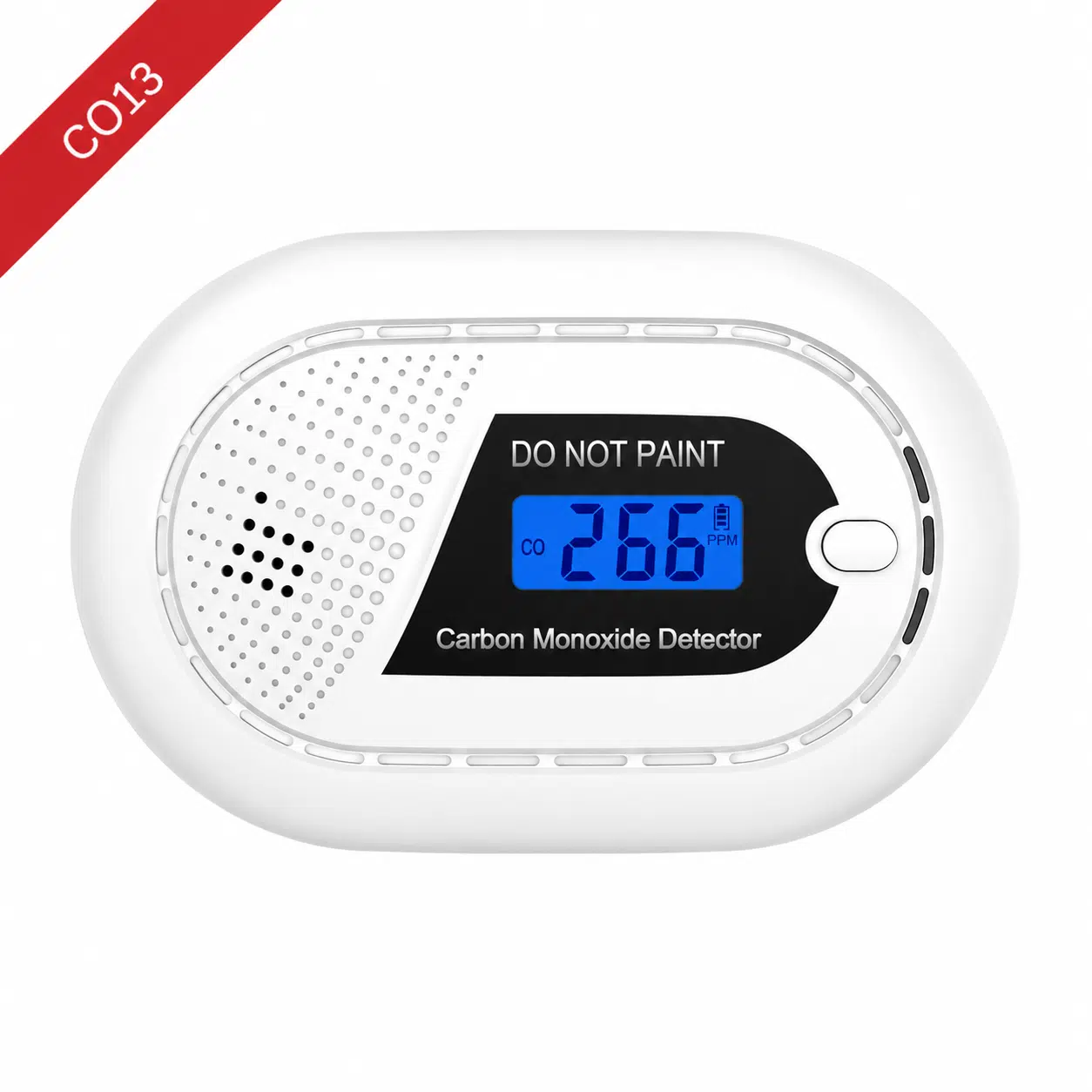
CO detectors require careful attention to lifespan. CO sensors are electrochemical detection devices, and after long-term operation, they experience sensitivity drift, output attenuation, and environmental influences. US fire safety regulations also categorize CO detector signals into three types: alarm, fault, and end-of-life. CO hazard alarms typically consist of four rapid beeps followed by a pause and cycle, while low battery/fault warnings are short beeps every 30–60 seconds.
CFS recommends to clearly state the following in the instruction manual, packaging, label, app interface, or installation guide:

3. Abnormal mains power supply or interconnection lines: A common hidden cause in hard-wired models.
For hardwired smoke alarms, AC smoke alarms, and interconnected smoke alarms (models with AC power and backup batteries), beeping may not originate from the battery itself, but could also be caused by:
UL’s documentation on CO alarms also states that AC-powered CO alarms typically require a backup battery to ensure continued operation during power outages.
For engineering installations and project delivery, the after-sales risk of hardwired alarms is usually not a “single-unit quality issue,” but rather the result of a combination of factors, including the product, installation, wiring, and on-site power conditions. It is recommended to use a multimeter to check the following during troubleshooting:
For distributors and contractors, pre-installation training is crucial. Otherwise, what was originally a construction issue will eventually become after-sales pressure on the product supplier.
What are the differences between a danger alarm, a low battery alarm, and an end-of-life alarm?
The most important thing users determine is: Is this a danger alarm or a maintenance reminder?
It is a simplified judgment from a practical engineering perspective.
Type | Sound Performance | LED Performance | User Action | Is the Product Malfunctioning? |
Fire Alarm | High sound pressure, rapid, continuous or three-beep cycle | Red light flashing rapidly | Immediately confirm fire and evacuate | Not necessarily |
CO Alarm | 4 rapid beeps + pause cycle | Red light flashing rapidly | Immediately ventilate, evacuate, contact professional | Not necessarily |
Low Battery Reminder | Short beep every 30–60 seconds | Slow flashing | Replace battery or replace the entire unit | Usually not |
Life Expiration Reminder | 2–3 short beeps, periodic cycle | Red/yellow light flashing slowly | Replace the entire unit | Not a malfunction, a design warning |
Power/Line Fault | Intermittent beeping, may be irregular | Fault light or slow flashing | Check power supply and wiring | Not necessarily |
The European EN14604 smoke alarm standard typically requires a fire alarm sound pressure level of 85 dB@3m and specifies requirements for false alarm stability and alarm performance. Under the North American UL system, smoke alarms often employ a Temporal-Three three-sound mode; CPSC data on residential smoke alarm sounds also mentions 85 dBA and the Temporal-Three alarm mode under relevant UL 217 test conditions.
Therefore, from a user experience perspective, the design goal of a true hazard alarm is to “instantly alert” users; while the design goal of low battery, nearing end of life, and malfunction alerts is to “inform users that maintenance is needed, but not to mislead them into thinking a fire has occurred.”
Why Alarm Sound and LED Logic Must Match Market Standards
EN14604 and EN50291 Alarms
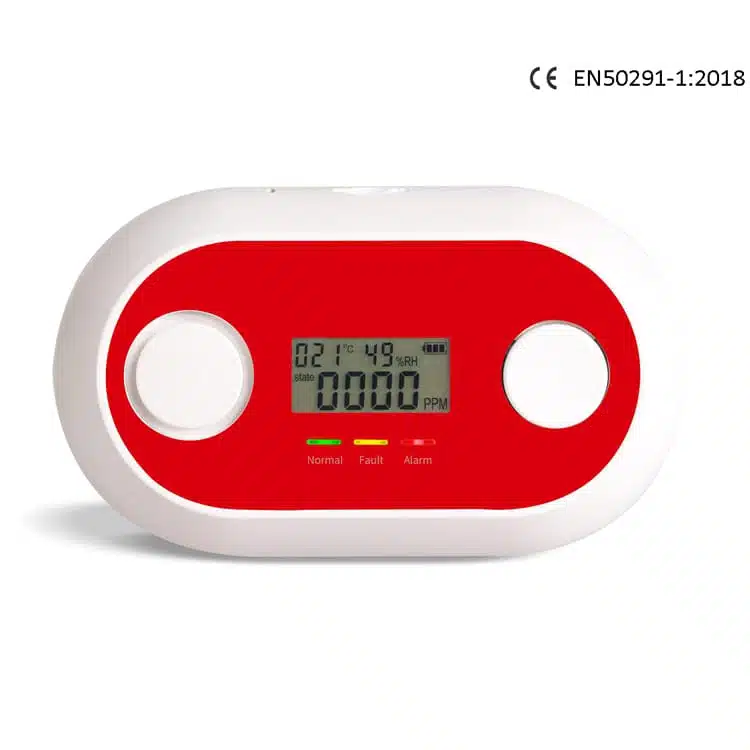
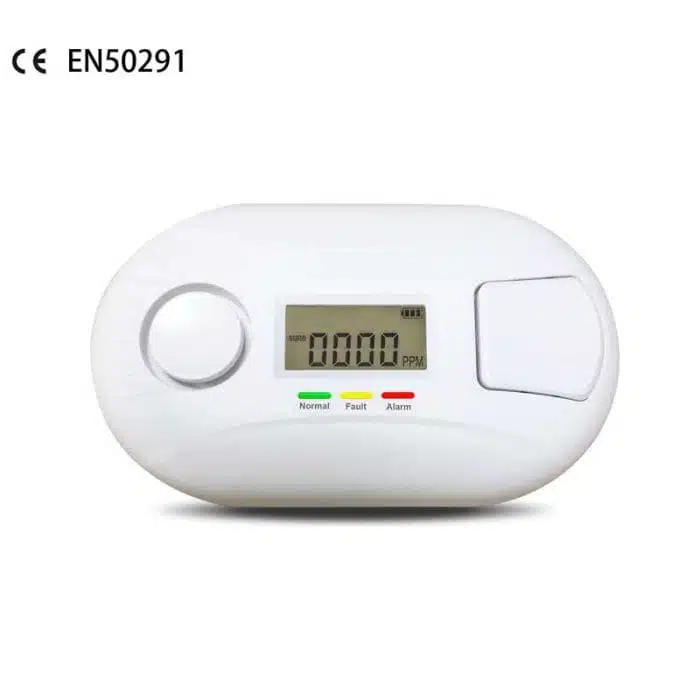
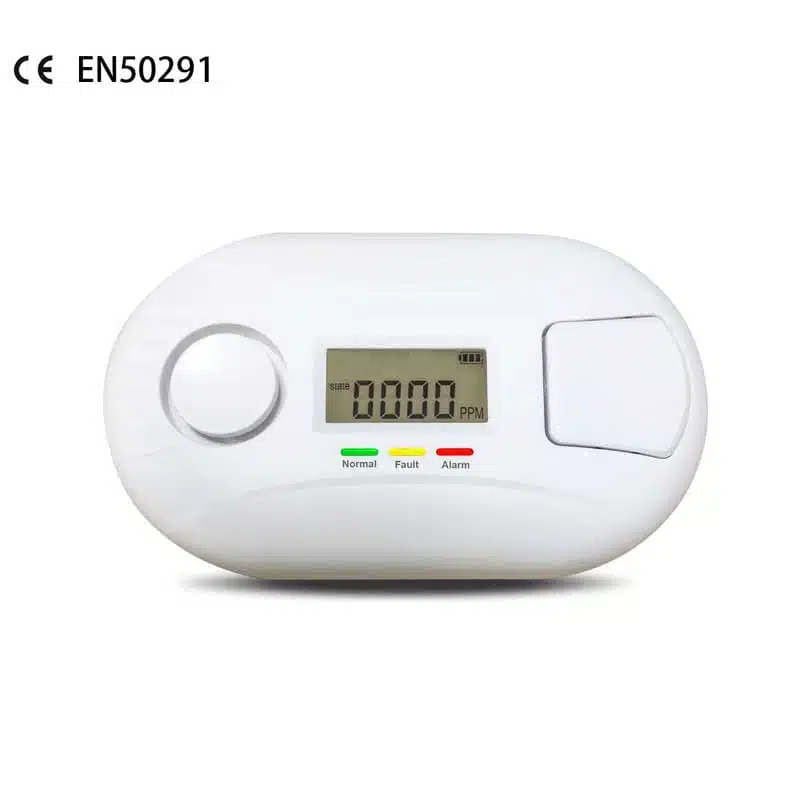
European smoke detectors typically conform to EN14604, and CO detectors typically conform to EN50291.
In actual product design, fire alarms and CO alarms must be clearly differentiated from low battery warnings and fault warnings.
Typical design logic includes:
This differentiation helps end customers quickly determine whether immediate evacuation is needed or whether battery or equipment replacement is required.
The Australian market has high requirements for residential smoke detectors, especially driven by connected smoke detectors, 10-year battery life models, and state regulations.
Smoke detectors compliant with AS3786 need require:
CFS’s SM11R4 wireless connected smoke detector features a low battery threshold of 2.6±0.1V, a sound pressure level greater than 85 dB(A)@3m, and supports 433MHz interconnection and up to 30 units per group. These specifications are crucial for Australian distributors and engineering channels when evaluating products.
UL217 and UL2034 Alarms
In the US market, smoke alarms typically conform to UL217, while CO alarms typically conform to UL2034.
Common user identification logic is as follows:

Quick Troubleshooting Process for Smoke Alarm Beeping
Below is a quick troubleshooting process for end customers, property management personnel, and channel after-sales teams.
Step 1: Check if the beeping is rapid and continuous.
Step 2: If it beeps once every 30–60 seconds, check the battery voltage first.
CFS’s after-sales guide for battery replacement also states that persistent beeping after consecutive battery replacements may be related to battery installation orientation, contact points, reset operation, or the device exceeding 10 years of age.
Step 3: If it’s a 2-3 beep cycle, check the battery lifespan.
Step 4: Check AC power and backup battery for hardwired models
For AC hardwired smoke alarms or interconnected smoke alarms, further checks should be made:
Engineering after-sales service recommendations:
Step 5: Eliminate Environmental Interference and False Alarm Factors If it’s not due to low battery or the end of the product’s lifespan, consider the following false alarm factors:
CFS mentions in its section on false alarms that abnormal power supply, low voltage, and poor contact of key components can all cause alarm malfunctions.
Why Beeping and False Alarms Become B2B After-Sales Costs
Many brand clients, when developing smoke alarms or CO alarms, focus on:
However, after actual market launch, the issues that truly impact channel satisfaction are often the following:
Therefore, Smoke Alarm Beeping / False Alarm / Battery Life is not a single after-sales issue, but a comprehensive product engineering risk.
How to Reduce Beeping and False Alarm Risk from Product Design
1. Low-battery threshold cannot be determined solely by theoretical voltage.
Low-battery threshold design needs to be considered:
If the low battery voltage is too high, the alarms will beep early to cause short battery life. If too low, the buzzer can’t work at real fire.
Mature OEM projects should confirm the low-battery threshold through room temperature, low temperature, high temperature, aging, and pulse load testing, rather than relying solely on the battery specifications.
2. 10-year battery life must be verified using system models.
Many customers ask, “Is this a 10-year battery smoke alarm?” A more accurate engineering answer is: 10-year battery life is not a battery capacity parameter, but rather a result of system power consumption design.
Verification required for:
For wireless interconnected smoke detectors, additional considerations include RF transmission power consumption, networking strategy, alarm linkage time, and communication failure retransmission mechanism.
3. False alarm control must address the smoke chamber, algorithm, and manufacturing consistency simultaneously.
Smoke alarms and false alarms are usually not caused by a single factor.
From a manufacturing perspective, common risks include:

For purchasing managers, a supplier’s ability to achieve stable mass production is more important than sample sensitivity.
It is recommended to focus on the following aspects during supplier evaluation:
4. Instructions and labels should be easy for users to understand.
Many beeping complaints are not essentially hardware problems, but rather a result of insufficient user education.
It is recommended to include clear tables in the instruction manual:
The sound heard by the user | Possible reasons | What should the user do |
Continuous rapid loud alarm | Smoke or fire may be present | Check immediately and evacuate |
4-tone rapid beeping cycle | There may be a CO hazard | Leave the scene immediately and ventilate |
Once every 30–60 seconds | Low battery | Replace the battery or the entire device |
2–3 beeps every 60 seconds | End of service life or malfunction | replace the device |
Irregular short beeps | Poor contact or abnormal wiring | Check the power supply, terminals, and installation environment |
For B2B brand clients, it is also recommended to include the following content:
Supplier Evaluation Checklist for Low After-Sales-Risk Alarms
You should ask the following engineering questions:
Product Design Level:
Mass Production Manufacturing Level:

After-sales support:
CFS Manufacturing Engineering Recommendations
As an OEM/ODM manufacturer of smoke and carbon monoxide alarms, CFS recommends that B2B clients include the following in their product specifications during the project initiation phase:
- Alarm Logic Table: Clearly define the differences between fire alarms, CO alarms, low battery alarms, end-of-life alarms, fault alarms, silent alarms, and test modes.
- Battery Life Calculation Model: Provide not just “10-year battery life,” but also standby current, alarm current, self-test frequency, LED power consumption, RF power consumption, and safety margin.
- Low Battery Warning Test Requirements: Includes tests at normal temperature, low temperature, high temperature, after battery aging, and pulse load.
- False Alarm Risk Verification Plan: Includes tests for dust, water vapor, insects, high humidity, temperature changes, EMC interference, and the effects of the installation environment.
- Hard-Wired Product Circuit Fault Testing: Includes tests for mains power fluctuations, power outage switching, backup battery failure, loose terminals, and abnormal interconnects.
- End-User Instruction System: Use simple and clear diagrams to explain to users what different beeping patterns represent. The CFS website also consistently emphasizes that low battery, false alarms, battery life, CO sensor life, and certification risks should not be considered as individual parameters, but should be verified together in the system-level engineering design.

FAQ About Smoke Alarm Beeping, False Alarms and Battery Life
Conclusion: A Good Alarm Should Alert Clearly and Communicate Clearly
Smoke alarm and CO alarm beeping should not be simply categorized as “product malfunction.”
In most cases, they might be:
For end users, quickly understanding the meaning of the sounds can prevent panic and mishandling.
For B2B customers, clear audio-visual logic, stable battery life design, reliable false alarm control, and comprehensive after-sales instructions are key to reducing returns, complaints, and channel pressure.
Truly mature smoke and CO alarms go beyond certification.
They must also be easily understood, installed reliably, used sustainably, and maintained clearly by users in real homes, properties, apartments, projects, and distribution channels.
Related Products