Case Study: Interconnected Smoke Alarm Project
Wireless Multi-Device Linkage and Ultra-Low Power OEM/ODM Solution
To overcome the industry bottleneck that keeping RF receivers constantly active consumes too much power to meet the 10-year lifespan requirement for sealed lithium batteries, and intermittent wake-up mechanisms used to save power fail to pass American fire safety certification, our project uses a hardware +software design strategy to optimize wireless networking protocols for multiple devices, ultra-low-power RF transceiver scheduling, RF Mesh self-organizing network topology design, end-to-end link latency control, and self-diagnosis of connectivity status with fault reporting. Without altering the housing or PCB mounting points, and with compatibility with existing production lines and avoiding additional tooling costs, the project delivers a ready-to-deploy OEM/ODM export solution that meets regulatory standards for fire-detection sensitivity, delivers a 10-year lifespan on sealed lithium batteries, supports real-time wireless interconnection and multiple connectivity protocols, and is suitable for large-scale projects in North America and Europe for interconnected smoke alarms.
Project Overview
Some traditional wireless interconnection solutions suffer from three major drawbacks:
1. Continuous RF monitoring: The receiver module remains powered on constantly, significantly increasing the device’s standby power consumption. This shortens the lifespan of the sealed lithium battery to just 3–5 years—failing to meet the 10-year longevity requirement for overseas smoke detector tenders—and leads to high rates of after-sales complaints.
2. Scheduled wake-up broadcast schemes: Wake-up intervals are enlarged to reduce power consumption, resulting in interconnection latency of 5–8 seconds. Some batches fail to pass NFPA on-site acceptance tests.
3. Simple star-topology RF broadcasting: signals are blocked by concrete walls, metal door frames, and floor slabs without relay capabilities, causing remote devices to lose connection.
The core breakthrough of this project lies in resolving the inherent conflict between “real-time interconnection” and “10-year low-power operation.” The solution fully utilizes existing housing structures, assembly processes, and production line tooling—eliminating the need for new molds. This drastically reduces customization cycles and tooling risks, providing export manufacturers with an ODM solution for interconnected smoke detectors that is burn-in tested, fully documented, and ready for rapid mass production.
Project Info
Item | Details |
|---|---|
Project Name | Smoke Alarm Interconnectivity and Ultra-Low Power Optimization |
Implementation Date | December 2025~Feb 2026 |
Service Model | OEM/ODM customization, hardware/software iteration, prototype validation, small-batch trial production, mass production ramp-up support |
Compatible Products | Standalone photoelectric smoke alarms |
Interconnectivity Options | RF 868/915MHz Mesh / Zigbee / Matter over Thread |
Max Interconnected Units | RF Mesh (up to 30 units); Zigbee (up to 40 units); Matter over Thread (compliant with Thread network standards). |
Target Markets | USA, Canada, EU, UK |
Design Standards | UL 217, NFPA 72, EN 14604, BS 5839-6, FCC, ISED, RED, etc. |
Battery Solution | |
Deliverables | Functional prototypes, interconnectivity latency test reports, power consumption test reports, high/low-temperature aging reports |
Core Optimization Modules | Wireless networking protocol selection and optimization, ultra-low power RF transceiver scheduling, RF Mesh topology design, end-to-end linkage latency optimization, network self-diagnosis and fault reporting |
Project Timeline | Requirements review → Interconnectivity link selection & evaluation → Hardware schematic & firmware development → Baseline power consumption validation → Multi-scenario networking reliability testing → High/low-temp, wall penetration, and aging stress tests → Small-batch trial production → Mass production ramp-up |
Compliance Matrix
Market | Product Standard | Installation/ System Specs | Wireless/ EMC Regulations | Certifications/ Declarations | Key Notes |
|---|---|---|---|---|---|
USA | UL 217 (10th Ed.) | NFPA 72 | FCC Part 15 Subpart B/C | UL/ETL + FCC ID | NFPA 72 residential non-supervised interconnection: max 18 units total (max 12 smoke alarms); supervised: max 64 units total (max 42 smoke alarms) |
Canada | CAN/ULC S531 | Local building codes / CAN/ULC S524 (if applicable) | ISED RSS 247 / RSS 210 | ULC + ISED | Similar to the US, but certification and frequency band requirements are independent |
EU | EN 14604 | National installation codes | RED 2014/53/EU, EN 300 220 (Sub-GHz); EN 300 328 (2.4GHz); EN 301 489 | CE / RED | EN 14604 does not cover wireless functionality; wireless must comply with RED |
UK | EN 14604 | BS 5839-6 | UK Radio Equipment Regulations | UKCA | Post-Brexit, UKCA is required; CE alone is insufficient |
Smart Home | Does not replace fire safety standards | Does not replace NFPA/UL | Zigbee/Matter/Thread certification | Ecosystem certification | Matter/Thread recommended only for auxiliary notifications and ecosystem integration |

Customer Requirements
Our client is an exporter with 10 million USD in the North American and European security markets, specializing in stand-alone photoelectric smoke detectors and supplying many apartment developers, homestay chains, and property management companies.
Alarm sound attenuates severely across floors, and end-users repeatedly report that it is inaudible in distant rooms of multi-story buildings. The client has clearly stated three non-negotiable iteration principles:
1. Interconnectivity Compliance: Enables wireless multi-device linkage, with all devices triggering simultaneously upon any alarm, meeting NFPA 72 and UL 217 Version 10 multi-site interconnection requirements and supporting over 30 devices.
2. Uncompromising 10-Year Battery Life: Even with the addition of interconnect modules, the average standby power consumption must still meet the 10-year design life of the sealed lithium battery. Adding wireless functionality should not significantly shorten battery life to avoid mass after-sales issues.
3. Minimized Mass Production Modification: Product appearance, mounting openings, PCB shape, and assembly processes all utilize existing mature models. No new molds or modifications to existing production-line tooling are required, controlling iteration costs and reducing mass-production yield risks.
The customer also requires delivery of a complete set of verifiable test data, network reliability verification records, and compliance support documents; the solution must be verifiable, replicable, and support stable large-scale shipments.
Customized Optimization Scope (Five Core Upgrades)
1. Wireless Networking Protocol Optimization and Selection Matching
Based on the client’s target market and project type, three switchable interconnection solutions are provided for selection as needed:
- RF868/915MHz Mesh (Preferred for Engineering Projects): No gateway or Wi-Fi router required; the alarms form their own mesh network. Each device can act as a signal repeater, suitable for large-scale projects in apartments and guesthouses; network capacity supports up to 30 devices, a common solution in overseas real estate bidding.
- Zigbee Solution (Smart Home Integration): supports up to 40 devices, suitable for fully furnished residences integrated with whole-house smart systems.
- Matter over Thread (High-End Smart Home): It is recommended to position it as a smart home auxiliary notification and ecosystem linkage, not as a replacement for NFPA/UL-compliant fire protection interconnection.

Zigbee Interlinked Smoke Alarm manufacturer CFS RF chamber

2. Ultra-Low Power RF Transceiver Scheduling Optimization
To address the additional power consumption caused by interconnection, a dynamic duty cycle scheduling strategy is designed. When there is no fire or abnormality, the RF module enters deep sleep mode, with sleep current as low as 0.1 μA (the exact amount depends on the selected module and actual measurements); it periodically wakes up to monitor network heartbeats, and the wake-up interval can be dynamically configured according to network size and latency requirements.
The MCU Nordic nRF52840 handles the Zigbee/Thread protocol stack and system scheduling .Under normal static standby conditions, the additional RF power consumption brought by the interconnect function is ≤2 μA (typical design target at room temperature).
-
Zigbee Interlinked Smoke Alarm manufacturer CFS sleep current test

3. RF Mesh Self-Organizing Network Topology Design
We adopted single-point broadcast architecture, and each alarm can relay signals, allowing them to hop through intermediate devices and penetrate concrete walls, floors, and metal door frames, significantly reducing the risk of signal blind spots within residences.
Supports multi-channel subnetting, allocating independent RF channels to different floors and units to prevent cross-unit network interference and avoid accidental triggering of alarms in one unit by neighboring smoke detectors.
4. End-to-End Linkage Delay Optimization
An event-driven priority broadcast mechanism is adopted, distinguishing between “regular heartbeat packets” and “high-priority fire alarm frames.”
Normally only send low-frequency heartbeats to maintain the network when any detector detects smoke, and high-priority alarm messages take precedence to immediately wake up the audible and visual circuits, without waiting for the next wake-up window.
The RF 868MHz solution achieves a typical end-to-end linkage latency of ≤2 seconds from smoke detection to synchronized alarm activation of all interconnected devices and meets NFPA standard safety time requirements.
-
Zigbee Interlinked Smoke Alarm manufacturer CFS Zigbee test

5. Interconnection Status Self-Diagnosis and Fault Reporting
The system automatically performs a full-network self-diagnosis every 60 minutes. The checks include: online device list, link communication quality, and Received Signal Strength (RSSI).
When a device is offline, the link has a persistently weak signal, or a network anomaly occurs, an audible and visual fault warning is triggered. The fault warning is designed according to target standards and is clearly distinguished from fire alarms and low battery signals in terms of audible and visual modes. The final standard is subject to the overall system certification test.
Note: The 60-minute self-diagnosis is a periodic check and is not equivalent to the continuous monitoring requirements of NFPA 72 supervised interconnection. If the customer requires supervised interconnection, a separate assessment of the continuous monitoring architecture and certification requirements is necessary.The system automatically performs a full-network self-diagnosis every 60 minutes. The checks include: online device list, link communication quality, and Received Signal Strength (RSSI).
When a device is offline, the link has a persistently weak signal, or a network anomaly occurs, an audible and visual fault warning is triggered. The fault warning is designed according to target standards and is clearly distinguished from fire alarms and low battery signals in terms of audible and visual modes. The final standard is subject to the overall system certification test.
Note: The 60-minute self-diagnosis is a periodic check and is not equivalent to the continuous monitoring requirements of NFPA 72 supervised interconnection. If the customer requires supervised interconnection, a separate assessment of the continuous monitoring architecture and certification requirements is necessary.
Protocol Selection Comparison
Items | RF868/915 Mesh | Zigbee | Matter over Thread |
|---|---|---|---|
Frequency Bands | Sub GHz 868/915MHz | 2.4GHz | 2.4GHz |
Gateway Required | No Required | Required Zigbee Gateway | Required Thread Border Router + Matter Controller |
Self-organizing Mesh | Multi-hop Relay | Mesh | Thread Mesh |
Network Capacity | Up to 32 units | Up to 40 units | Complies with Thread standard, actual capacity limited by ecosystem |
End-to-End Latency | Typical ≤2s | Usually <1s, depends on gateway | Usually <1s, depends on border router |
Wall Penetration Ability | Strong | Medium | Medium |
Power Consumption | Low | Medium | Medium |
Interoperability | Private/Semi-private | Zigbee ecosystem | Matter ecosystem |
Applicable Scenarios | Apartments, guesthouses, engineering projects | Smart home decoration | High-end smart homes |
Certifications | FCC/ISED/RED | Zigbee certification + FCC/ISED/RED | Matter/Thread Certification + FCC/ISED/RED |
Key Risks | Proprietary protocols, need for self-diagnosis | gateway dependency, impact of network outages | ecosystem dependency, limited fire safety positioning |
Technical Pain Points and Industry Challenges
1. The Inherent Contradiction Between Low Power Consumption and Real-Time Interconnection
Constantly on-the-fly RF monitoring directly increases standby current by 10 nA and reduces lithium battery life. Increasing Wake-up cycles to save power results in excessive link latency, causing on-site acceptance tests to fail. We should find the balance.
2. RF Signal Attenuation Due to Building Structure
Concrete shear walls, reinforced concrete slabs, and metal entrance doors significantly attenuate RF signals.
3. Network Capacity Constraints in Various Countries’ Regulations
Local regulations in the US, Canada, and the EU differ slightly, requiring solutions to support flexible parameter configuration to adapt to compliance boundaries in different markets.
4. Difficulty in Real-World Reliability Verification
Ideal radio frequency conditions in a laboratory shielded room differ significantly from a real-world residential setting with multiple walls, appliance interference, and metal pipes. We need to do real tests in a complex environment.
Solution Limitations and Risks
Limitations | Explanations |
|---|---|
Self-Diagnostic Unsupervised Interconnection | The network-wide self-diagnosis every 60 minutes is a periodic diagnostic process and is not equivalent to the continuous supervision requirement of NFPA 72 supervised interconnections. Supervised interconnections require a separate assessment. |
RF Environment Limitations | Thick concrete walls, large metal components, and large metal appliances can reduce the signal. |
battery life trade-off explanation | “the interconnect module inevitably introduces additional power consumption. This solution has controlled the additional RF power consumption to ≤2µA (typical design target at room temperature), achieving the 10-year design target; however, actual battery life will decrease under high-frequency communication and extreme high and low temperature long-term operating conditions, and the final battery life will be based on actual testing of the entire device.” |
Certification Responsibilities | We are responsible for the development of the interconnect function, pre-testing, and providing a complete set of technical support documents; the final certification of the entire device for UL/EN/FCC/ISED/RED is completed by the customer as the certification holder, and we provide design guidance and pre-verification support. |
Matter over Thread Boundaries | Matter over Thread requires a Thread Border Router and a Matter controller. It is recommended to position it as a smart home auxiliary notification and ecosystem linkage, and it does not replace NFPA/UL compliant fire protection interconnection. |
Protocol Mixing | New and old smoke detectors must be networked with completely consistent firmware protocol versions. Old standalone versions without interconnection cannot be added to the Mesh network. |
Network Security | The solution supports encryption, anti-replay, anti-interference, and secure OTA. Updated; specific security levels are configured according to target market and customer requirements. |
Not applicable scenarios | This wireless interconnection solution does not cover wired, hard-wired interconnected fire protection systems or address-based fire alarm systems connected to building fire alarm control panels. |
Complete verification and test matrix
Test Item | Test Conditions | Acceptance Criteria |
|---|---|---|
Interconnection Function Test | Network of 12 devices; smoke alarm triggered on any single unit | All interconnected devices trigger synchronized audible and visual alarms |
End-to-End Linkage Latency Test | RF868, open-field environment, room temperature | End-to-end latency ≤ 2s |
RF Average Power Consumption Test | 25°C, standard network setup, static standby | Additional RF power consumption ≤ 2µA |
Wall Penetration Test | Double-layer concrete wall + metal door frame | Stable signal, reliable linkage, no connection loss |
Network Stability | 30 days of continuous power, periodic heartbeat communication | Device online rate ≥ 99%; recovery from single offline event ≤ 60s |
Disconnection Auto-recovery Test | Power restored after 1 hour of power-off for a single device | Automatic reconnection to Mesh network within 60s |
High/Low Temperature Interconnection Test | Temperature cycling (-10°C to 60°C) | Fire alarm linkage and self-diagnosis functions operate normally |
RF Compliance Pre-test | FCC/ISED/RED pre-testing | Pre-test data provided; final certification to be completed by the customer |
EMC/ESD Pre-test | Based on target market standards | Remediation suggestions and design guidance provided |
Battery Transport Pre-test | UN38.3, etc. (as applicable) | Data provided per customer requirements |
Small-batch pilot production validation: The structure, assembly, and key production-line tooling will use those from the existing, mature model. If required for RF calibration or pairing tests, we may add necessary workstations or tooling to the current testing process, subject to a specific production line assessment. Mass production risks are controllable.
Data Comparison: Before vs. After Optimization
Item | Some Low-Cost Wireless Interconnect Solutions | Client’s Legacy Standalone Solution | Optimized Solution (This Project) |
|---|---|---|---|
Interconnection Method | Simple RF | Star-topology Broadcast, None | Choice of RF Mesh, Zigbee, or Matter |
Max. Interconnected Units | 8–12 units | No interconnection support | RF Mesh (up to 30 units), Zigbee (up to 40 units); actual deployment subject to regulatory configuration |
End-to-End Linkage Latency | 3–8 seconds | N/A | RF868 typical value ≤2seconds |
Additional RF Standby Power Consumption | ≥10µA | N/A | ≤8µA |
Battery Design Life (with Interconnect) | 3–5 years | 10 years (standalone) | 10 years (Sealed Lithium Batteries: 2x CR14505) |
Network Topology | Star topology (single point), no relay | None | Mesh distributed relay/forwarding |
Cross-Unit Network Interference Prevention | Not supported | None | Multi-channel subnet isolation to prevent accidental triggering by neighboring devices |
Final Project Outcomes and Business Value
1. Technical Achievements
- F868 solution achieves end-to-end linkage latency of ≤2seconds in open-field environments, meeting safety standards for fire response times;
- RF module power consumption controlled at ≤8µA (typical static design target at room temperature), supporting a 10-year battery life design goal using a sealed lithium battery;
- Periodic network-wide self-diagnosis with proactive fault alerts for offline status or degraded link quality, eliminating hidden safety blind spots;
- Supports multi-channel subnet isolation to reduce the risk of false alarms caused by cross-unit network interference.
2. Compliance Achievements
- wireless links are designed in accordance with local RF regulations such as FCC, ISED, and RED;
- provision of comprehensive pre-testing documentation significantly reduces communication and rectification costs for the customer’s final product certification. The customer will complete final certification as the certificate holder.
3. Mass Production Readiness
Its structural design, assembly processes, and key production-line tooling use the same solutions as existing, mature models; the new and old models can be manufactured on the same mixed production line without new molds, enabling a rapid transition from small-to-medium-batch trial production to full-scale mass production.
4. Business Value
- Adds connectivity capabilities, meeting the mandatory requirements for tenders involving new overseas residential developments and long-term rental apartments, thereby unlocking opportunities for large-scale project-based orders;
- Enables synchronized alarms across all units, enhancing escape safety and mitigating liability risks for property managers and developers;
- Facilitates entry into the smart home market via Zigbee/Matter-enabled versions, expanding reach into the high-margin market for fully fitted (turnkey) homes;
- Establishes a standardized connectivity solution, significantly shortening development cycles for future customization projects involving the same series of smoke and CO detectors.
We provide end-to-end OEM/ODM implementation support for interconnected smoke alarms:
-
OEM smoke alarm factory CFS

Service Category | Service Details |
|---|---|
Documentation Request | Interconnectivity test reports, power consumption test data, protocol selection guides, compliance checklists |
Prototype Testing | Engineering prototype requests for internal customer testing and laboratory pre-verification |
FAQ
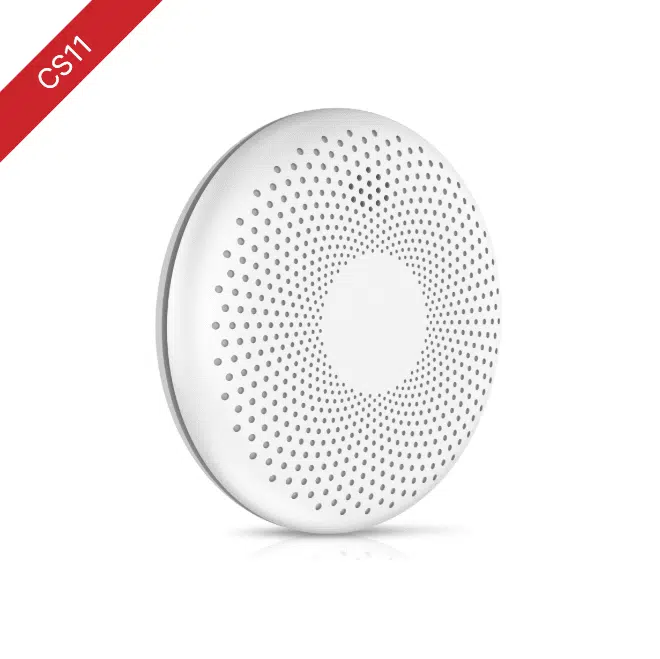
CS11 Standalone Smoke And Carbon Monoxide Combo Alarm
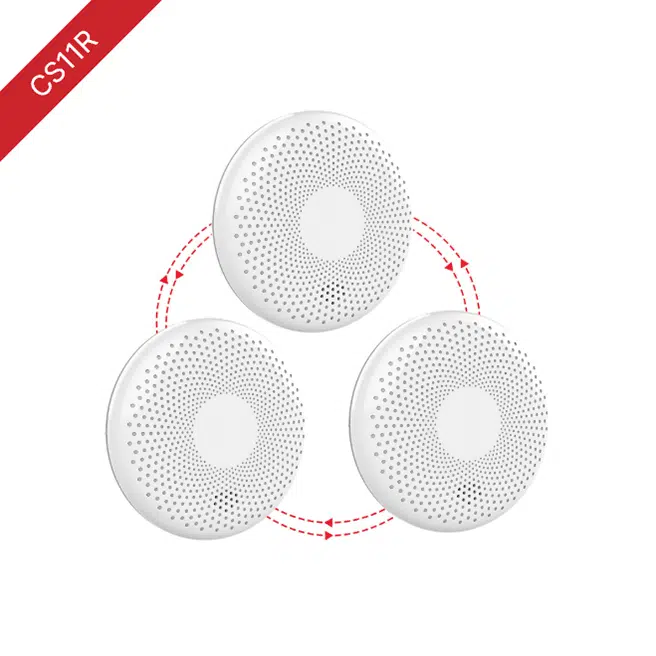
CS11R Wireless Interlinked Smoke & Carbon Monoxide Combo Alarm
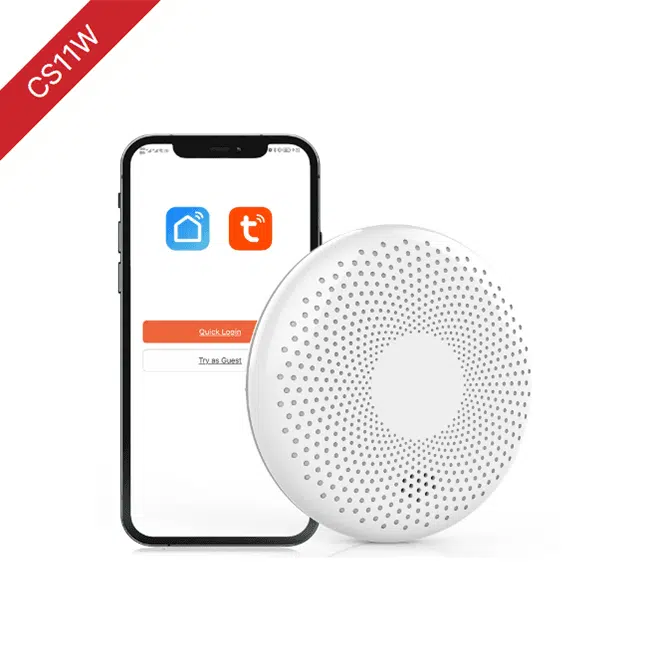
CS11W WIFI Smoke And Carbon Monoxide Combo Alarm
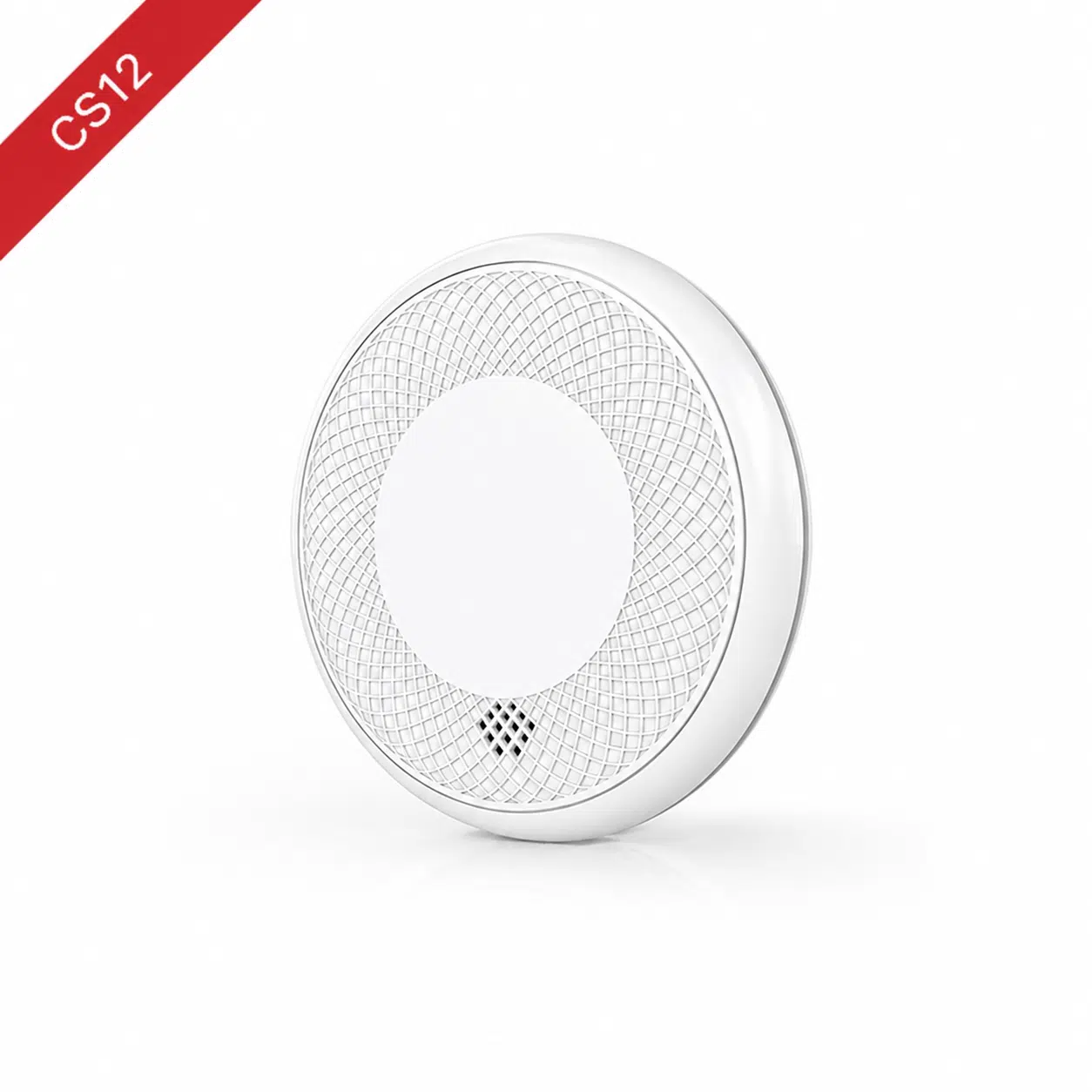
CS12 Standalone Smoke And Carbon Monoxide Combo Alarm
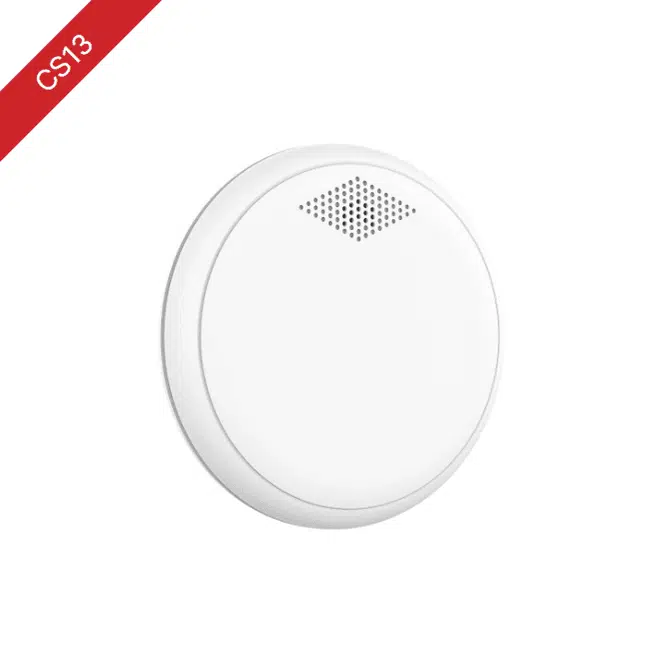
CS13 Standalone Smoke And Carbon Monoxide Combo Alarm
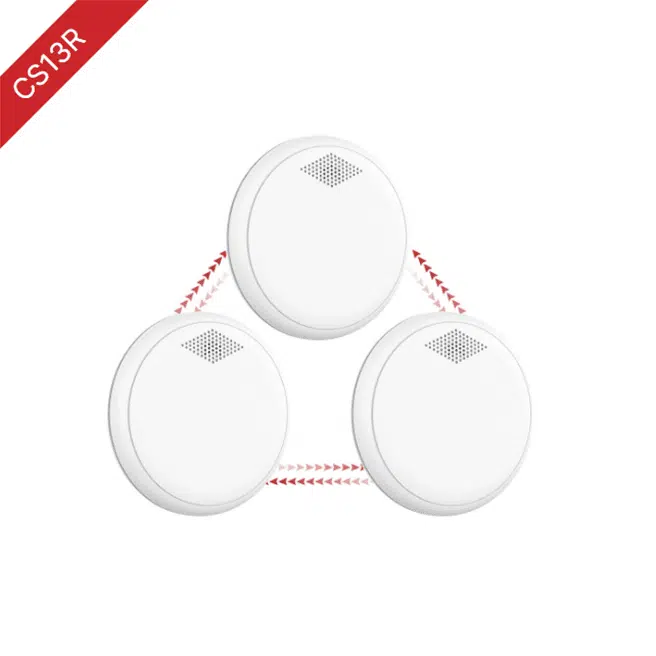
CS13R Wireless Interlinked Smoke And Carbon Monoxide Combo Alarm
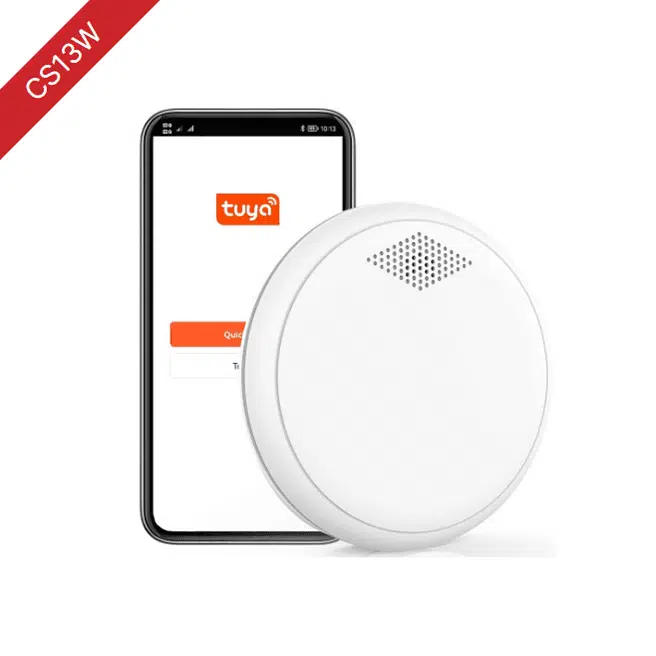
CS13W WIFI Smoke And Carbon Monoxide Combo Alarm
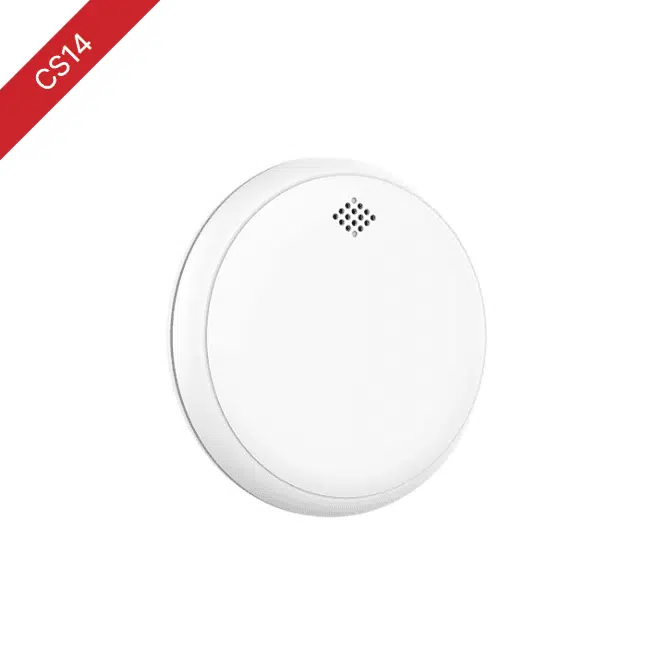
CS14 Standalone Smoke And Carbon Monoxide Combo Alarm
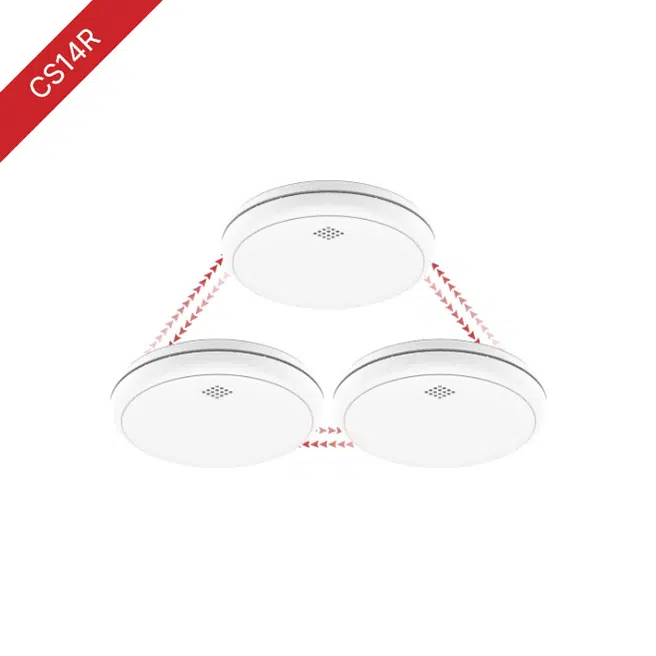
CS14R Wireless Interlinked Smoke And Carbon Monoxide Combo Alarm