Case Study on 10-Year Battery Life Optimization Project for Smoke Alarms with Built-in Lithium Batteries
OEM/ODM Solution for Sealed Lithium Battery Photoelectric Smoke Alarms
Project Overview
Household and commercial photoelectric smoke detectors commonly suffer from industry pain points such as short battery life, false alarms at night due to low battery, user disassembly and shutdown, and high after-sales complaint rates. With the updating of market access regulations in Europe and the United States, EN 14604 and the CPSC are gradually requiring long-life smoke detectors to adopt a sealed, non-replaceable lithium battery design. Traditional photoelectric smoke detectors generally have shortcomings such as high standby power consumption, accumulated leakage current in circuits, and a lack of battery internal-resistance compensation mechanisms, making it difficult to meet the 10-year maintenance-free design standard.
This project achieves a 10-year long-life optimization of the entire unit through five major software and hardware iterations: sealed lithium battery selection and matching, ultra-low-power MCU sleep scheduling, dynamic duty-cycle optimization, circuit leakage-current suppression, and intelligent firmware calibration. This is done without reducing fire detection sensitivity, modifying the product’s appearance and mold, or altering the mass-production structure. The solution is suitable for large-scale projects in European and American residential buildings, rental apartments, guesthouses, and commercial buildings, effectively reducing the likelihood of false alarms and alleviating after-sales maintenance pressure overseas.
The demand for smoke detectors in overseas high-end residential properties, rental properties, and commercial facilities has shifted from basic alarm functions to three core indicators: long-lasting, maintenance-free operation, a low false alarm rate, and high compliance. Traditional replaceable-battery smoke detectors commonly suffer from issues such as uneven battery degradation, false alarms at night due to low battery levels, unauthorized disassembly by users for frequent maintenance, and high maintenance costs for property management companies.
The North American CPSC and the new version of the European EN 14604 standard both list factory-sealed, non-replaceable batteries as the mainstream design trend for long-lasting smoke detectors to avoid safety hazards from replacing inferior batteries and reusing expired equipment. Addressing the industry’s technical contradiction of “high power consumption → insufficient lifespan, excessive power saving → decreased sensitivity” in traditional products, this project completes a full-chain ultra-low power consumption hardware and software upgrade, fully compatible with existing shells, structures, and production lines, requiring no new molds, and enabling rapid mass production implementation. It provides export companies with a mature, implementable, customized, ten-year long-life smoke detector solution.
Project Info
Project | Details |
|---|---|
Project Name | 10-Year Battery Life Optimization Project for Built-in Lithium Battery in Smoke Alarms |
Implementation Time | September 2022 |
Service Model | OEM/ODM solution customization, software and hardware iteration, small-batch trial production, mass production implementation |
Products | Standalone photoelectric smoke alarms |
Battery | Factory-sealed, non-replaceable built-in lithium battery |
Battery Type | Lithium-manganese battery (Li-MnO₂), nominal 3.0V |
Target Market | North America, Europe, global high-end properties and commercial projects |
Standards | EN 14604, NFPA 72, NFPA 101 |
Battery Export Compliance | UN 38.3, IEC 62133, MSDS, air/sea freight certification report compatibility |
Deliverables | Optimized prototype, power consumption test report, battery discharge curve, mass production firmware, selection manual, production line adaptation solution |
Core Optimization Modules | Battery capacity calibration, MCU ultra-low power scheduling, duty cycle optimization, circuit leakage current suppression, firmware algorithm reconstruction |
Project Implementation Timeline | Requirements Review → Battery solution selection → Software and hardware development → Power consumption verification → High- and low-temperature reliability testing → Small-batch trial production → Mass production implementation |

Customer Needs
The customer is a smoke detector exporter with a strong presence in the European and Canadian markets. They urgently need an upgrade to a compliant, long-lasting, low-false-alarm, mass-producible 10-year sealed lithium battery version to replace traditional replaceable battery models that experience frequent false alarms at night.
The customer specified three iteration principles:
1. Long-lasting and maintenance-free: A sealed built-in lithium battery and ultra-low power consumption design ensure stable power supply throughout the device’s entire lifespan, aligning with overseas 10-year lifespan design recommendations.
2. No performance degradation: All power optimizations must not reduce fire detection sensitivity, anti-interference capabilities, or response speed, eliminating the risk of missed or delayed alarms.
3. Zero modifications for mass production: The appearance, structure, mounting location, and assembly process remain completely unchanged from the previous version, requiring no new molds or production line modifications, controlling iteration costs and mass production risks.
It also requires the provision of complete power consumption data, aging test data, battery curves, and export compliance documents to ensure the solution is verifiable, replicable, and implementable at scale.
Customized Optimization Scope (Five Core Upgrades)
1. Sealed Lithium Battery Selection + Capacity Calibration + 10-Year Lifespan Computing Basis
Utilizes industrial-grade 3.0V CR123A lithium-manganese batteries/customized sealed lithium battery packs, with a capacity ≥ 1500 mAh and an annual self-discharge rate ≤1%. Factory-sealed and integrated to prevent user disassembly and replacement. A new dynamic battery internal resistance calibration algorithm reduces false undervoltage alarms caused by increased internal resistance due to long-term equipment aging. Meets EN 14604 margin requirements: maintains 30 days of standby time plus 4 minutes of continuous alarm after a low-battery alarm.
10-Year Battery Life Design Calculation Basis (25℃ Standard Operating Conditions)
Item | Value |
|---|---|
Total Battery Capacity | 1500mAh |
Self-Discharge Loss over 10 Years (1%/Year) | Approx. 150mAh |
Total Static Standby Power Consumption over 10 Years (8μA×24h×365×10) | Approx. 700mAh |
Dynamic Margin for Alarms, Self-Test, and Indicator Lights | Approx. 100mAh |
Maximum Total Power Consumption | 945mAh |
Design Redundancy | Approx. 37% (555mAh) |
The 37% redundancy is included to provide a margin for the design life, accounting for factors such as individual battery differences, temperature fluctuations, accelerated self-discharge, and frequent alarms. It is not delivered based on theoretical critical values. Actual lifespan is affected by extreme temperatures, frequent alarms, and individual battery variations; the final lifespan will be determined by measurements of the entire device.
A complete set of battery compliance documents can be delivered simultaneously: UN38.3, IEC 62133, MSDS, and transportation certification, supporting overseas customs clearance.
2. Ultra-Low Power MCU Sleep Scheduling (with Standard Test Conditions)
Used TI MSPM0/STM32L151 ultra-low-power, industrial-grade MCU @ 25℃, nominal 3.0V, standard sampling duty cycle, no alarm, static standby
- Wake-up current as low as 50nA
- Overall static standby current ≤10μA (average 8μA)

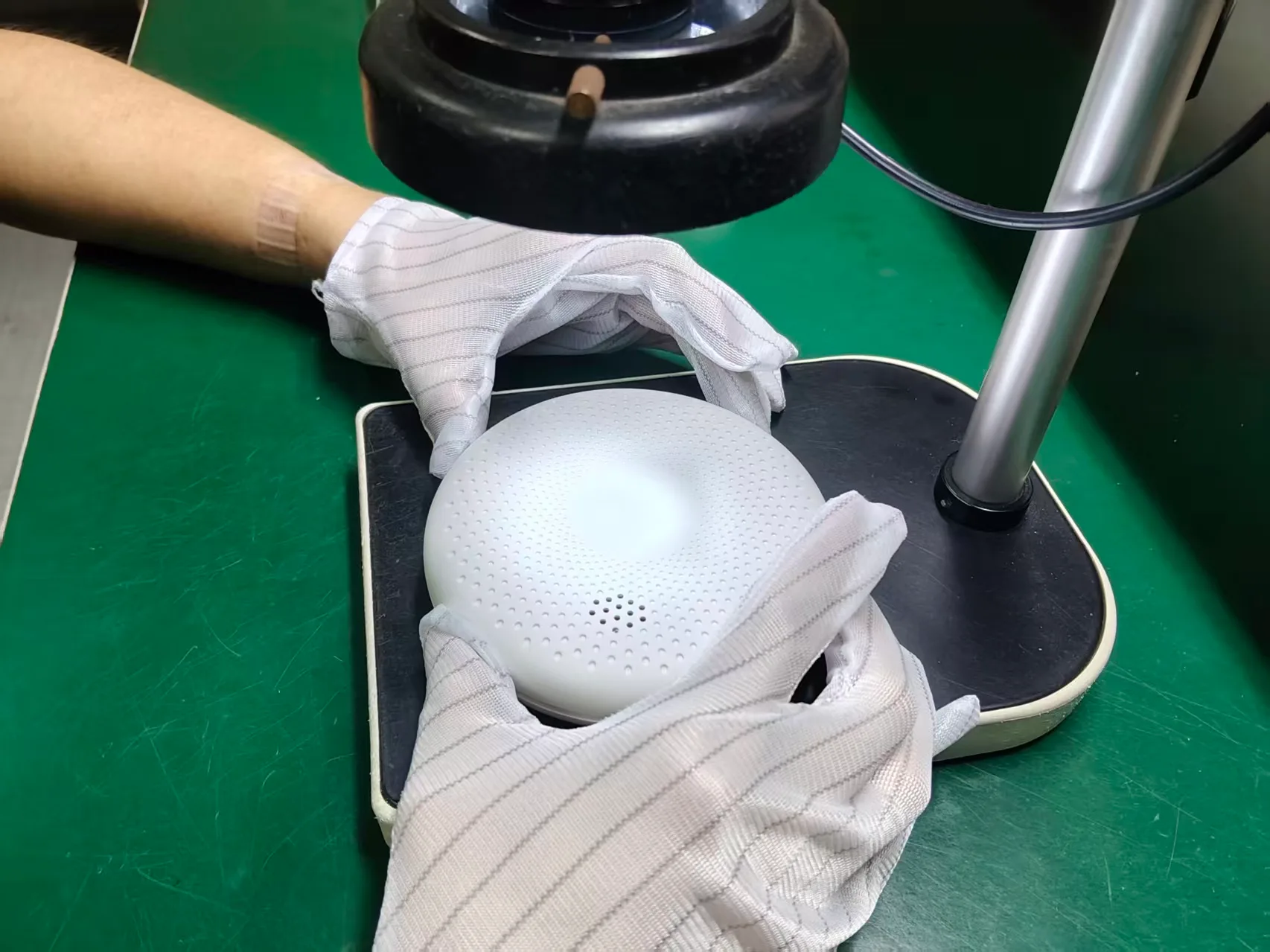
10-Year Smoke Alarms manufacturer CFS PCBA 
10-Year Smoke Alarms manufacturer CFS functional test -
10-Year Smoke Alarms manufacturer CFS smoke calibration -
10-Year Smoke Alarms manufacturer CFS test


The device wakes up only during the timed sampling window, remaining in deep sleep the rest of the time. RAM data is retained to avoid repeated initialization power consumption, maximizing the reduction of ineffective power consumption.
3. Optimized Duty Cycle Power Consumption of Optoelectronic Components
The drive timing and duty cycle of the infrared emitter, indicator lights, and buzzer have been re-optimized. Under standard operating conditions at room temperature, the average operating current of the entire unit is as low as 5.28μA. This achieves extreme power consumption control without reducing the smoke recognition signal-to-noise ratio or affecting smoldering fire detection capabilities, resolving the industry’s technical contradiction of “power saving = reduced sensitivity.”
4. Circuit Leakage Current Suppression + Full-Temperature Range Voltage Regulation Optimization
The traditional discrete circuits are replaced by an ultra-low-leakage-current LDO/DC-DC integrated power supply solution.
- MOS leakage current < 1 μA
- On-resistance <100mΩ
The high- and low-temperature voltage regulation mechanism is optimized to suppress false low-battery alarms caused by voltage fluctuations, ensuring stable device operation within the range of -10℃ to 60℃.
5. Firmware Simplification + Intelligent Early Warning Algorithm Reconstruction
Adopts an event-driven architecture: continuous sleep mode without anomalies, with immediate wake-up for high-precision calculations upon detection of suspicious signals. Redundant self-check logic and invalid wake-up tasks have been removed. A built-in 30-day early low-battery warning mechanism enables predictable and traceable battery degradation.
Technical Pain Points and Industry Challenges
1. A Natural Trade-off Between Power Consumption and Detection Accuracy: High-frequency sampling ensures detection accuracy, but high-power consumption prevents a ten-year battery life; excessive power reduction can lead to insufficient signal-to-noise ratio and missed detection of smoldering flames.
2. Fixed and Uncompensable Capacity of Sealed Batteries: Factory-locked capacity, coupled with self-discharge, temperature aging, and increased internal resistance, often results in false undervoltage alarms after 3-5 years for conventional solutions.
3. Severe Accumulated Power Consumption Due to Leakage in Traditional Circuits: Discrete power supplies have high standby leakage, which accumulates over the years and depletes battery life.
4. Dual Compliance Thresholds for Export: Both fire safety certification standards and lithium battery transportation safety standards must be met simultaneously, making it difficult for conventional solutions to achieve dual compliance for overseas markets.
Solution Limitations and Risks
Limitations | Explanations |
|---|---|
Low Temperature Impact | Extremely low temperatures below -10℃ will slightly reduce the lithium battery’s effective capacity. This needs to be assessed in conjunction with project operating conditions. |
Sealed Battery After-Sales Logic | The entire unit is sealed and non-replaceable. Replacement of the entire unit is recommended after its lifespan expires, complying with European and American property safety management regulations. |
Certification Responsibilities | This solution completes design verification and pre-testing in accordance with UL/EN standards. Final certification of the entire unit is completed by the client. We provide complete technical documentation and compliance guidance support. |
Lifespan Fluctuation Conditions | Frequent alarms and prolonged high-temperature environments will slightly shorten the theoretical battery life. |
Unsuitable Scenarios | Markets requiring user-replaceable batteries, extreme low-temperature scenarios (<-20℃), and non-photoelectric smoke detector solutions. |
This project is grounded ilation interfaces, power supply methods, and assembly processes.
Overall Solution and Verification System
Constructing a four-dimensional ultra-low-power closed-loop system: Battery Layer – Chip Layer – Circuit Layer – Software Layer
Layer | Optimization Strategies |
|---|---|
Battery Layer | Low self-discharge selection + dynamic internal resistance compensation |
Chip Layer | nA-level deep sleep scheduling |
Circuit Layer | Microampere-level leakage suppression + full-temperature-range voltage regulation |
Software Layer | Event-driven intelligent sleep + battery early warning calibration |
Complete Verification Test Matrix: Long-term standby at room temperature, high- and low-temperature cycling, 10-year self-discharge simulation, frequent alarm impact, battery internal resistance aging simulation test.
Small-batch trial production verification: 100% compatibility with the old version in appearance, assembly, and production line; no need for new molds, significantly reducing the risk of mass production iteration.
Data Comparison Before and After Optimization
Project | Before Optimization (Traditional Swappable Battery Solution) | After Optimization (10-Year Sealed Lithium Battery Solution) |
|---|---|---|
Standby Power Consumption | mA | Microamplitude (Typical ≤10μA, Average 8μA) |
Design Lifespan | 3-5 years | Design Target: 10-Year Long-Term Service Life |
Low Battery False Alarms | Frequent at night, high complaint volume | Significantly reduced false alarms after testing |
Battery Aging Compensation | None | Software dynamic internal resistance calibration compensation |
Battery Structure Trends | Incompatible with European and American long-term smoke detector trends | Adapts to UL/CPSC sealed battery design guidelines |
Temperature Stability | Prone to abnormally high and low temperatures | Stable operation from -10℃ to 60℃ |
Compliance Capabilities | Basic fire safety standards | Fire safety design verification + full compliance for battery transportation |
Final Project Outcomes and Commercial Value
1. Technological Achievements
- Achieved a 10-year maintenance-free battery life design goal, eliminating the need for battery replacements throughout the entire lifecycle.
- Detection sensitivity and response speed meet European and American standards, completing design pre-verification and supporting customer certification of the entire device.
- Significantly improved the issue of false low-battery alarms at night, resulting in significantly enhanced equipment operational stability.
- Built-in battery aging compensation algorithm effectively avoids false low-voltage alarms in the later stages.
2. Compliance Achievements
Adheres to the European and American trend of 10-year long-life smoke detector design, with complete battery transportation compliance documentation to support large-volume export customs clearance.
3. Mass Production Achievements
Fully compatible with existing molds and assembly processes, requiring zero mold-opening investment, minimizing iteration risk, and enabling rapid deployment, suitable for both small and large-batch OEM orders.
4. Commercial Value
- Significantly reduces annual maintenance costs for overseas apartments and properties.
- Reduces safety hazards and customer complaints caused by user dismantling and abandonment of the product.
- Breaks away from low-price, homogeneous competition, creating a differentiated high-end product with ten-year long-term compliance.
- Establishes a standardized and replicable ultra-low power consumption solution, shortening the new product development cycle.
We offer 10 years of end-to-end OEM/ODM services for sealed lithium battery-powered photoelectric smoke detectors:
Requirement Types | Contents |
|---|---|
Required Documents | Complete power consumption test report, battery discharge curve, selection manual |
Prototype Testing | Request optimized prototypes, small-batch trial production verification |
OEM/ODM Cooperation | Customized low-power solutions, firmware development, algorithm debugging |
Certification Guidance | UL/EN standard design guidance, pre-test adaptation |
Export Compliance | Complete documentation for UN 38.3, MSDS, IEC 62133 |
Bulk Quotation | Provide MOQ, delivery time, and mass production scheduling solutions. |
FAQ
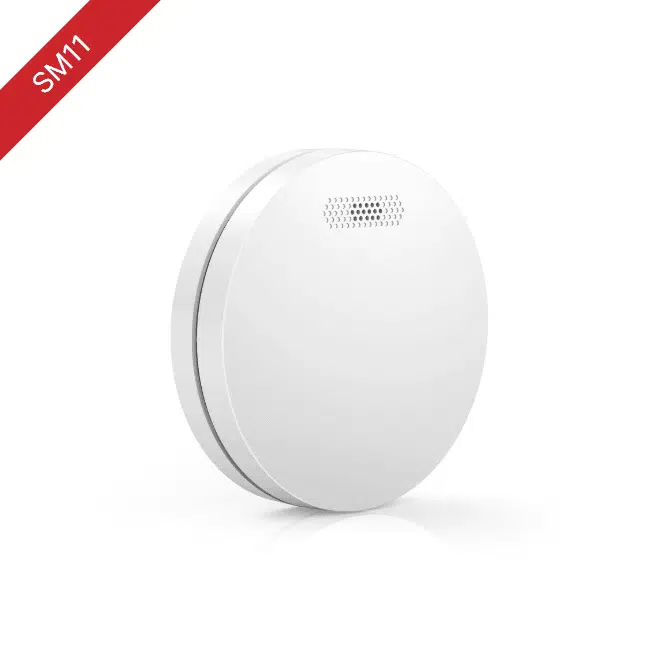
SM11 Ultra-slim And Ultra-light Stand Alone Smoke Detector
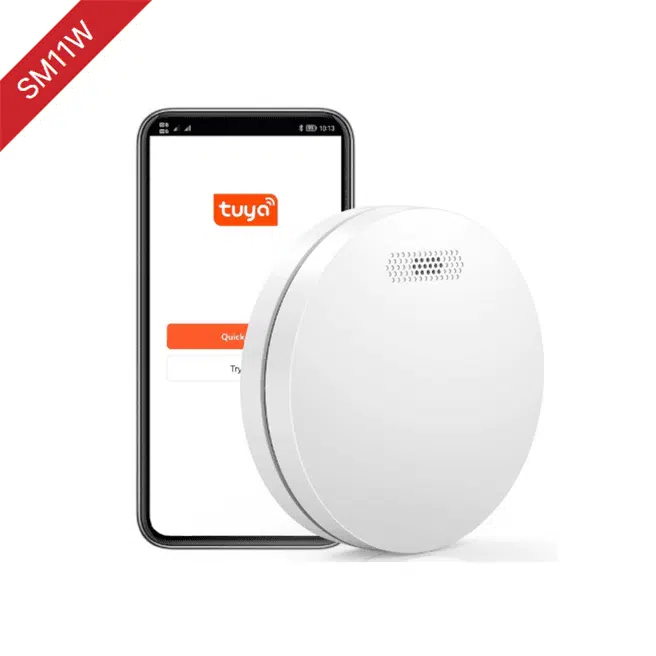
SM11W WIFI Photoelectric Smoke Alarm
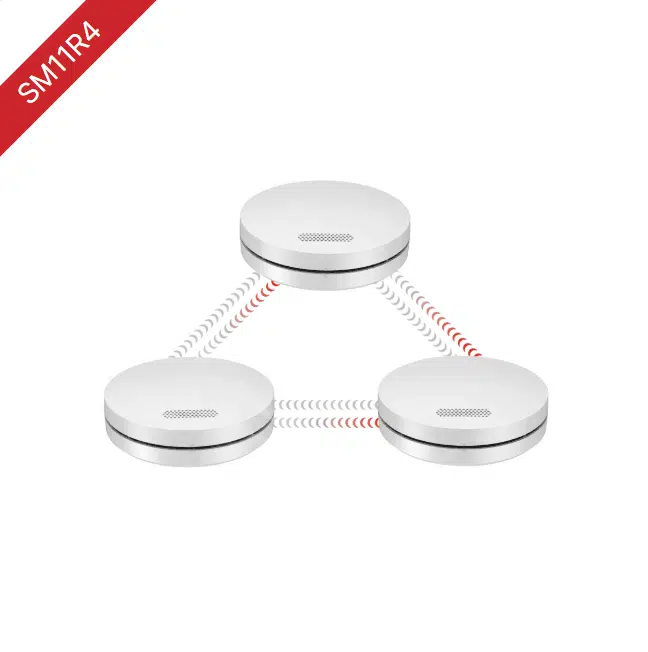
SM11R4 Wireless Interlinked Photoelectric Smoke Alarm
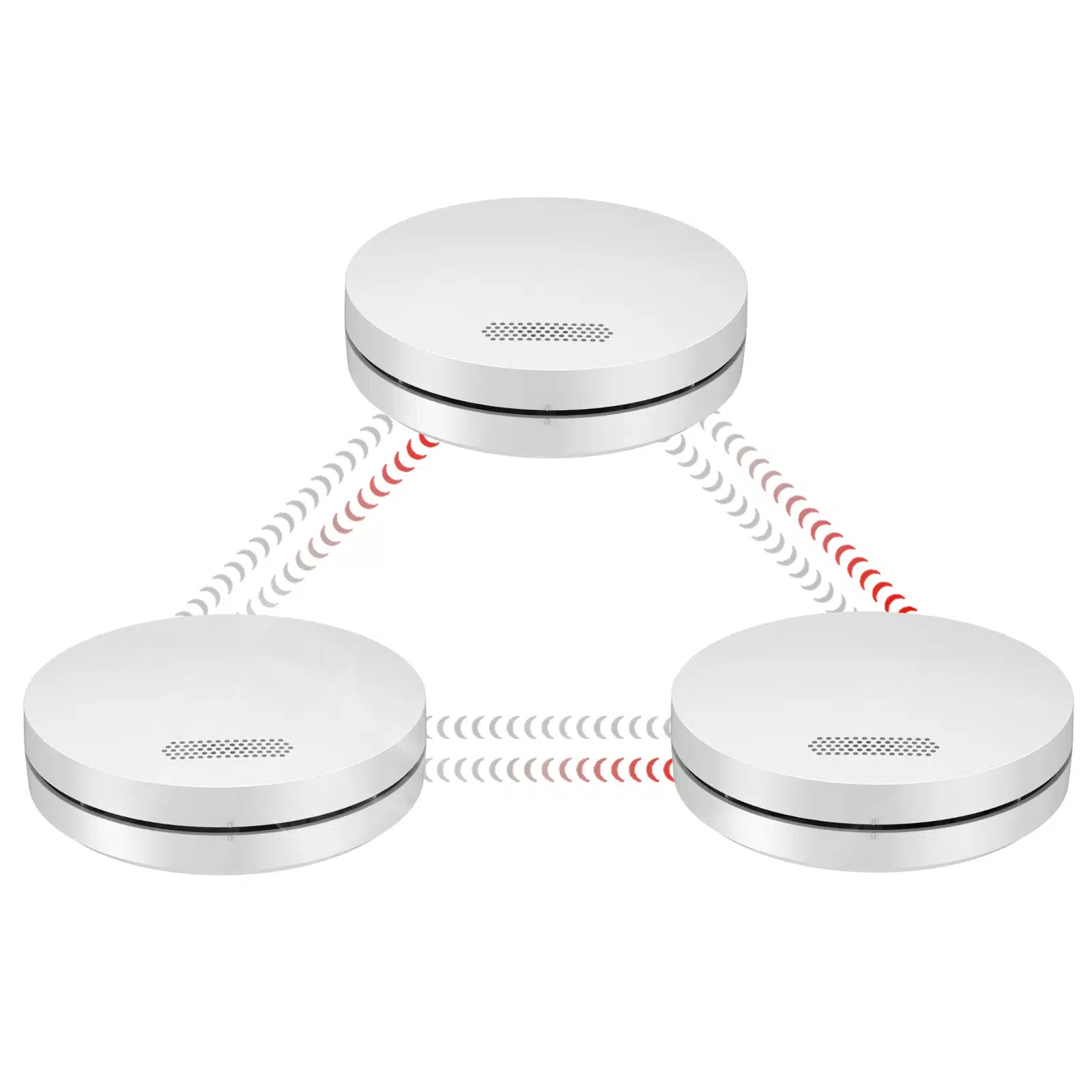
SM11R8 Wireless Interlinked Photoelectric Smoke Alarm
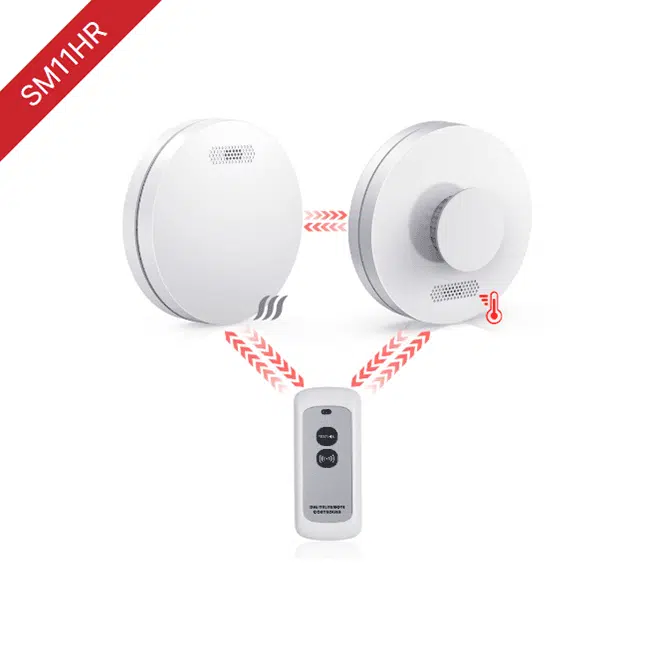
SM11HR Wireless Interlinked Smoke And Heat Combo Alarm
SM11HW WIFI Photoelectric Smoke Alarm
SM17 Standalone Photoelectric Smoke Alarm
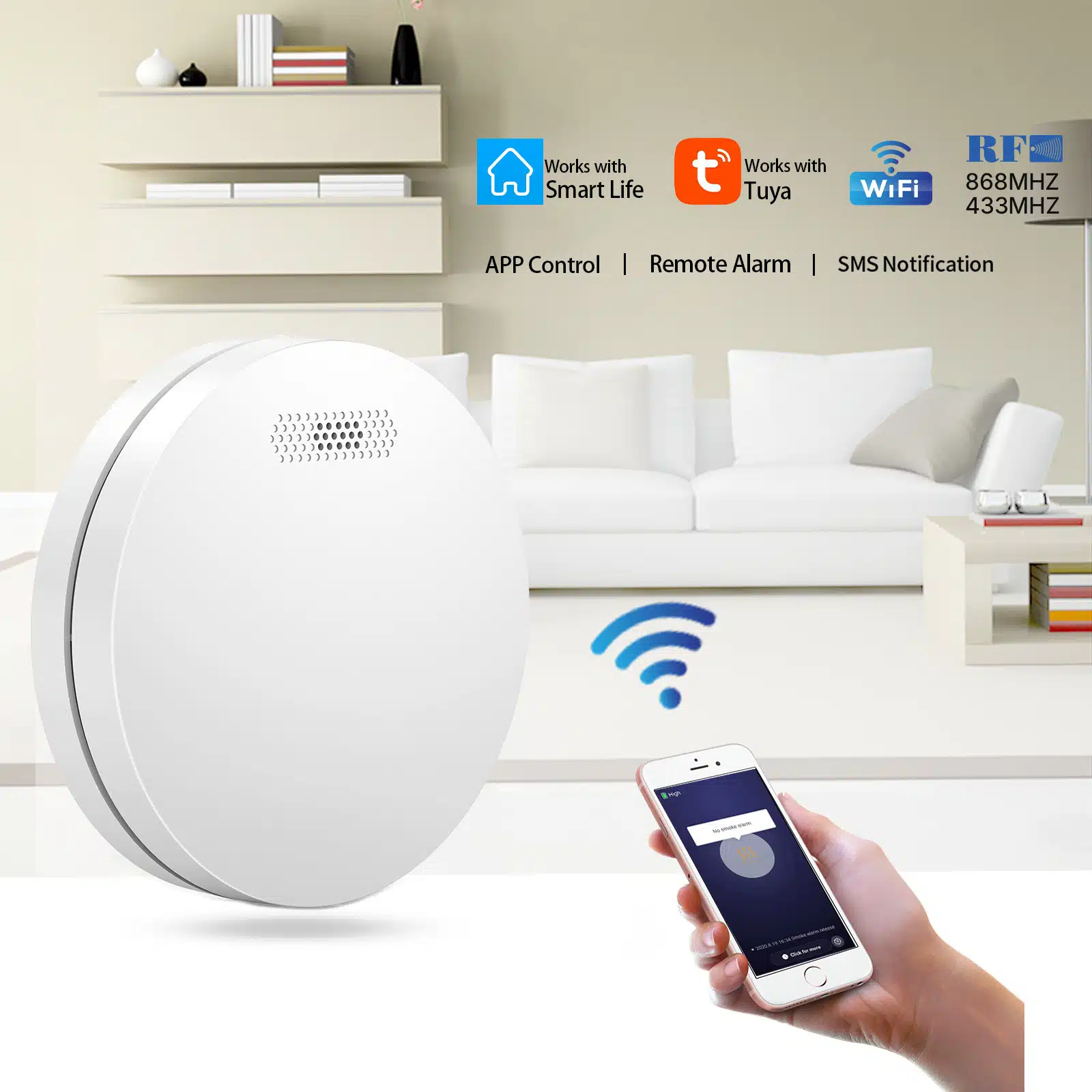
SM11RW Wi-Fi & Wireless Interlinked Photoelectric Smoke Alarm
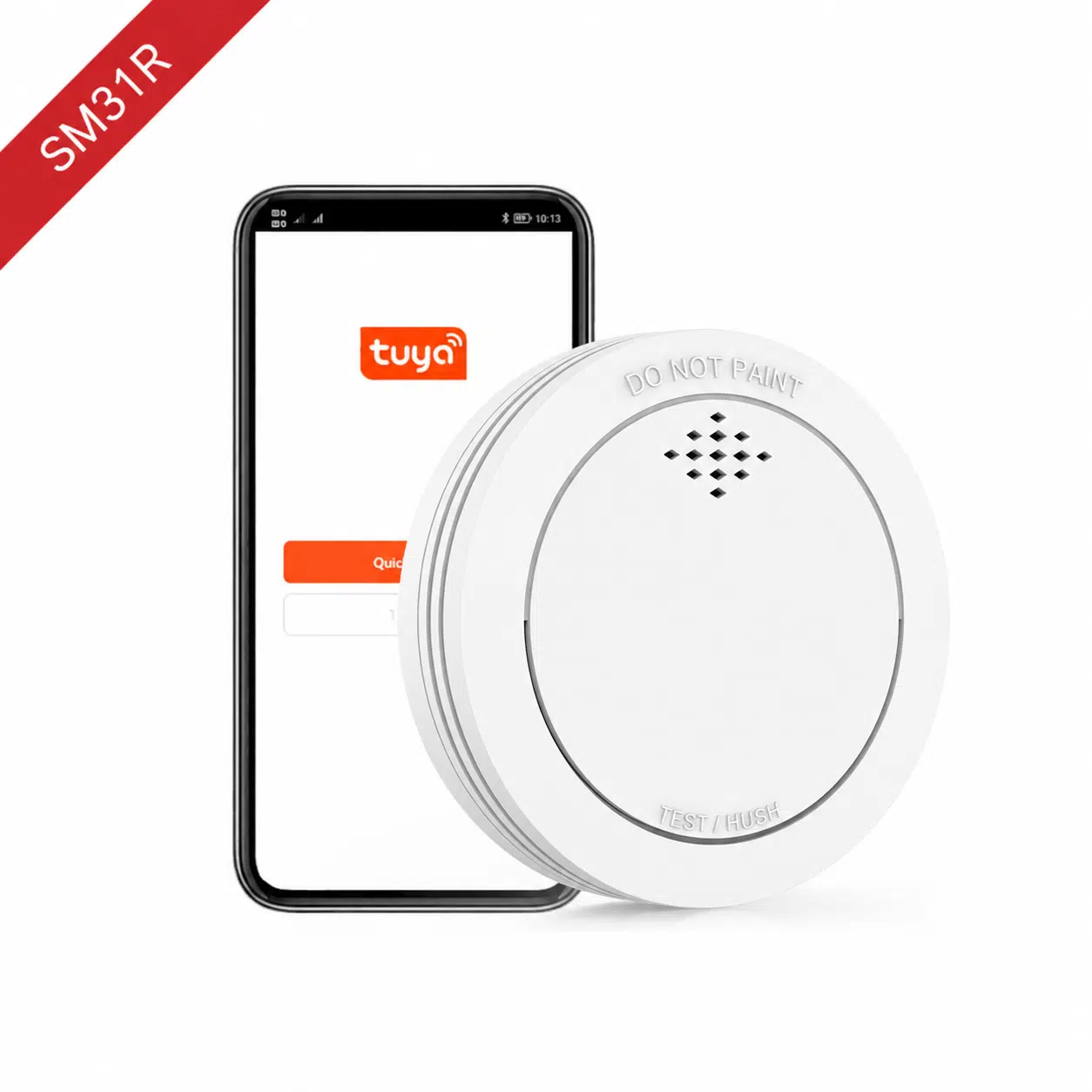
SM31R Wireless Interlinked Photoelectric Smoke Alarm
SM32 Standalone Photoelectric Mini Smoke Alarm
CS11 Standalone Smoke And Carbon Monoxide Combo Alarm
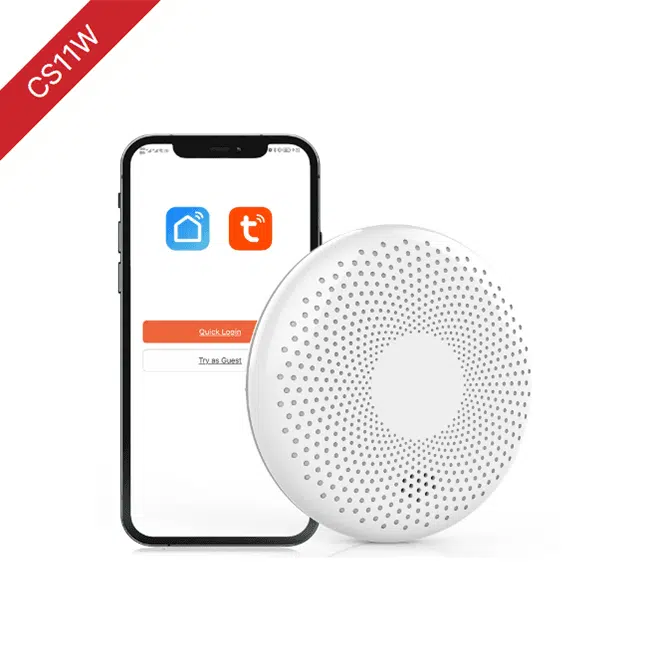
CS11W WIFI Smoke And Carbon Monoxide Combo Alarm
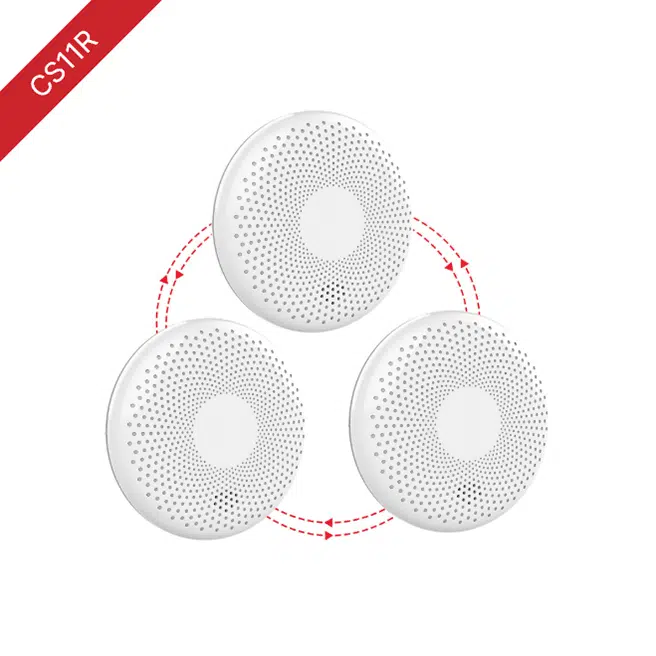
CS11R Wireless Interlinked Smoke & Carbon Monoxide Combo Alarm
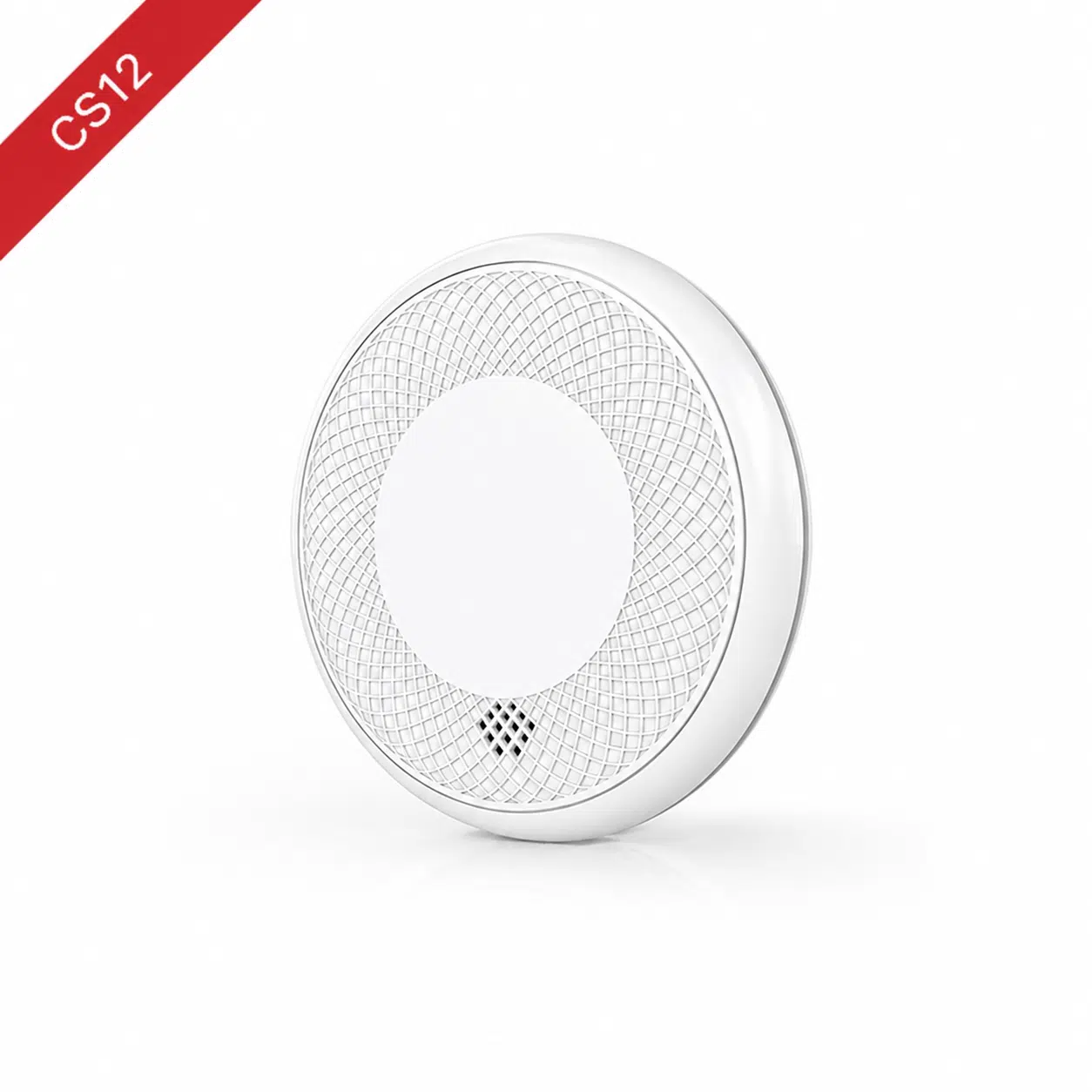
CS12 Standalone Smoke And Carbon Monoxide Combo Alarm
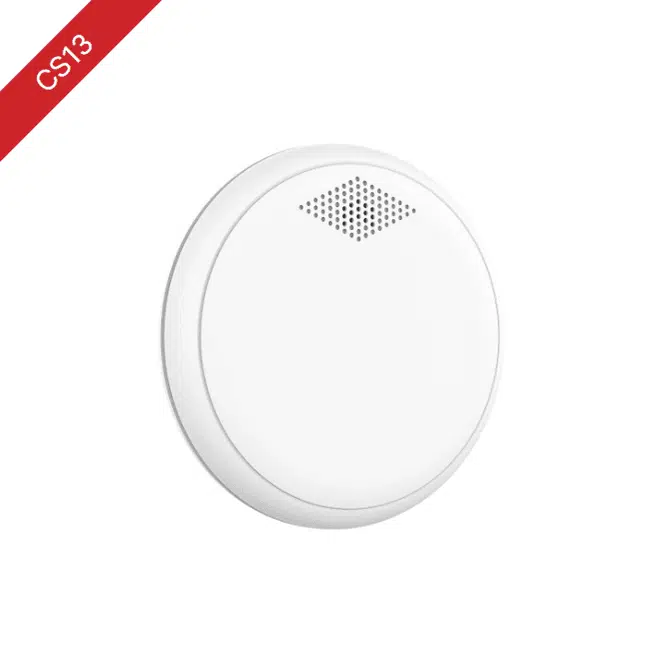
CS13 Standalone Smoke And Carbon Monoxide Combo Alarm
CS13R Wireless Interlinked Smoke And Carbon Monoxide Combo Alarm
CS13W WIFI Smoke And Carbon Monoxide Combo Alarm
CS14 Standalone Smoke And Carbon Monoxide Combo Alarm
CS14W WIFI Smoke And Carbon Monoxide Combo Alarm
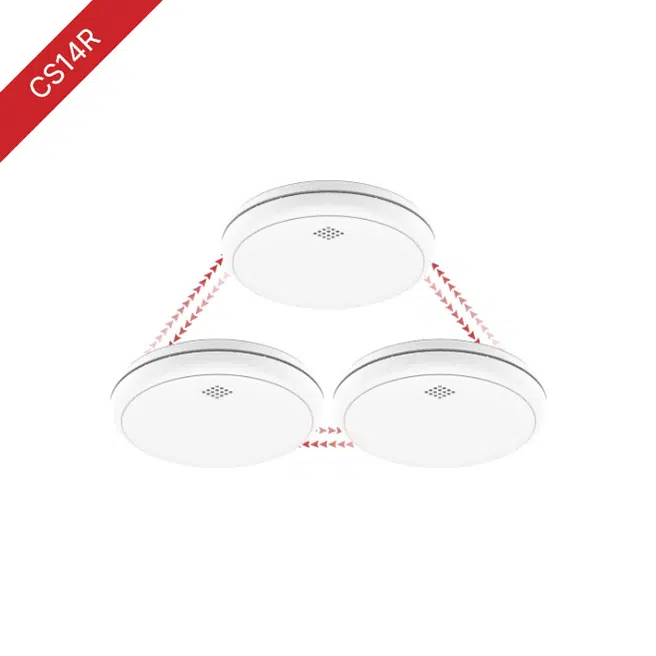
CS14R Wireless Interlinked Smoke And Carbon Monoxide Combo Alarm

10 Year Battery Smoke Alarms

Battery Operated Smoke Alarms

AS 3786 Interconnected Smoke Alarms

EN 14604 + EN 50291 Smoke & Carbon Monoxide Combo Alarms

EN 14604 Standalone & Wireless Photoelectric Smoke Alarms

Photoelectric Smoke Alarms OEM / ODM manufacturing solution

Smoke & Carbon Monoxide Alarms
2027 Queensland Smoke Alarm Laws: Distributor Guide for AS 3786 Interconnected Smoke Alarms

AS 3786:2023 Smoke Alarm Standard: OEM/ODM Compliance Guide for Australian Distributors

Combo Smoke and Carbon Monoxide Alarm OEM/ODM Manufacturing Solutions for Brands and Project Buyers

Commercial Smoke Alarm Requirements for Businesses: Codes, Installation & Maintenance Guide
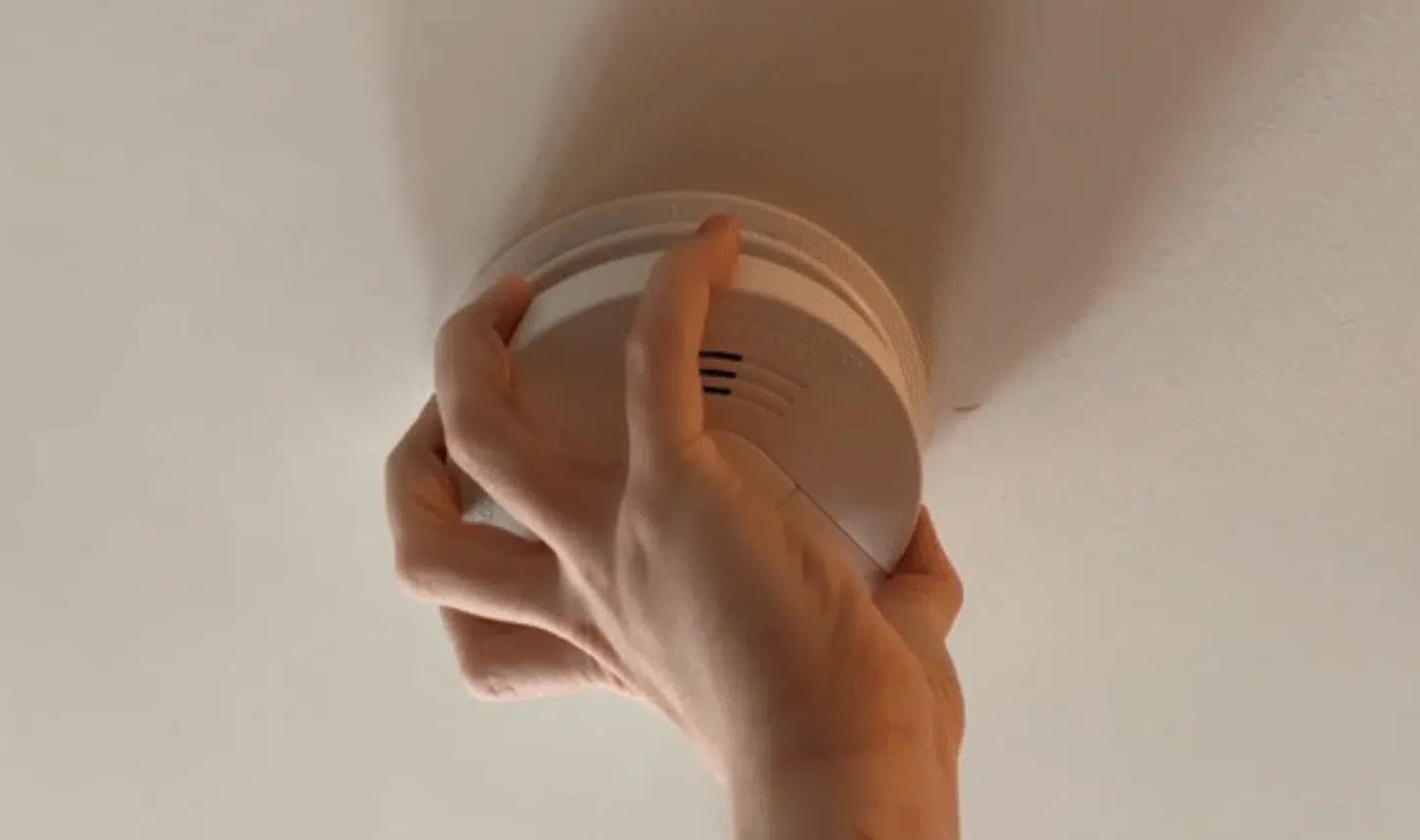
How do you change the battery in a smoke alarm?


