AS 3786 Interconnected Smoke Alarms Australia
Certification-ready photoelectric smoke alarms for Australia, supporting RF interlink, 10-year battery options, private label, and OEM/ODM compliance support.


✅ AS 3786:2014 ✅ AS 3786:2023 ✅ ISO 12239:2021
AS3786 Certified Smoke Alarm Product Info
For Australian distributors, wholesalers, electrical contractors, and private-label brands, CFS provides AS 3786-compliant photoelectric smoke alarms designed for residential projects, rental properties, retail channels, and Queensland interconnected smoke alarm demand.
Model | SM11R4 | SM22 |
|---|---|---|
Product Image | 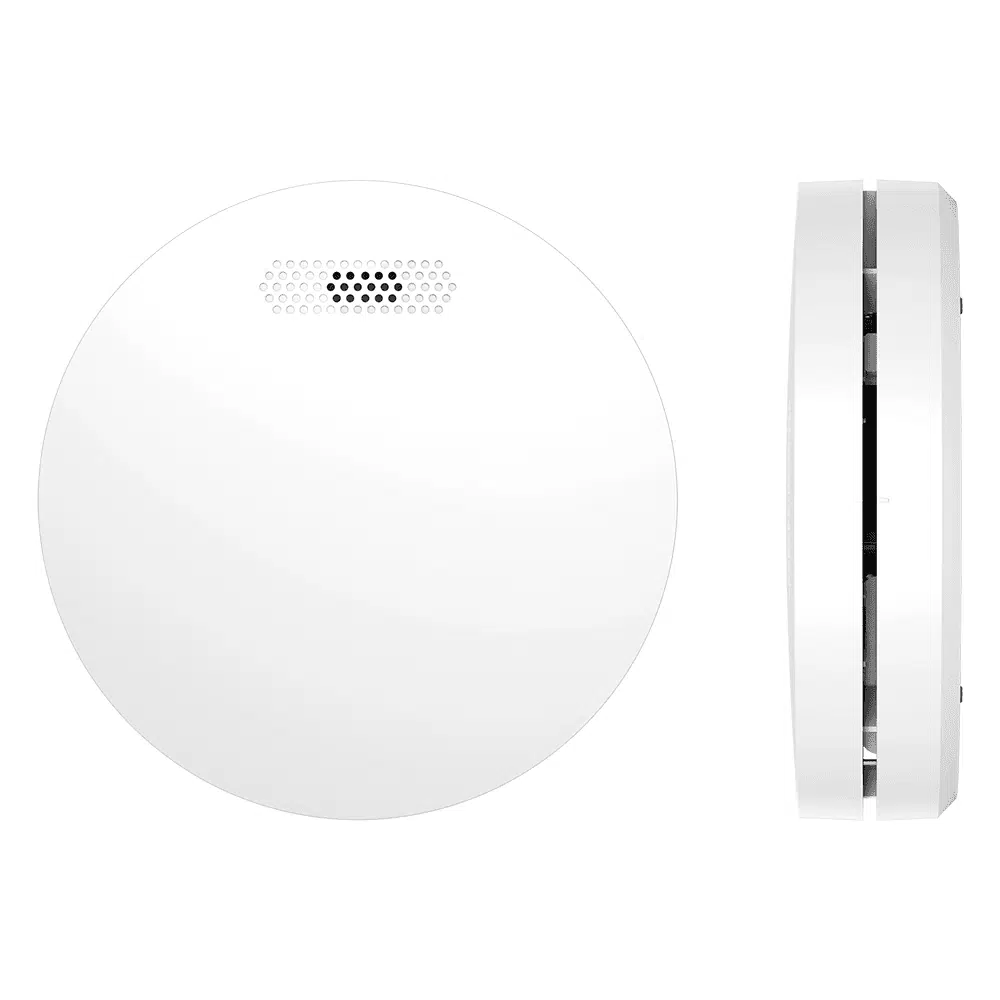
| 
|
Product Type | Photoelectric smoke alarm | Photoelectric smoke alarm |
Compliance | AS3786:2014; SAI GLOBAL | AS3786:2023; ACTIVE FIRE |
Interconnection | RF interconnected | Hardwire interconnected |
Power / Battery | 10-year sealed lithium battery | 240V Hardwired with backup battery |
Application | Old buildings, residential houses, apartments, rental properties, retrofit projects | Residential projects, electrical channels, property safety programs |
Key Selling Point | Suitable for Australian interconnected smoke alarm demand | Flexible product platform for Australian distributors and private-label projects |
Branding | OEM logo, packaging, user manual, barcode available | OEM logo, packaging, user manual, barcode available |
Timeline | Sample: usually 3-7 days if available. | Sample: usually 3-7 days if available. |
Queensland Smoke Alarm Laws 2027
QLD Interconnected Smoke Alarms for Distributors
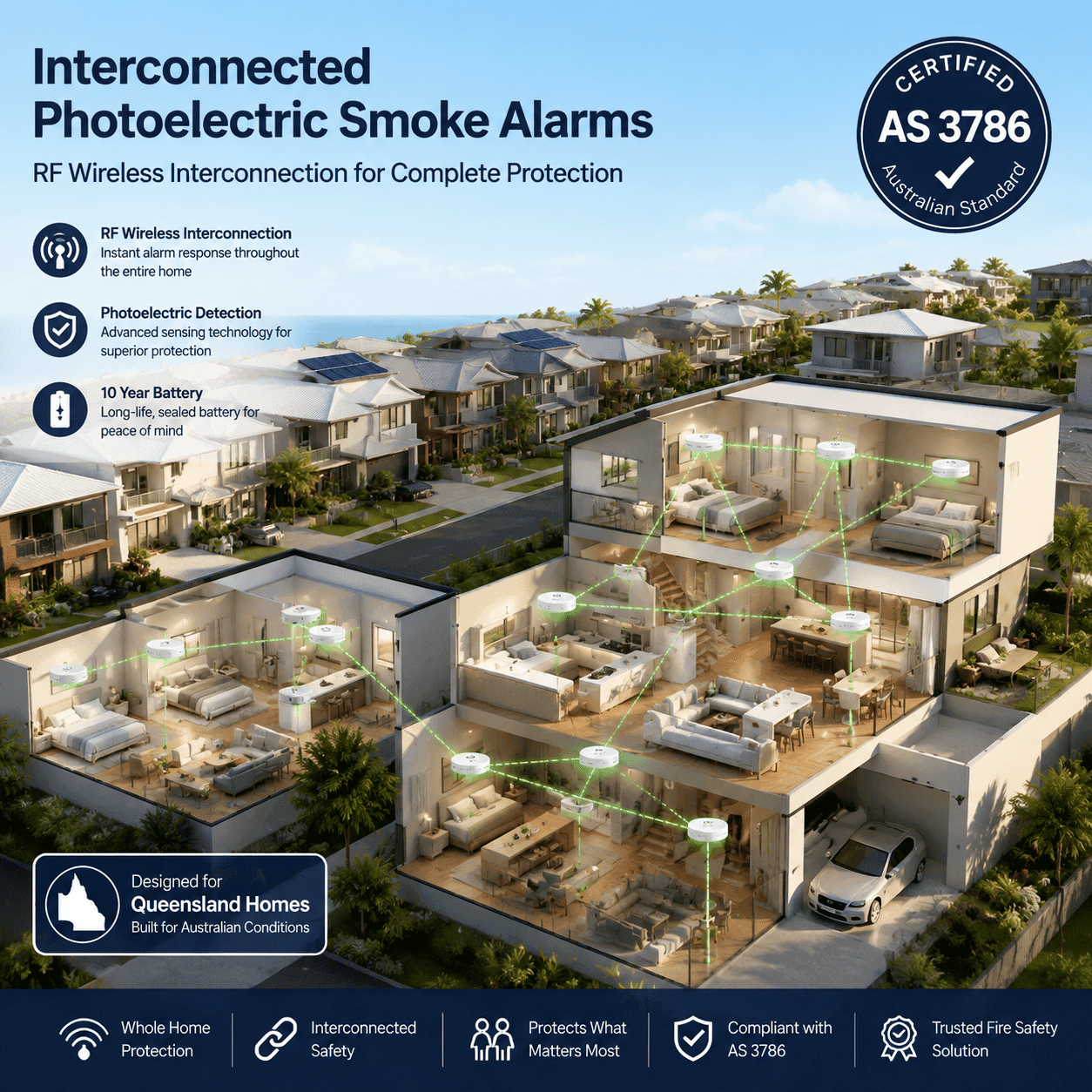
Interconnected photoelectric smoke alarms with a 10-year lifespan, in compliance with AS 3786:2014, should be installed in every bedroom, hallway serving bedrooms, and each storey of existing private homes, townhouses, units, and manufactured homes in Queensland after 1 January 2027. All connected alarms alert after one alert.
For Australian distributors and brand customers, this is a product-line decision, not just a legal deadline.
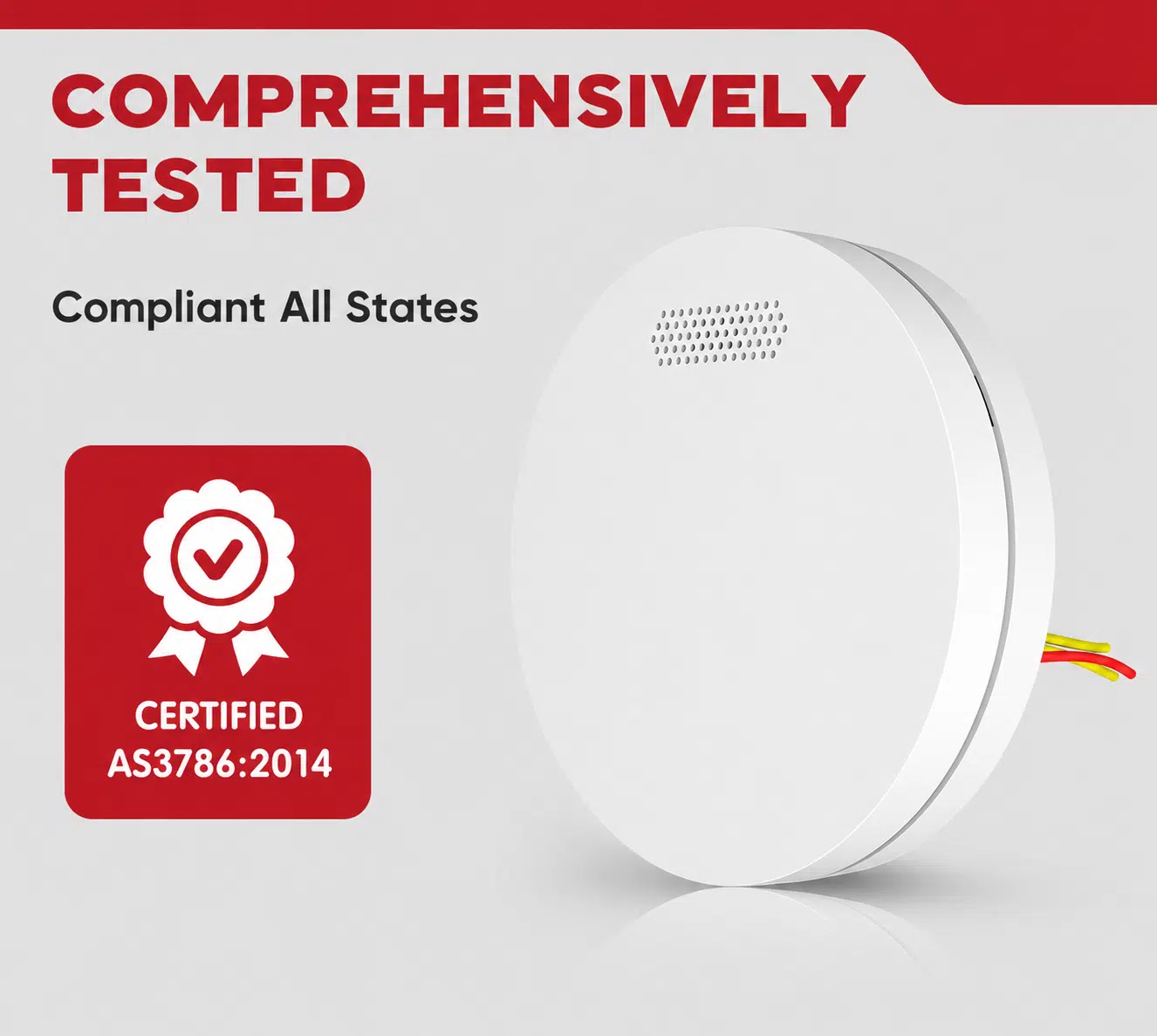
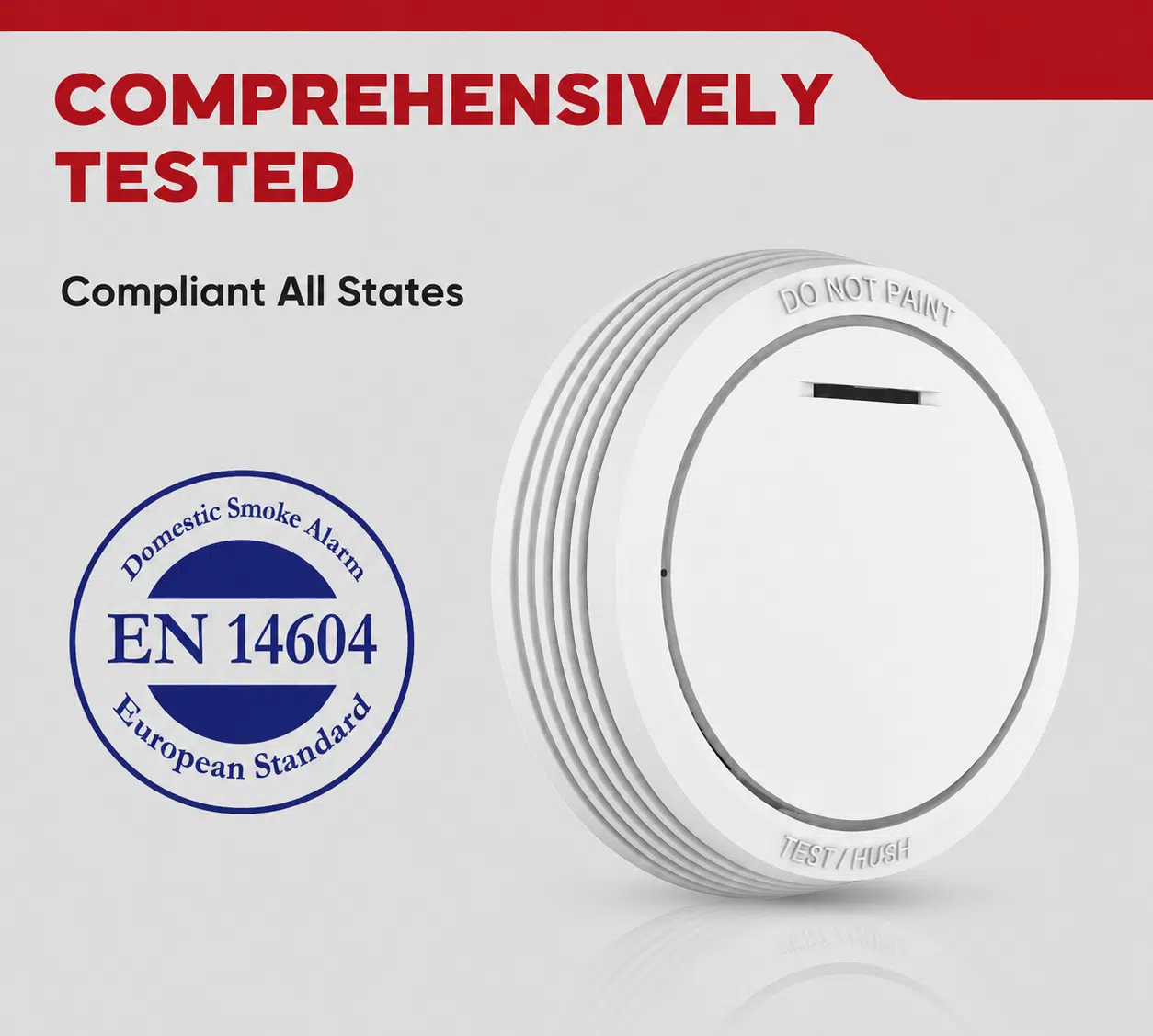
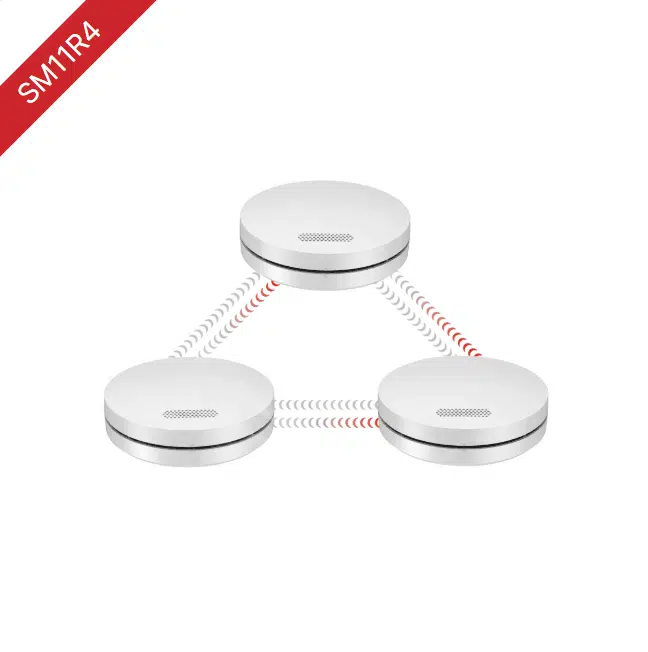
In CFS products, SM11R4 supports photoelectric detection, AS3786/EN14604/RoHS approval, 433MHz interconnection up to 30 units per loop, 85dB buzzer, easy installation, and 3-year or 10-year battery options. It fits retrofit, retail, property maintenance, and whole-house kit sales.
For project channels, CFS can position hardwired interconnected models such as SM22 for 240V mains-powered applications with backup battery planning.
Before stocking QLD interconnected smoke alarms, buyers should verify:
What is AS3786
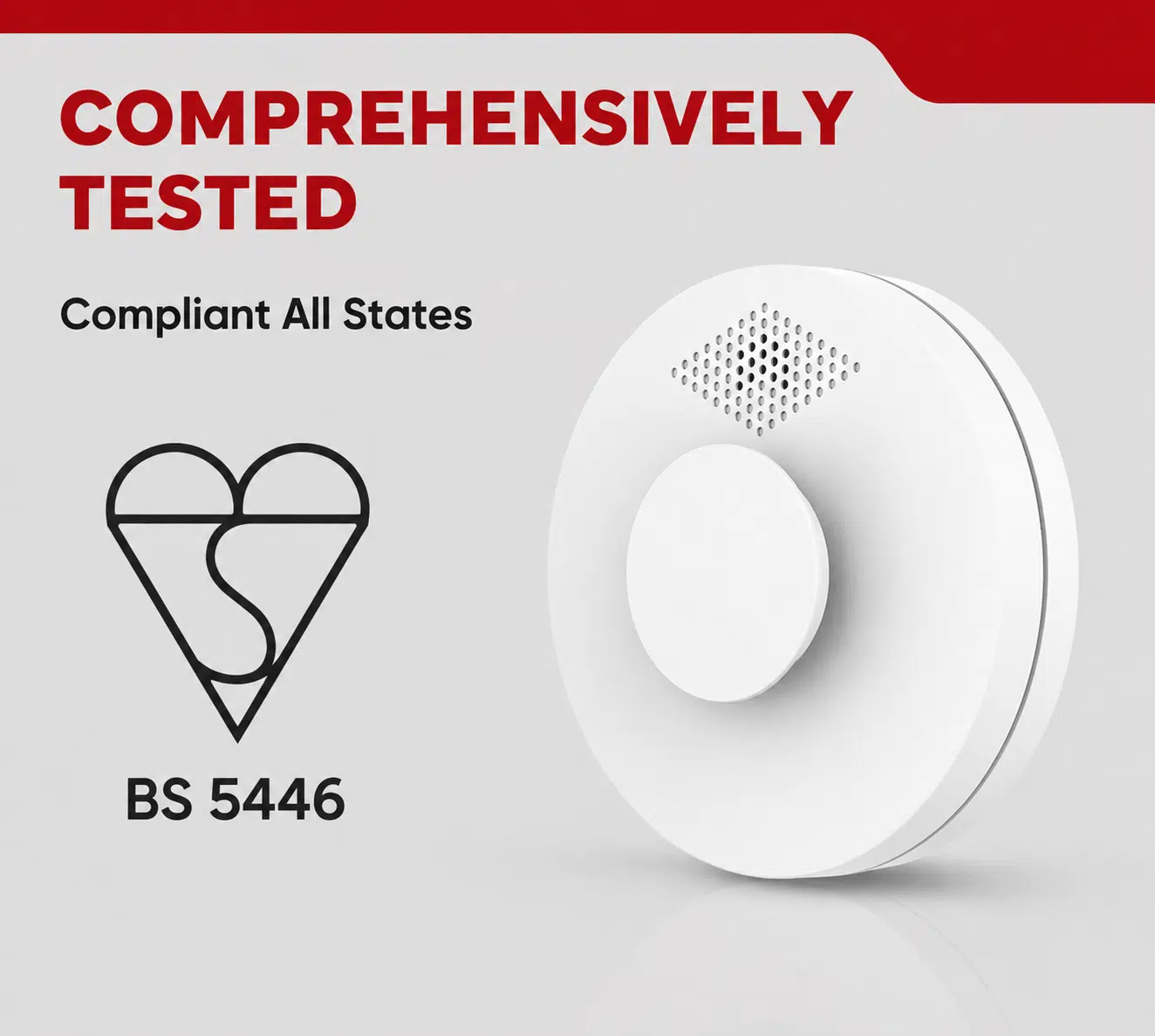
AS 3786 is the Australian product standard for smoke alarms used in residential and similar settings. It’s not an installation specification, but rather a performance standard used to determine whether a smoke alarm meets Australian market requirements.
From a manufacturing perspective, AS 3786 primarily focuses on the following:
AS 3786:2023, titled “Smoke alarms using scattered light, transmitted light, or ionization (ISO 12239:2021, MOD),” indicates that it covers smoke alarms using scattered light, transmitted light, or ionization and uses ISO 12239:2021 as a foundation while incorporating Australian modifications.
For purchasing and product managers, the core value of AS 3786 is not just about the “pretty certificate,” but rather proof that a product has passed Australian market-recognized verification of responsiveness, durability, functional safety, and labeling requirements. Especially in Australian residential real estate projects, property maintenance, and distribution channels, AS 3786 compliance is often a basic market entry requirement.
Key Aspects of Australian Standard AS 3786:2014 Smoke Alarms
AS 3786:2014 is the key Australian product standard for residential smoke alarms. From a manufacturing and sourcing perspective, it defines the baseline requirements for smoke alarms using scattered light, transmitted light, or ionization technology, mainly for household and similar residential applications.
For procurement managers, the standard is important because it helps verify whether a smoke alarm is suitable for the Australian market, not just whether it can “sound an alarm.” Key aspects include smoke detection performance, alarm sound output, visual indicators, test facility, low-battery warning, battery connection safety, marking, installation instructions, and environmental reliability.
AS 3786 Smoke Alarms: 2014 vs 2023 Explained
Comparison Point | AS 3786:2014+A1 | AS 3786:2023 | Engineering / Procurement Impact |
|---|---|---|---|
Standard basis | Australian smoke alarm standard mainly written around traditional residential smoke alarms | Adopts ISO 12239:2021, MOD with Australian modifications | Better alignment with modern global smoke alarm testing and documentation practices |
Product scope | Focused mainly on stand-alone smoke alarms using scattered light, transmitted light, or ionization | Recognizes interconnectable, non-interconnectable, detachable-base, combination, and multi-criteria smoke alarms | Buyers should check whether the certificate covers the exact SKU, power type, and interlink version |
Interconnection | Included, but less detailed for today’s RF market | Adds clearer requirements for RF interconnected smoke alarms | Important for Australian distributors preparing for interconnected photoelectric smoke alarm demand |
Detection performance | Response threshold testing already required | Adds new response threshold value bands | Product managers should verify smoke chamber stability, calibration limits, and production consistency |
Long-term reliability | Basic functional durability focus | Introduces drift compensation for slowly changing sensor output | Critical for 10-year battery smoke alarms, where dust, LED aging, and chamber contamination affect sensitivity |
Product documentation | Less demanding | Data clause revised into Hardware documentation | OEM/ODM suppliers need stronger BOM control, PCB files, firmware logic, battery-life model, and marking records |
Market implication | Still relevant for legacy Australian listings | Better suited for future Australian smoke alarm products | New projects should be designed around AS 3786:2023; existing 2014 products need gap analysis |
Summary: AS 3786:2014 mainly validates traditional smoke alarm performance. AS 3786:2023 moves closer to a system-level compliance model, covering RF interlink, multi-sensor design, drift compensation, and production traceability. For procurement teams, the key is not only “AS 3786 certified,” but which version, which model, and which functions are covered.
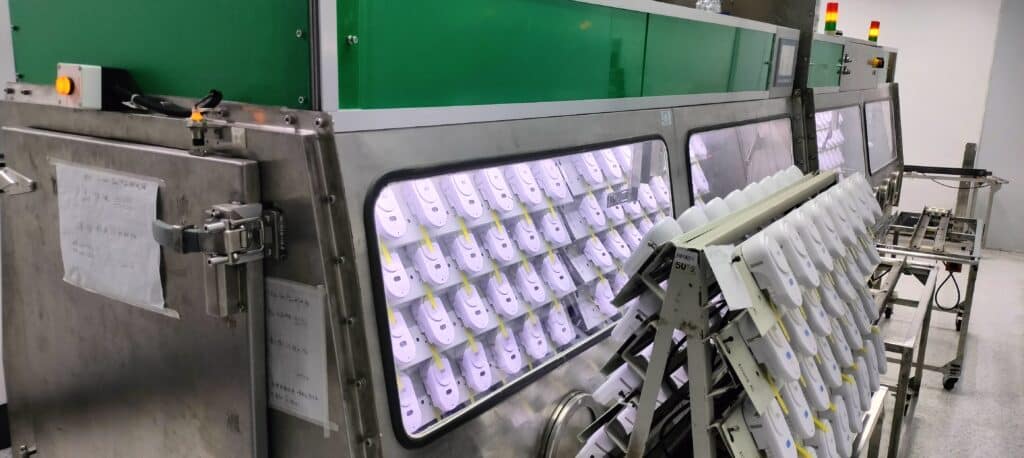
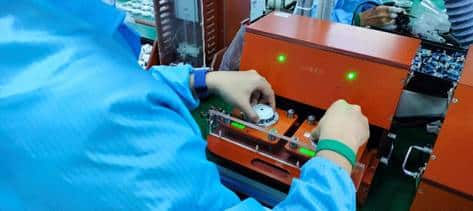
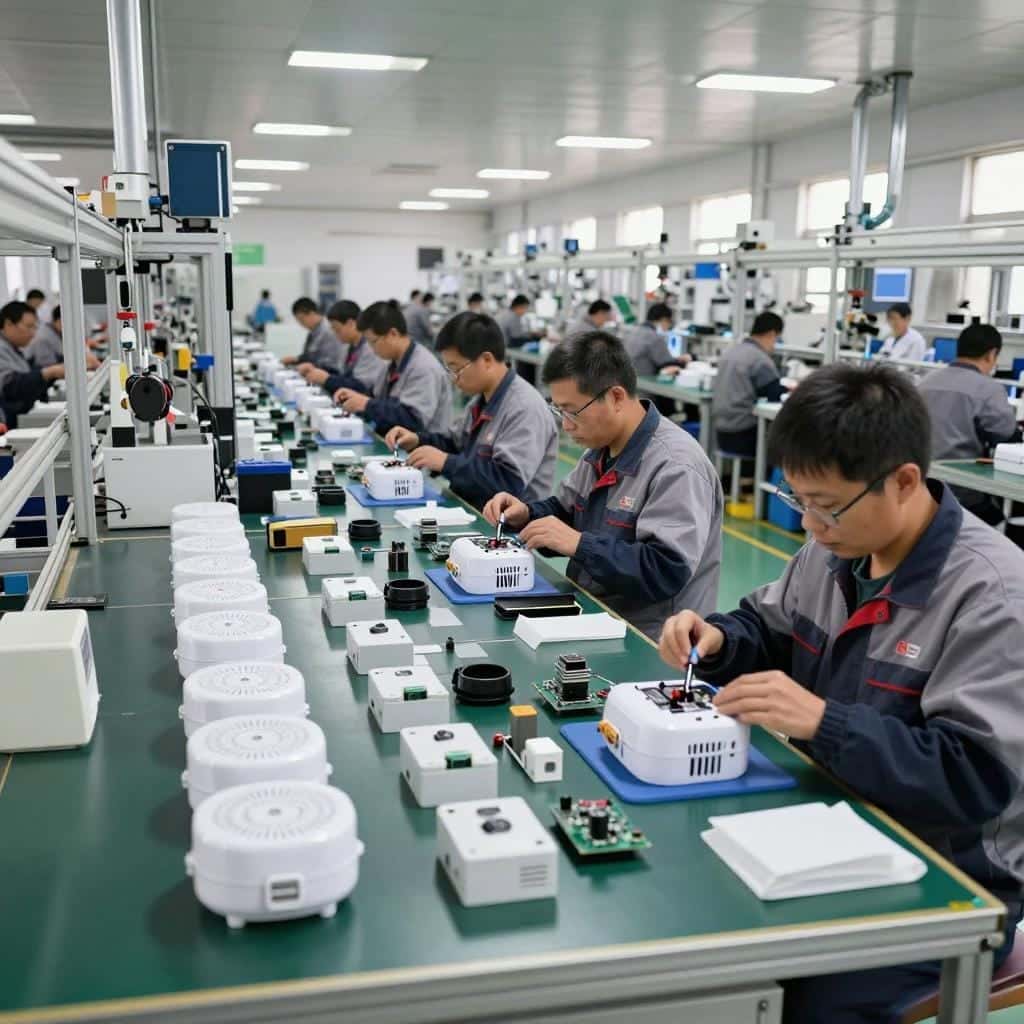
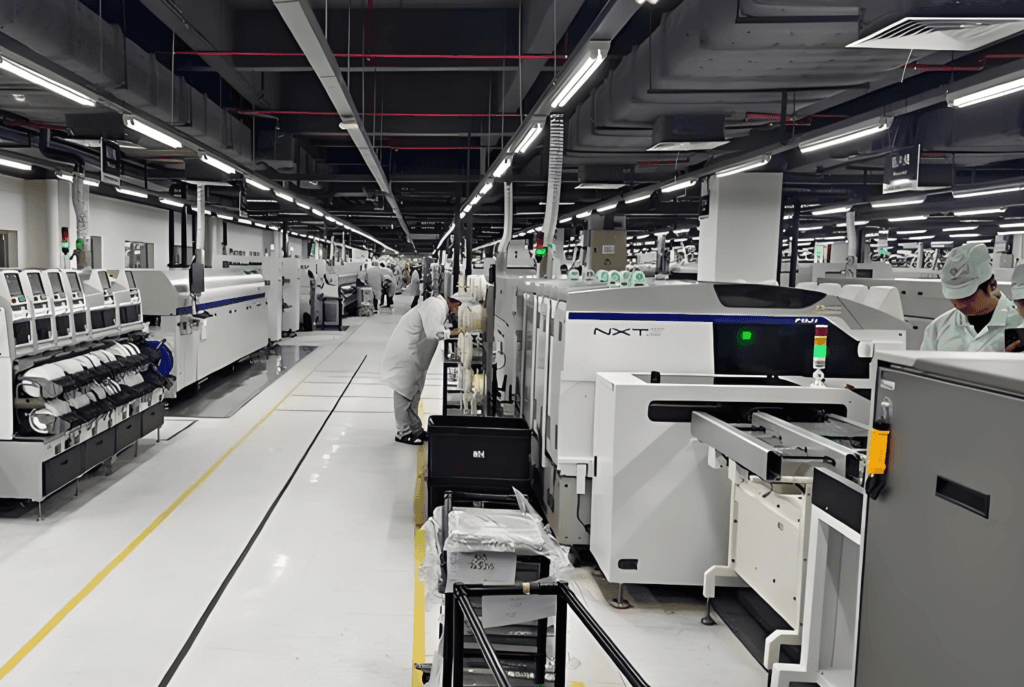
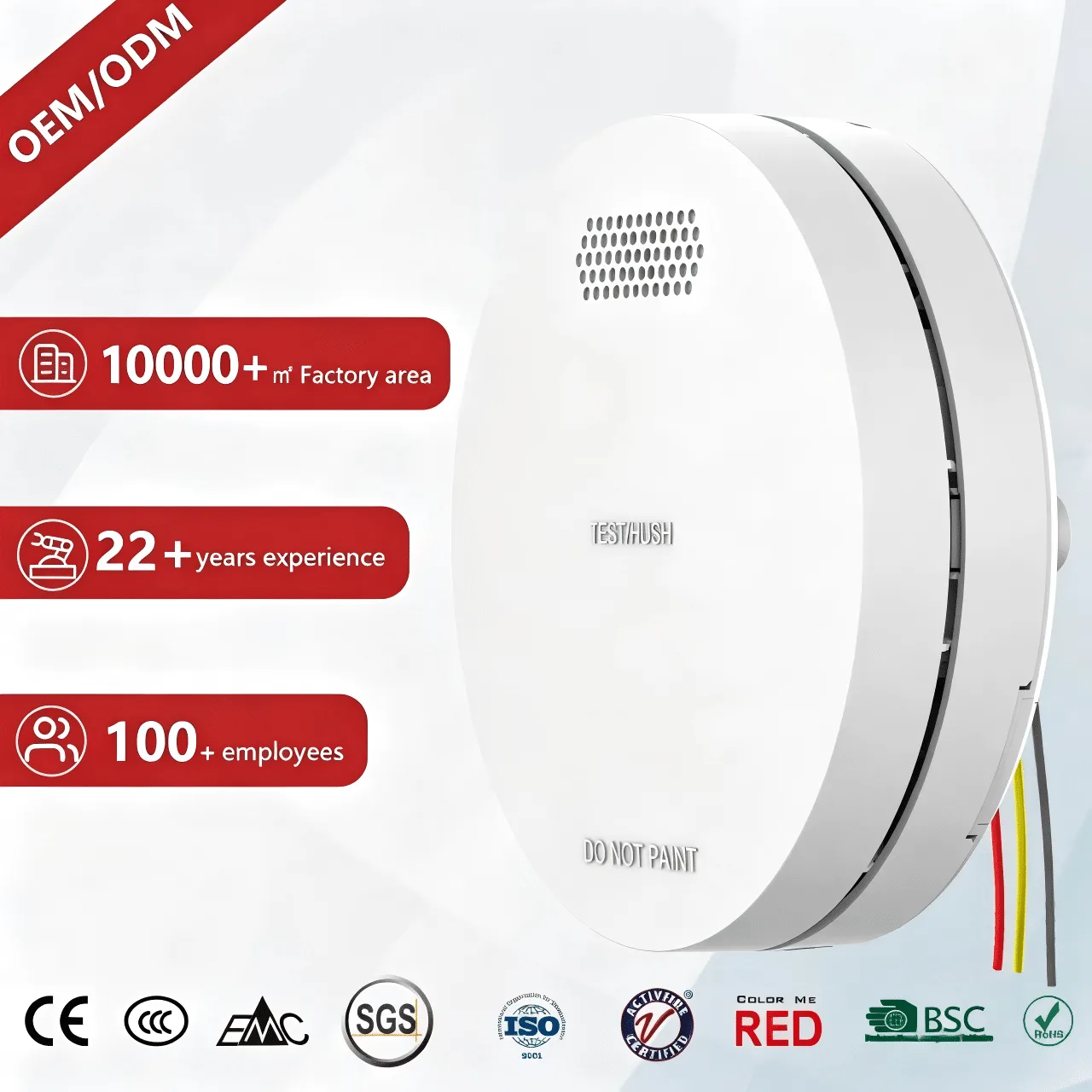
CFS® (Shenzhen Fire Security Technology Co., Ltd.), as a leading manufacturer specializing in fire safety alarms, we design and produce a comprehensive range of Smoke Alarms, CO Alarms, and Combo Alarms to protect homes and businesses worldwide.
🏭 OEM & ODM Services Available
We offer complete customization services including private labeling, custom packaging, and product modifications to meet your specific market requirements.
For the Australian market, CFS focuses on AS 3786-compliant photoelectric smoke alarms, including 10-year battery models, RF interconnected smoke alarms, hardwired alarms, and private-label solutions. We can help customers prepare for Australian certification by supporting product selection, technical document review, BOM and component control, sample preparation, test coordination, marking and packaging review, user manual preparation, and production consistency management.
Our goal is to help customers reduce certification risk, shorten time-to-market, and build a reliable Australian smoke alarm product line with stronger compliance confidence.


AS 3786 Version History
The Australian smoke alarm standard AS 3786 was first published in 1990 and has had 4 versions.
Version | Market Meaning | Engineering Impact |
|---|---|---|
AS 3786-1990 | Original Australian smoke alarm standard | Built the foundation for residential smoke alarm performance requirements |
AS 3786:2014 | Long-used Australian market reference | Many existing Australian smoke alarm listings and legacy product lines were developed around this version |
AS 3786:2014+A1 | 2014 edition with Amendment 1 | Still relevant for many current certificates and state references |
AS 3786:2023 | Current fourth edition, replacing AS 3786:2014 | More aligned with modern smoke alarms: interconnection, RF links, detachable bases, multi-criteria alarms, drift compensation, and stronger documentation requirements |
Australian Smoke Alarm Requirements
Australian smoke alarm compliance is built from two layers:
For example, Queensland’s official fire service states that all existing private homes, townhouses, units, and manufactured homes require interconnected photoelectric smoke alarms by 1 January 2027. It also explains the core principle of interconnection: when one alarm goes off, they all go off. Also install smoke alarms with AS 3786 certifications in New South Wales Residential accommodation.
Requirements | Engineering Explanation | Implications for Procurement |
|---|---|---|
AS 3786 Compliance | The product itself complies with Australian smoke alarm standards. | A fundamental requirement for entering the Australian market. |
Photoelectric Smoke Alarm | Photoelectric smoke alarms are more suitable for slow-burning residential fires. | A mainstream choice in Australian regulations and the market. |
Interconnected Alarms | When one alarm is triggered, other alarms sound simultaneously. | Demand is expected to increase significantly before QLD 2027. |
10-Year Battery or Hardwired | 10-year sealed battery or 240V hardwired battery with spare battery. | Suitable for various installation scenarios. |
Correct Installation Location | Location requirements for bedrooms, hallways, floors, etc. | This affects the project list and procurement quantity. |
Replacement After Service Life | Alarms need to be replaced when their service life expires. | Product labels and after-sales maintenance information must be clearly understood. |
FAQs
Other Standard Products
Explore our complete range of fire safety products certified to international standards:
SM11R4 Wireless Interlinked Photoelectric Smoke Alarm
Lifetime: 3 or 10 years, cuztomziation avaliable
Partnership Models
Flexible cooperation options designed for different business needs. Choose the partnership that works best for you.
Brand Owners
Create your own fire safety brand with our comprehensive OEM/ODM services.
· OEM/ODM Manufacturing
· Private Labeling
· Custom Design
· Certification Assistance
Distributors
Source high-quality fire safety products at competitive wholesale prices.
· Bulk Order Discounts
· Competitive Pricing
· Fast Delivery
· Marketing Support
Contractors
Get project-specific solutions and technical support for installations.
· Project Solutions
· Technical Support
· Training Programs
· After-Sales Service