FIRE SAFETY STANDARDS
UL2034 Carbon Monoxide Alarms: Standalone or CO Sensor for USA and Canada
As a smoke alarm manufacturer with years of experience in residential safety products, we understand that carbon monoxide alarm selection in the USA and Canada increasingly depends on certification compliance, reliability and long-term product performance. ANSI/UL2034 provides the technical foundation our factory uses to evaluate standalone carbon monoxide alarms and CO sensing products for North American residential safety applications.
UL2034 Carbon Monoxide Alarms Standalone or CO Sensor Product Info
UL2034 carbon monoxide alarms are developed to provide dependable warning before exposure reaches levels that may impair occupant response capability.
For the United States and Canadian residential market, carbon monoxide alarms are commonly evaluated according to ANSI/UL2034, which defines construction, performance and reliability requirements for single and multiple station CO alarms. The latest Fifth Edition, issued in 2024, places increased emphasis on alarm reliability, sensor supervision and long-term performance consistency.
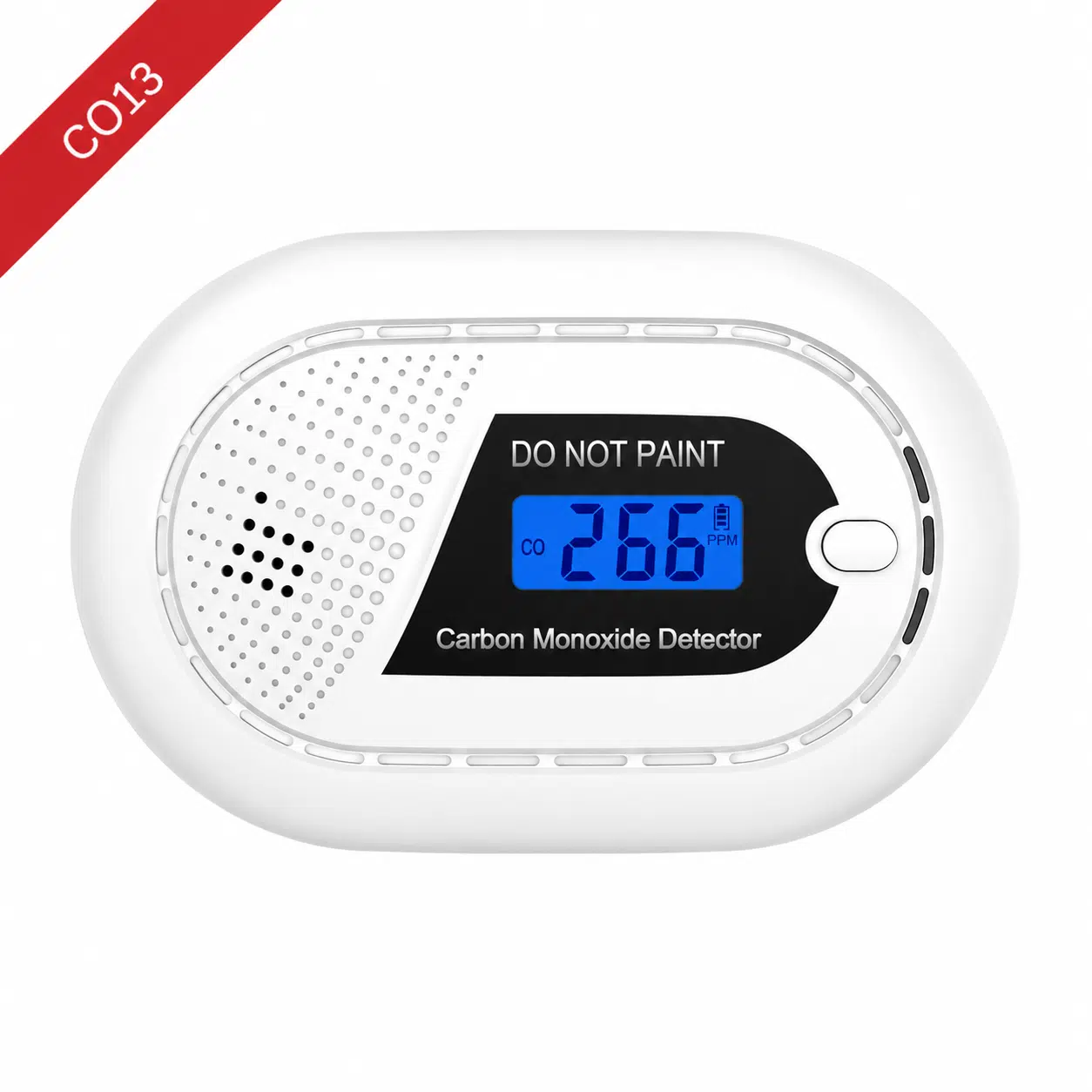
The CO13 standalone carbon monoxide alarm is designed for residential CO detection projects requiring compact installation, replaceable power supply and North American certification alignment.
CO13 Carbon Monoxide Alarm Overview
Image | Model | Installation | Power Supply | Battery Type | Certification Status |
|---|---|---|---|---|---|
| Standalone | DC3V | Replaceable AA Battery | TUV Certified / UL2034 Pending |
The CO13 platform adopts a DC3V replaceable AA battery architecture, allowing convenient maintenance and battery replacement without rewiring or product disassembly.
Typical applications include:
For distributors and OEM customers, replaceable battery CO alarms continue to provide a practical solution where routine maintenance access and low ownership cost are important considerations.

What Is UL2034
UL2034 is the primary North American safety standard governing single and multiple station carbon monoxide alarms intended for residential and ordinary indoor environments. The standard applies to electrically operated CO alarms used in homes, mobile residences and other enclosed spaces where carbon monoxide accumulation may occur.
Unlike general gas sensing products, UL2034 does not simply evaluate whether a device can detect carbon monoxide. The standard establishes requirements covering:

UL2034 also defines how a carbon monoxide alarm should behave under both hazardous and non-hazardous exposure conditions. According to the standard, a CO alarm is intended to activate before exposure reaches conditions that may impair a person’s ability to react, while avoiding nuisance alarms caused by normal low-level environmental CO conditions.
This Distinction Is Particularly Important
As a manufacturer, we design our CO alarms to balance life-safety response with nuisance alarm resistance, ensuring reliable protection without false activations.
Why UL2034 Matters in North American CO Alarm Projects
In residential CO protection projects, product selection is often influenced by more than sensing capability alone. Procurement teams typically evaluate:
UL2034 addresses these concerns through a structured performance and reliability framework. In practical applications, this means a compliant CO alarm is engineered to deliver:
Key Aspects of UL2034 CO Alarms

UL2034 evaluates carbon monoxide alarms through a combination of sensing performance, reliability and environmental testing.
Rather than focusing only on gas detection, the standard verifies whether a residential CO alarm can provide dependable warning and stable long-term operation under practical use conditions.
UL2034 Requirement | Technical Focus | What It Means for CO Alarm Design | User / Project Value |
|---|---|---|---|
CO Sensor Operation | Electrochemical sensing | Converts CO concentration into electrical signals for alarm processing | Accurate CO detection with low power consumption |
Alarm Response Logic | Concentration + exposure time | Alarm activates based on hazardous exposure rather than instant gas presence | Reduced nuisance alarms and improved warning reliability |
False Alarm Resistance | Low-level CO immunity | Avoids unnecessary alarm activation under temporary or non-dangerous conditions | Higher user confidence and fewer unwanted alarms |
Sensor Reliability | Failure rate and stability | Sensor must demonstrate controlled reliability or supervision capability | Improved long-term performance |
Sensor Supervision | Fault monitoring | Detects sensor drift, open circuit or sensing failure | Early fault visibility and safer operation |
One-Year Sensor Stability | Long-term consistency | Evaluates sensitivity drift and repeatability over time | Reduced premature replacement risk |
Battery Monitoring | Power supervision | Monitors battery condition and low-voltage status | Maintains dependable operation |
Trouble Signal | Fault notification | Distinct signal for battery, wiring or sensor issues | Easier maintenance and troubleshooting |
End-of-Life Signal | Lifetime management | Indicates when the alarm has reached replacement age | Prevents continued use of expired alarms |
Environmental Testing | Temperature / humidity / dust | Verifies operation after environmental exposure | Reliable use in varied residential conditions |
Mechanical Reliability | Vibration / impact / drop | Confirms enclosure and component durability | Improved transport and field reliability |
Surge & Electrical Immunity | Transient protection | Evaluates electrical disturbance resistance | Stable operation under power fluctuation |
Audible Performance | Alarm sound output | Ensures warning signal remains recognizable and effective | Better occupant notification |
Production Calibration | Factory verification | Requires production-line sensitivity and function checks | Consistent batch quality |
In-Service Reliability | Field performance | Tracks product reliability during operating life | Supports long-term residential safety |
CFS® (Shenzhen Fire Security Technology Co., Ltd.), as a leading manufacturer specializing in fire safety alarms, we design and produce a comprehensive range of Smoke Alarms, CO Alarms, and Combo Alarms to protect homes and businesses worldwide.
🏭 OEM & ODM Services Available
We offer complete customization services including private labeling, custom packaging, and product modifications to meet your specific market requirements.


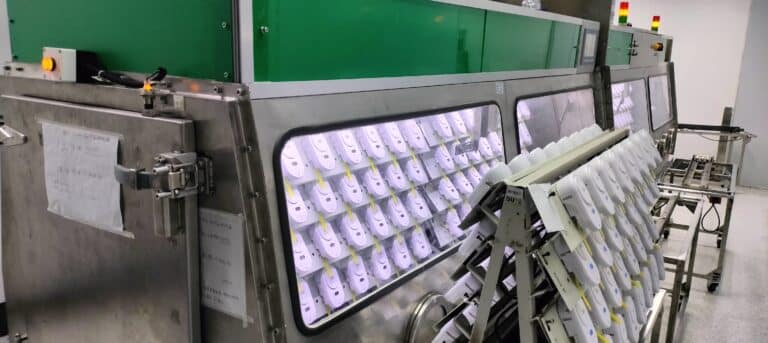


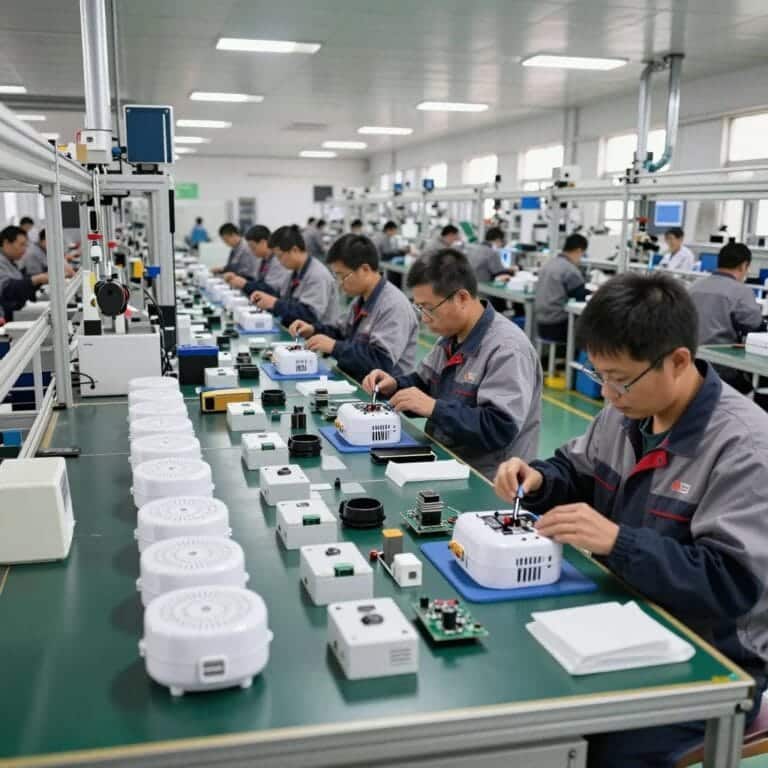



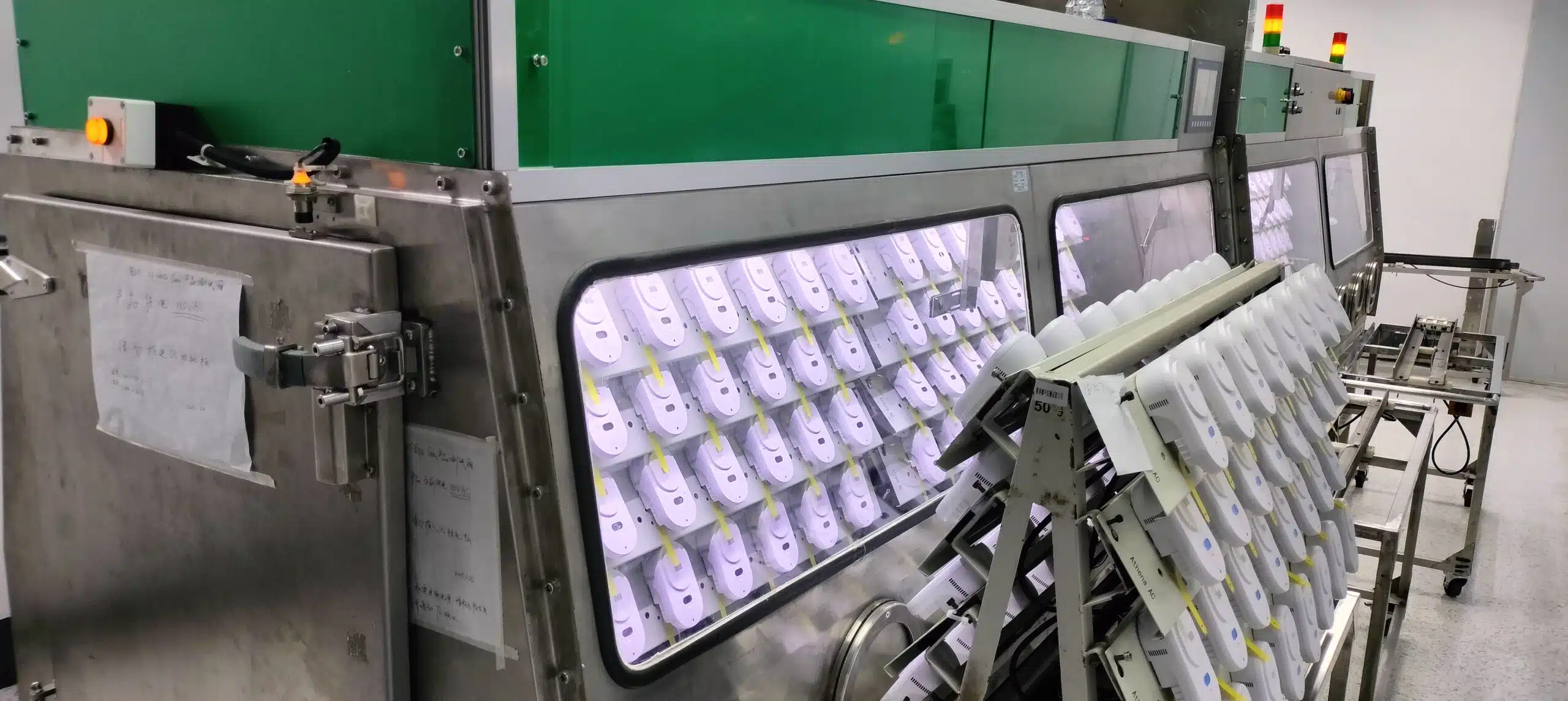


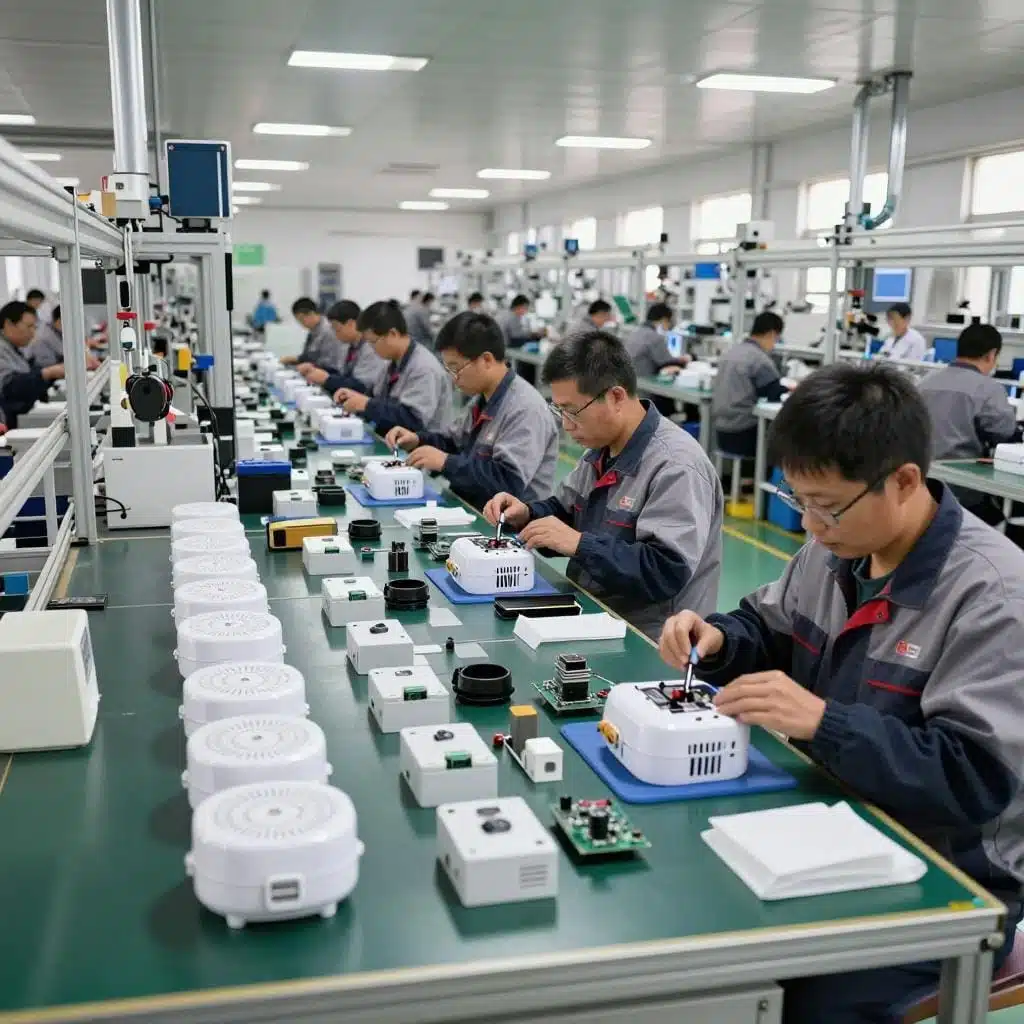

Carbon monoxide alarm performance is closely related to sensing, circuit control and signal management. Our engineering capability supports residential CO alarm development through:
CO Sensor Integration
Electronic and RF Development
Product Validation
Carbon monoxide alarms are life-safety devices. Production consistency is therefore a critical purchasing consideration. Our manufacturing quality management focuses on:
Incoming Material Control
Production Testing
Based on UL2034 manufacturing requirements, production verification at our factory typically includes:
UL2034 also includes production-line calibration and electrical verification requirements intended to support long-term field reliability.
North American alarm projects often involve multiple certification requirements. Our factory provides certification support that may include:
Early compliance planning can help:
For private label programs, certification continuity and document management remain important supply chain considerations.
CO Alarm UL2034:2017 vs UL2034:2024 Explained
UL2034: 2017 (4th) and UL 2034: 2024 (5th) maintain the same life-safety objective. The 2024 version focuses on reliability prediction, sensor supervision, and lifecycle management.
Comparison Area | UL2034:2017 (4th Edition) | UL2034:2024 (5th Edition) | Engineering Impact |
|---|---|---|---|
Core Objective | Residential CO warning | Residential CO warning | Life-safety principle unchanged |
Sensor Reliability | Basic reliability evaluation | Enhanced reliability prediction and documentation | Greater focus on long-term sensor performance |
Failure Rate Analysis | Reliability considered | Explicit reliability prediction requirements | Earlier reliability engineering involvement |
Sensor Supervision | Fault supervision required | Expanded failure mode and supervision expectations | Better fault visibility |
Failure Mode Documentation | Limited emphasis | Detailed sensor failure mode documentation required | Improved traceability and risk management |
One-Year Sensor Stability | Stability testing included | Greater focus on long-term drift and sensitivity consistency | Stronger lifetime validation |
Trouble Signal Logic | Trouble notification supported | Expanded supervision and fault-response expectations | Easier maintenance diagnosis |
End-of-Life Management | Required | Continued and reinforced | Better lifecycle replacement control |
Wireless / Remote Features | Limited market focus | Includes remote reset and wireless communication considerations | Supports modern smart alarm design |
RF / Communication Compliance | Less emphasized | FCC-related wireless provisions referenced | More suitable for connected products |
Environmental Testing | Temperature / humidity / vibration | Maintained and expanded application focus | Improved environmental durability |
Production Calibration | Manufacturing verification required | Stronger production-line calibration expectations | Better batch consistency |
In-Service Reliability | Reliability measurement present | Greater emphasis on field reliability monitoring and record keeping | Supports OEM quality systems |
Manufacturing Traceability | General production control | Increased documentation and record retention importance | Improved compliance management |
Market Alignment | Conventional residential alarms | Modern residential and smart alarm platforms | Better support for future products |
The Fifth Edition strengthens requirements related to:
It helps support:
For procurement teams, products aligned with the latest UL2034 edition generally offer improved long-term compliance and project confidence.
UL2034 Version History
Continuous product and certification management supports long-term market stability. The carbon monoxide alarm platform follows a structured revision process intended to maintain product consistency and compliance continuity.
Edition | Release Date | Major Industry Background / Technical Significance | Notes |
|---|---|---|---|
1st | April 1992 | Initial establishment of the safety standard for residential and similar-use CO alarms. Defined basic construction, performance, and testing requirements for carbon monoxide alarms. | Original publication of UL 2034 |
2nd | October 1996 | Updated to address increased residential CO safety concerns and expanding market adoption. Improved alarm performance and safety requirements. | Superseded First Edition |
3rd | February 2008 | Significant technical upgrade reflecting advances in electronics and sensing technologies. Enhanced reliability, sensor supervision, and failure analysis requirements. | Major reliability-focused revision |
4th | March 2017 | Expanded requirements to support interconnected and intelligent alarm systems. Increased focus on lifetime management and environmental performance. | Smart alarm / interconnected era update |
5th | June 3, 2024 | Current edition. Expanded scope and introduced updated requirements for modern CO alarms, including: wireless reset/silence functionality, end-of-life signaling, reliability prediction, long-term sensor stability, enhanced environmental/vibration/corrosion/EMC testing, coverage for RVs, commercial vehicles, boats, and unconditioned areas | Current governing edition |
Version control supports:
For OEM programs, revision control helps reduce approval duplication and field compatibility issues.
UL CO Alarm Requirements
Requirement Area | UL2034 Requirement | Technical Purpose | Project / User Value |
|---|---|---|---|
Product Scope | Single and multiple station CO alarms | Defines residential CO alarm application | Supports USA and Canada residential use |
CO Detection Logic | Concentration + exposure time | Responds to hazardous exposure rather than instant gas presence | Reduced nuisance alarms |
False Alarm Resistance | Low-level and transient CO immunity | Prevents alarm activation under non-dangerous conditions | Improved user confidence |
Alarm Signal | Audible + visual indication | Provides recognizable emergency notification | Faster occupant response |
Alarm Pattern | Distinct emergency tone sequence | Differentiates emergency alarm from maintenance signals | Clear warning identification |
Trouble Signal | Separate fault indication | Indicates battery, sensor or wiring problems | Easier maintenance |
Battery Monitoring | Power supervision | Detects low battery or abnormal power conditions | Improved operational reliability |
Battery Removal Protection | Battery removal indication | Prevents operation without proper battery installation | Reduced misuse risk |
Alarm Silence / Reset | Manual reset function | Allows temporary silence while preserving sensing capability | Improved usability |
Sensor Reliability | Reliability prediction or supervision | Controls sensor failure and long-term performance | Stable CO detection |
Sensor Supervision | Drift and fault monitoring | Detects sensor degradation or failure | Higher field reliability |
Sensor Stability | Minimum one-year stability evaluation | Verifies long-term sensitivity consistency | Reduced calibration drift |
Product Lifetime | Minimum specified lifetime | Requires defined operational service life | Better replacement planning |
End-of-Life Signal | Replacement notification | Alerts users when alarm lifetime expires | Prevents expired alarm use |
Environmental Testing | Temperature / humidity / dust | Confirms operation after environmental exposure | Reliable residential performance |
Mechanical Testing | Vibration / drop / jarring | Verifies enclosure and component durability | Improved transport and field robustness |
Electrical Immunity | Surge and transient resistance | Protects against electrical disturbance | Stable operation |
Audible Performance | Sound output and duration | Ensures warning can be heard | Improved life-safety performance |
Production Testing | Calibration and factory verification | Confirms manufacturing consistency | Better batch quality |
Reliability Measurement | In-service reliability monitoring | Evaluates field performance over time | Supports long-term compliance |
Marking and Instructions | Product marking and installation guidance | Improves correct installation and maintenance | Reduced user error |
Carbon monoxide alarms are commonly installed in locations where occupants may be exposed to combustion-related CO accumulation.
Installation Area | Typical CO Risk Source | Recommended Protection | |
|---|---|---|---|
Bedroom Area | Night-time exposure | CO Alarm | |
Hallway Near Bedrooms | Whole-home warning | CO Alarm | |
Furnace or Boiler Room | Fuel appliance malfunction | CO Alarm | |
Utility Room | Combustion equipment | CO Alarm | |
Attached Garage | Vehicle exhaust | CO Alarm | |
Vacation Home / Cabin | Fireplace or heating appliance | CO Alarm |
Residential placement should follow local building regulations and manufacturer installation instructions.
How Our UL2034 CO Alarms Meet USA and CA Requirements
Residential CO alarm selection increasingly depends on certification readiness, maintenance convenience and long-term operating reliability. The CO13 standalone CO alarm has been developed with these considerations in mind.
The product architecture supports residential CO alarm applications requiring:
Replaceable AA Battery Design
Power management remains an important factor in residential alarm selection. CO13 adopts a replaceable AA battery platform, allowing users to perform routine battery replacement without specialized tools or rewiring.

Typical advantages include:
UL2034 also requires battery monitoring and low-power supervision to help ensure dependable operation throughout product life.
Standalone Installation Flexibility
Not all projects require interconnected systems. Standalone CO alarms continue to be widely specified in:

CO13 supports simplified installation without additional network or interconnect requirements. This can help:
particularly where electrical modification may be limited.
Alarm Reliability and Safety Design
UL2034 emphasizes not only alarm response but also long-term reliability and fault visibility. CO13 development follows these engineering principles through:
These design priorities support stable field operation and improved residential safety performance.
How to Choose the Right UL2034 CO Alarm
Selecting a residential carbon monoxide alarm involves more than certification alone. Purchasing decisions typically balance:
The following considerations may help guide product selection.
Sensor Performance Is Key
The sensor largely determines long-term alarm performance. When evaluating CO alarms, procurement teams commonly consider sensor reliability, drift management, lifetime expectation, and calibration consistency. UL2034 places particular emphasis on these factors through stability and supervision requirements.
FAQ
Other Standard Products
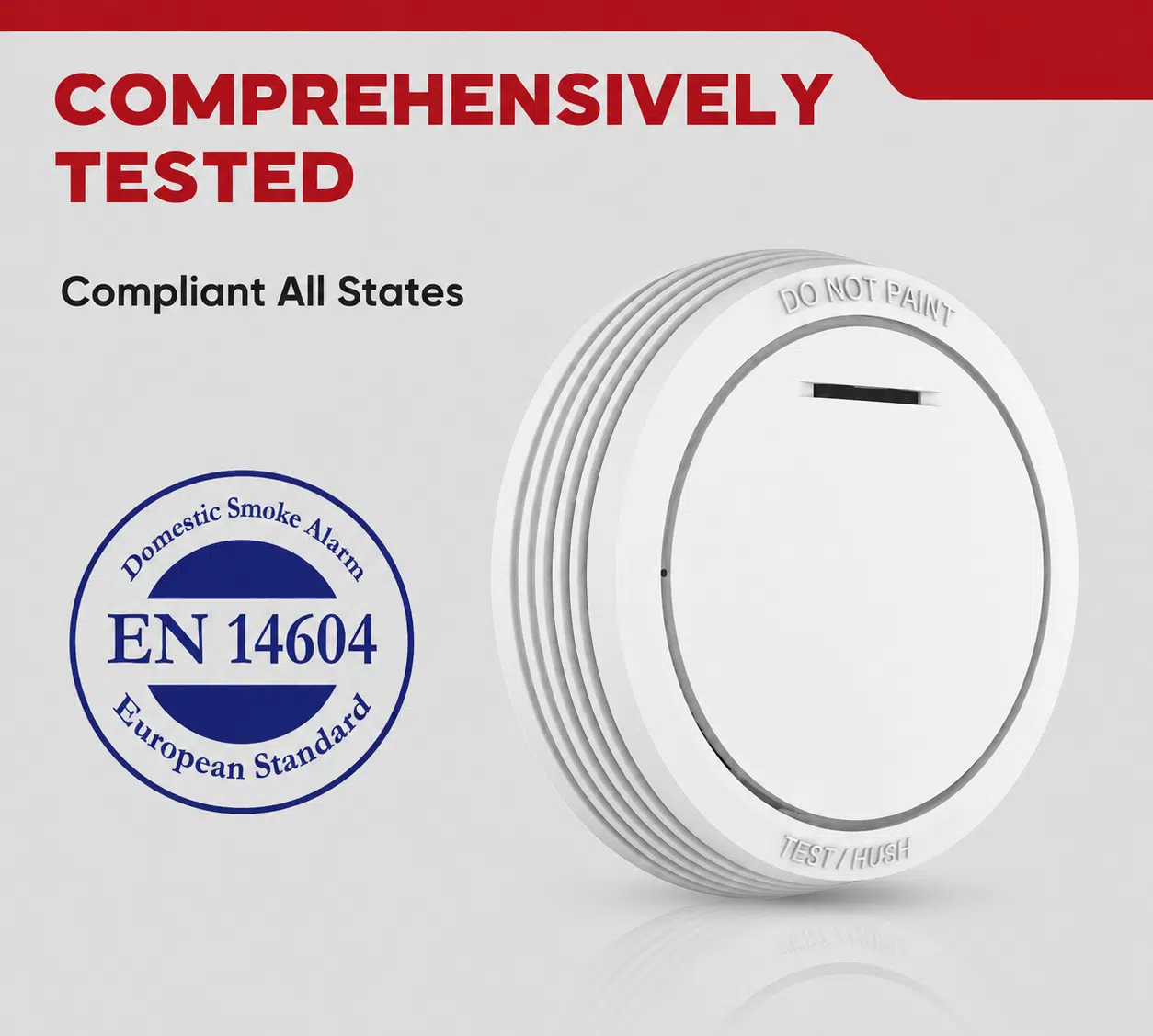
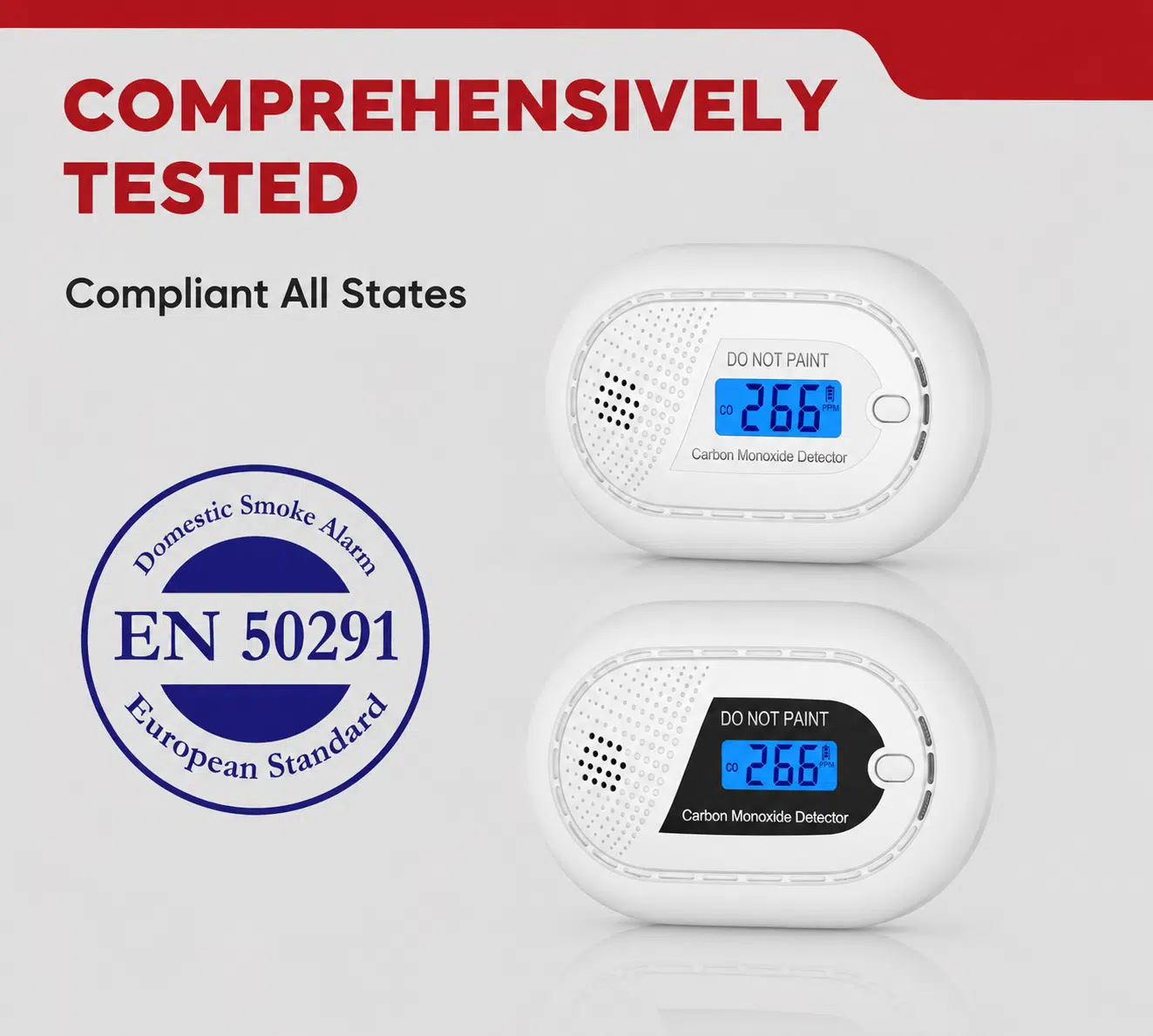
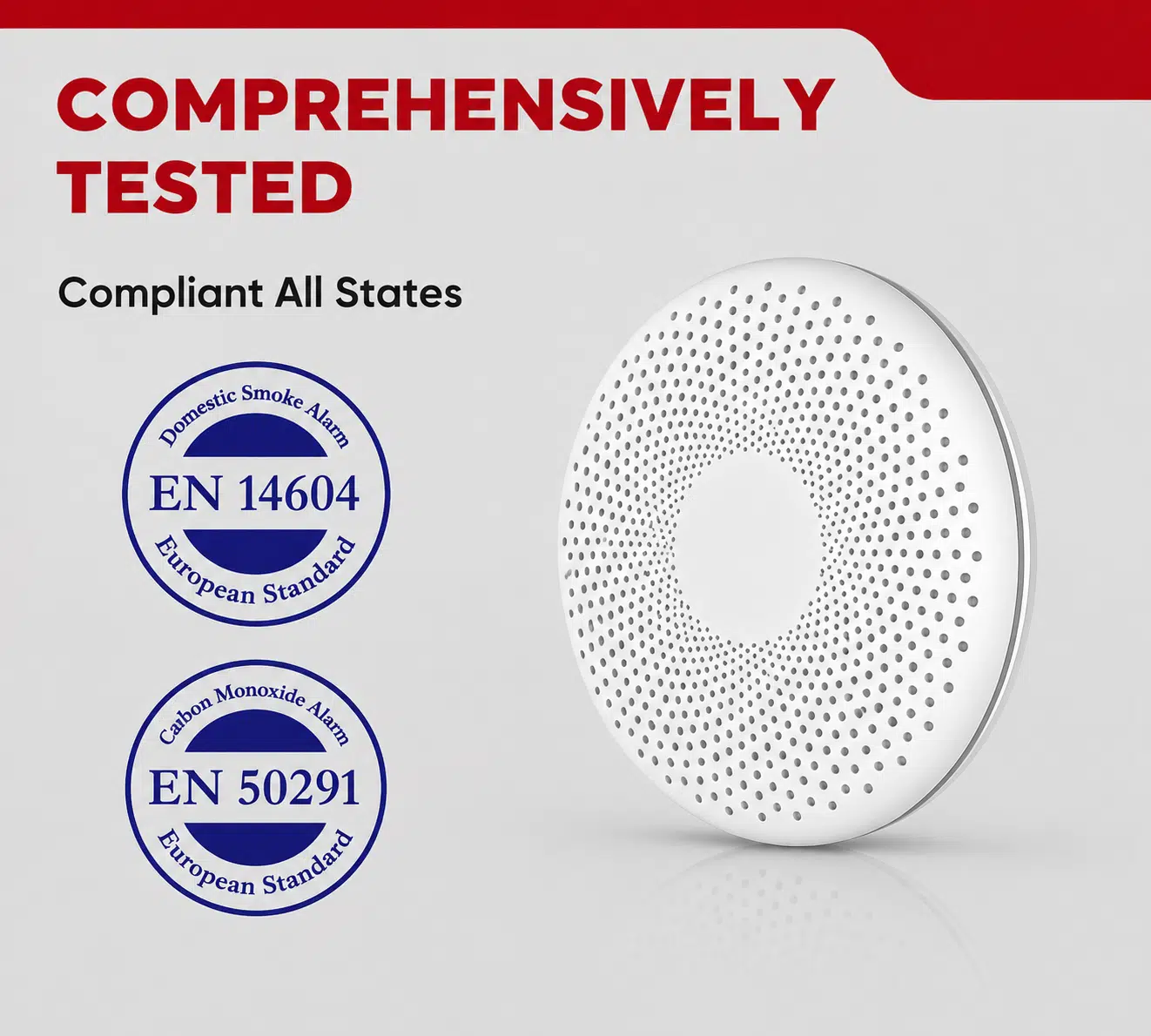
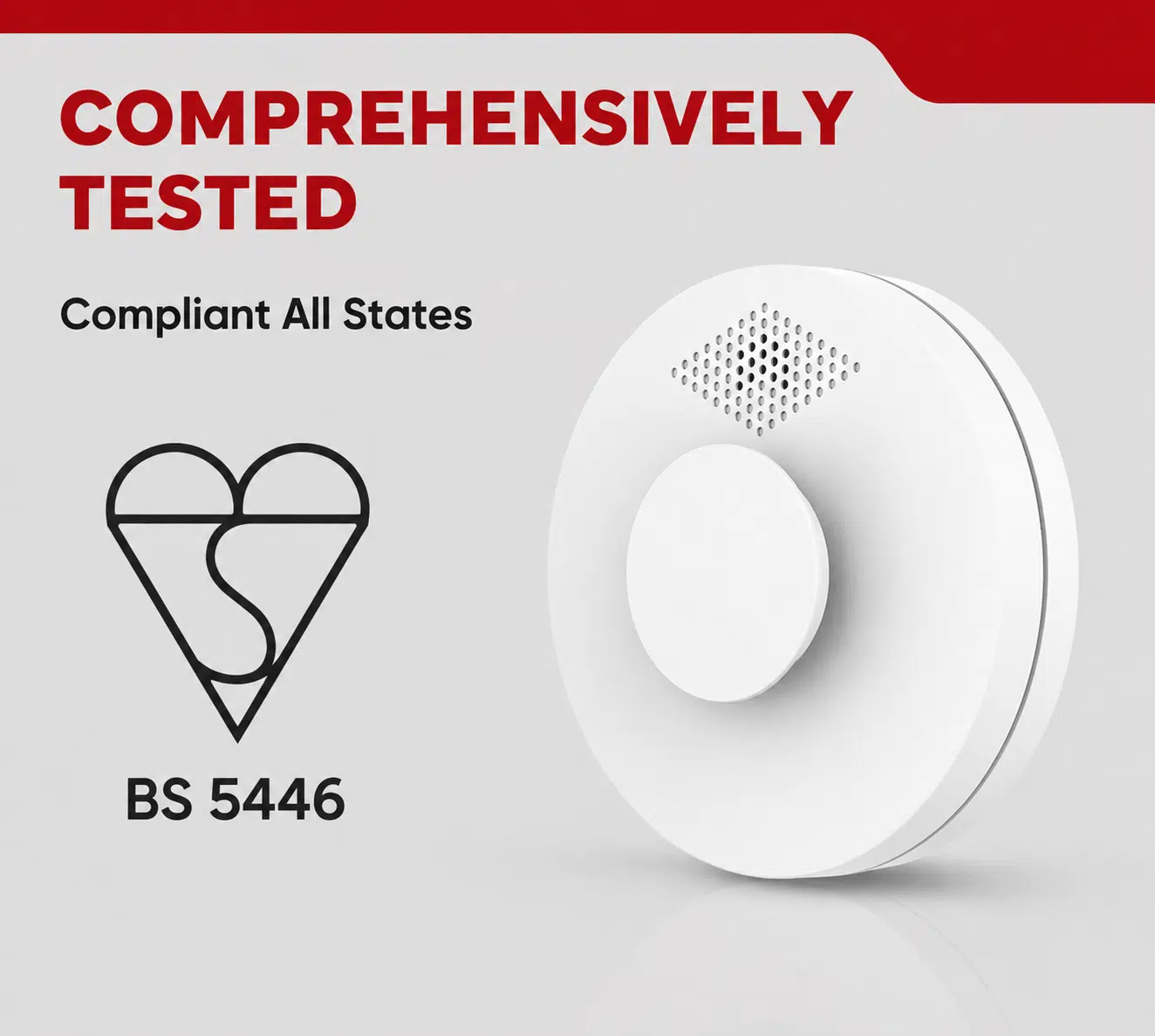
The following standards improve protection against fire, heat, and toxic gas exposure, in addition to UL2034 carbon monoxide alarms, which are commonly referenced in international residential projects.
Standard | Product Type | Typical Market |
|---|---|---|
Smoke Alarm | Australia | |
Smoke Alarm | Europe | |
Smoke + CO Combination Alarm | Europe | |
Heat Alarm | UK | |
Carbon Monoxide Alarm | Europe |
Get Started with CFS UL 2034 Carbon Monoxide Alarms
Ready to launch your UL2034 certified carbon monoxide alarm product line for the North American market? CFS offers complete OEM/ODM services from design to certification. Contact our team today to discuss your project requirements.