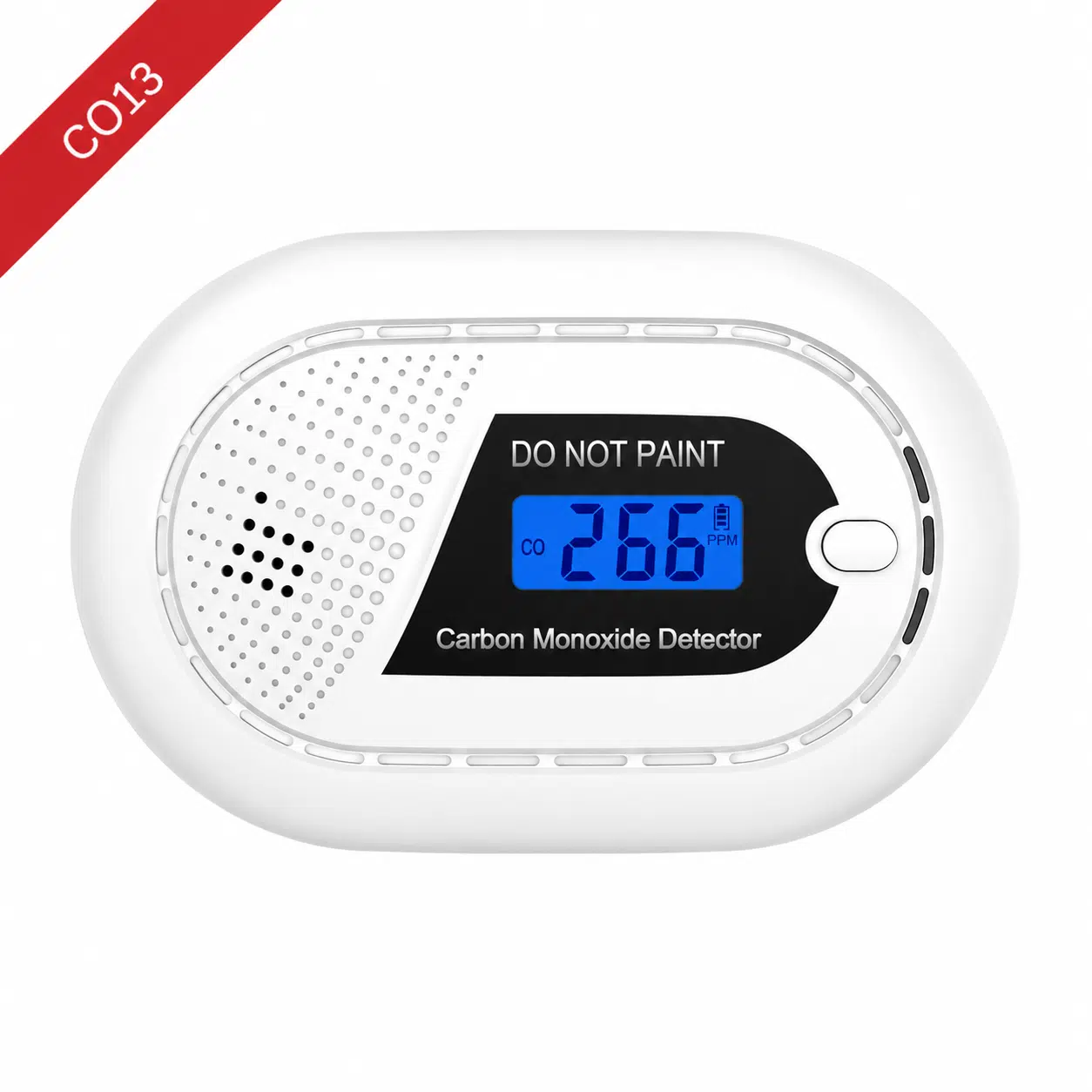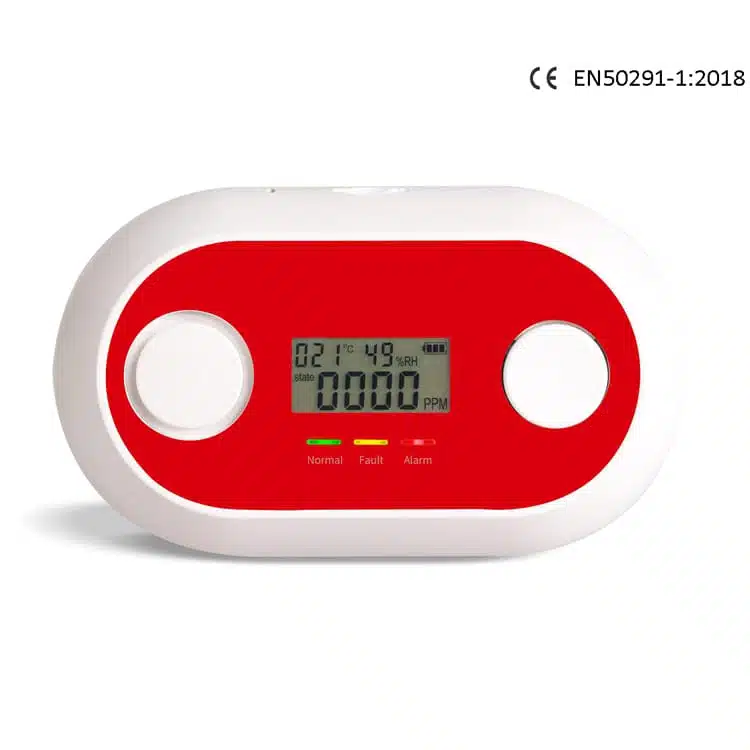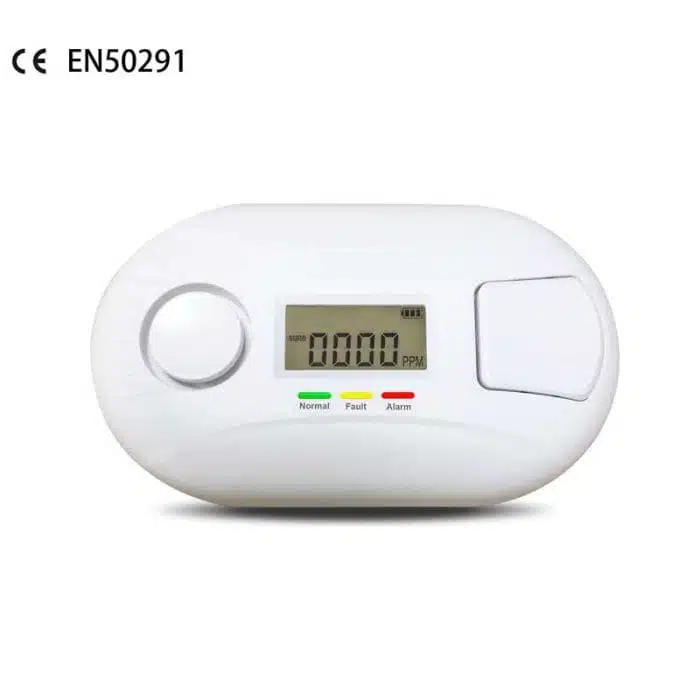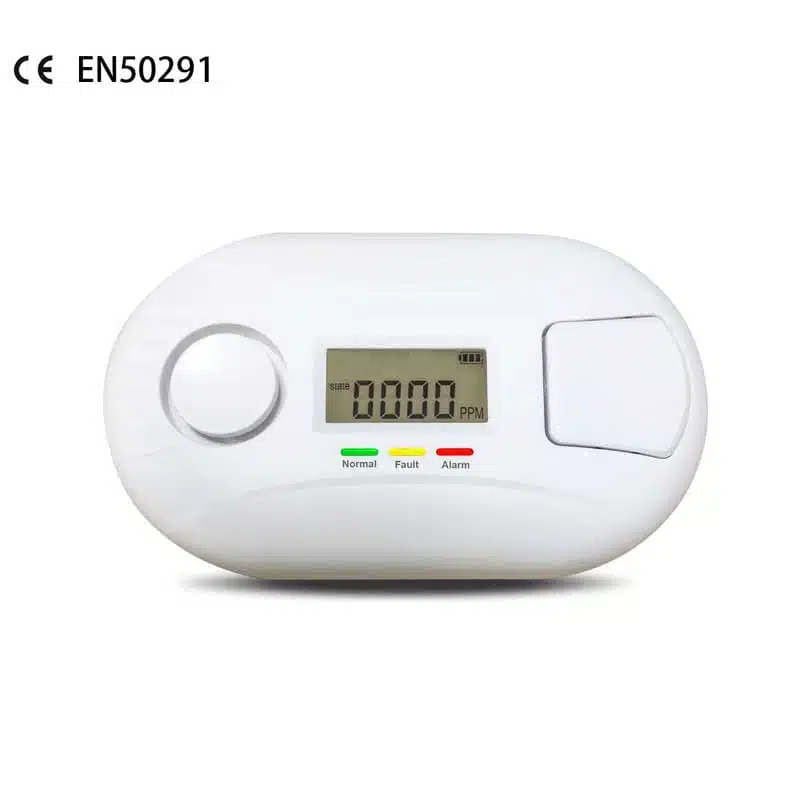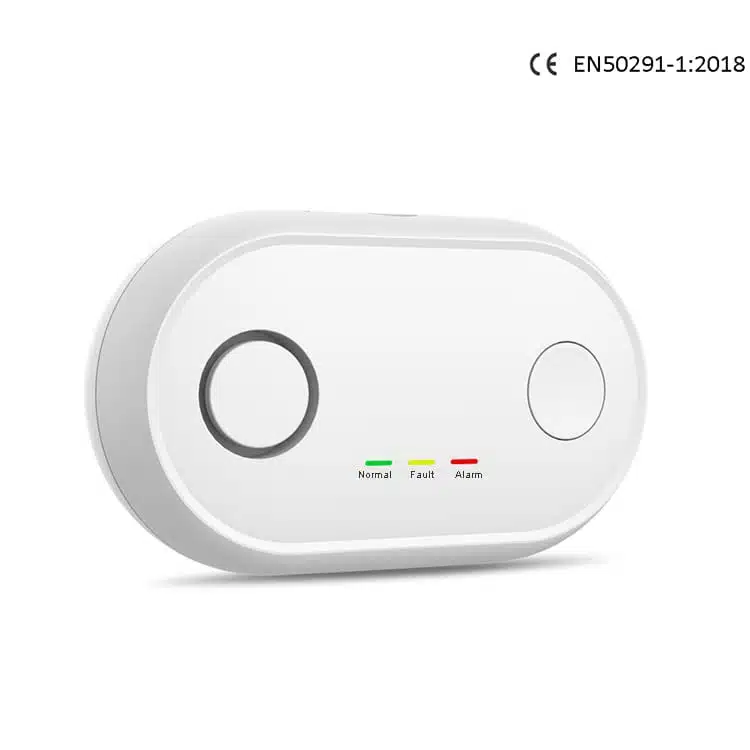
Smoke detector batteries should normally be replaced every 6–12 months for replaceable models, while sealed lithium smoke alarms are designed for up to 10 years of operation. However, actual battery life depends on measured standby current, alarm load, low-voltage logic, and environmental validation rather than battery label alone.
In property projects, this is not only a user habit issue; missed battery replacement can turn into tenant complaints, false low-battery calls, and compliance exposure. For B2B projects, battery life should be verified by standby current, alarm current, low-voltage logic, and battery consistency—not only by the “10-year battery” label.
Why Battery Performance Matters for B2B Smoke Alarm Projects
Over the past few years, fire safety regulations for residential properties in markets such as North America, Australia, and the UK have undergone continuous upgrades.
Many property developers, distributors, and property management companies in Australia’s QLD 2027 regulations are prioritizing the selection of:
For B2B clients, the real question is not simply “will it sound like the alarm?” but rather:
In large residential projects, battery performance directly affects service visits, replacement planning, and complaint rates. It affects TCO, complaint rate, service visits, compliance risk, and brand reputation

How Often Should You Change Smoke Detector Batteries
According to recommendations from the National Fire Protection Association NFPA 72:
Replacement frequency is not only a maintenance issue but also directly affects labor cost, tenant complaints, and compliance risk for property projects.
For large-scale residential projects, traditional solutions utilizing replaceable batteries present several distinct issues:
Common Issues | Impact on B2B Projects |
Residents forget to replace batteries | Increased complaint rates |
Inconsistent battery models | Complex maintenance |
Use of low-quality batteries | Increased false alarm rates |
Property management unable to conduct unit-by-unit inspections | Elevated compliance risks |
Consequently, an increasing number of engineering projects are shifting toward 10-year sealed lithium battery solutions.
10-Year Sealed Lithium Battery vs. Replaceable Battery Smoke Alarms
Comparison Item | Replaceable Battery | 10-Year Sealed Lithium Battery |
|---|---|---|
Routine Maintenance | High | Low |
Risk of User Error | High | Low |
Property Labor Costs | High | Low |
Suitability for Retrofit Projects | Moderate | Highly Suitable |
Long-Term Stability | User-Dependent | Factory pre-set |
Regulatory Trends | Declining | Mainstream Trend |
Complaint Rate (B2B Projects) | Higher | Lower |
From a manufacturing engineering perspective, a truly “10-year” design entails more than just a high-capacity battery; it also encompasses:
This explains why some low-cost products—despite being nominally rated for “10 years” actually begin to exhibit low-voltage anomalies and abnormal sounds after just 3 to 5 years.
Why Battery Performance Is Becoming a Procurement Issue
Battery selection is no longer only an engineering issue. It is becoming a procurement and compliance decision.
Battery policy is increasingly influenced by regulation and maintenance economics. In Queensland and other retrofit-driven markets, sealed lithium battery smoke alarms are becoming preferred because property owners seek to reduce service visits and tenant complaints.
In many residential retrofit and rental-property projects, battery strategy has shifted from a maintenance discussion to a procurement decision. Property owners increasingly prioritize sealed lithium battery smoke alarms because of repeated battery replacement, tenant complaints, and service visits often create higher lifetime cost than the initial product price.
Battery issues are becoming a procurement problem. Possible factors to consider:
1. Maintenance Economics
Maintenance costs.
Including:
- On-site replacement
- Labor costs
- Tenant complaints
2. Compliance Exposure
Regulatory risks.
For example:
- QLD
- Rental property audits
- Liability
3. Brand Reputation Risk
False alarms and low voltage complaints.
Especially:
- Private label
- Distributor brand

Battery Life Calculation Is More Than Battery Capacity
Battery Capacity ≠ Battery Life
Many 10-year product failures are not due to insufficient capacity, but rather:
Influencing factors:
Typical 10-Year Design Reference is as follows:
Parameter | Typical Range |
|---|---|
Standby current | 10–20 μA |
Alarm current | 15–40 mA |
Backup duration | 24h + alarm |
Product life | 8–10 years |
In product validation, a 10-year battery claim should be supported by measured current data, not only by nominal battery capacity. Please also get more from the battery calculation model.
Engineering Item | Why It Matters |
|---|---|
Measured Standby Current | Determines the baseline lifespan model |
Alarm Current | Impacts the sustained operation capability of the buzzer and LED alarms |
RF Interlink Current | Must be calculated separately for wireless interlink versions |
Battery Derating | Prevents overestimation of theoretical capacity |
Temperature Profile | Evaluates lifespan performance in high- and low-temperature environments |
Low-Voltage Threshold | Avoids premature “chirping” or delayed warnings |
Aging Verification | Verifies stability and reliability after 4–6 years of service |
What Type of Battery Does a Smoke Detector Use?
Smoke Detector Battery Type Comparing
Battery Type | Common Applications | Service Life | Maintenance Frequency | Cost Level | Suitable Projects |
|---|---|---|---|---|---|
9V Alkaline Battery | Traditional Standalone Alarms | 6–12 Months | High | Low | Low-Cost Residential |
AA Lithium Battery | New Low-Power Alarms | 1–3 Years | Medium | Medium | Mid-Range Residential Projects |
10-Year Sealed Lithium Battery | Smart / Long-Life Alarms | 10 Years | Very Low | Higher | Apartments, Hotels, Schools |
Hardwired with Battery Backup | Commercial Systems | 6–12 Months | Medium | Medium | Commercial Buildings |
The battery type is only the starting point for OEM and private-label projects. Battery cell consistency, high- and low-temperature discharge behavior, actual standby current, low-voltage alarm threshold, and reverse-polarity protection determine whether the product remains stable after several years of installation, not just whether the first sample passes a basic function test.
In CFS’s project practice, many Australian and European clients have already established “verified 10-year real-world lifespan” as a core procurement requirement.
How to Test Your Smoke Detector Battery
Standard Testing Procedure (For Property Management & End Users)
Press the test button for 5 seconds until the alarm enters its self-test cycle. You will hear the buzzer sound clearly and see the correct indicator. If the sound is weak, intermittent, or delayed, please check battery voltage, buzzer condition, battery contact, and device age. For property managers, each test should be logged with room number, test date, device status, battery condition, and replacement record.
This makes it easier to meet the audit requirements of:
For property managers, testing records are part of maintenance control, not just user operation.

How to Change Smoke Detector Batteries
Suitable for traditional, standalone products.
Replacement Steps:
- Rotate to detach the alarm unit.
- Open the battery compartment.
- Replace with a new battery.
- Verify the correct polarity (+/-) orientation.
- Press the TEST button to perform a test.
- Reinstall the alarm unit.
Please don’t mix batteries with different brands because of their different internal resistors.
Hardwired Alarms with Battery Backup
These products typically feature:
Common Maintenance Pitfalls:
Many users switch off the circuit breaker but fail to replace the backup battery, resulting in:
Therefore, for engineering projects, the following features are highly recommended:
Why Is My Smoke Alarm Still Chirping After I Changed the Battery?
Smoke alarms need new batteries, but chirps are among the most common issues encountered in B2B after-sales support.
1. Residual Capacity not discharged
The big electrical capacitor may still retain a residual charge after replacing the battery. You can:
2. Incorrect Battery Orientation
It is during on-site installations or large-scale property maintenance operations.
Recommendation:
Implementing the following features—
3. Device Reached End of Service Life
Most smoke detectors have a service life of 8 to 10 years.
Even after replacing the battery:
4. Others
They may be:
The system will continue to emit “chirping” sounds to signal that the entire unit requires replacement.
For real estate development projects, it is recommended to establish:

Why Some 10-Year Smoke Alarms Fail Before 10 Years
The real risk of low-cost smoke alarms is not the first sample test. Problems often appear after several years of field installation. Common causes include high standby current, an unoptimized buzzer driver, unstable MCU sleep mode, RF interlink power consumption missing from the battery-life model, inconsistent battery cells, unverified high/low temperature discharge curves, poor low-voltage threshold setting, and lack of aging validation.
Common root causes of failure:

B2B Procurement Checklist for Smoke Alarm Battery Solutions
A truly stable 10-year photoelectric smoke alarm requires a comprehensive system-level design:
The issues with many low-cost solutions do not manifest in the “first year,” but rather begin to emerge between the fourth and sixth years:
This is why many distributors now ask for battery-life data before approving a new smoke alarm model to select OEM/ODM manufacturers with proven expertise in standards such as:
Electrical Validation
For procurement teams and product managers, electrical validation is often where the real quality difference between smoke alarm platforms becomes visible.
Many smoke alarms pass initial functional testing but begin generating complaints several years later. In most cases, the problem is not smoke sensing technology itself but incomplete electrical validation during product development.
A battery specification alone does not prove long-term reliability. A stable smoke alarm platform should demonstrate measured electrical performance across standby, alarm, environmental, and aging conditions.
When evaluating an OEM or private-label smoke alarm solution, buyers should focus on electrical evidence rather than nominal battery claims.
1. Measured Standby Current
Standby current is one of the most important parameters in long-life smoke alarm design.
A large percentage of so-called “10-year” battery claims are calculated from nominal battery capacity without sufficient validation of actual standby power consumption. However, long-term battery performance is determined by measured current under real operating conditions.
Procurement teams should request:

For low-power smoke alarms, even minor leakage current or firmware inefficiency may significantly shorten service life over several years.
From an engineering perspective, standby current establishes the baseline battery-life model.
2. Alarm Current and Buzzer Load Verification
Battery performance should not be evaluated only during standby mode.
During alarm events, smoke alarms experience substantially higher electrical demand due to:
These short-duration current peaks have direct influence on battery stability and alarm reliability.
A proper electrical validation program should confirm:
Under standards such as NFPA 72 and regional product requirements, an alarm is expected to maintain effective warning performance during emergency conditions rather than simply produce a short sound pulse.
Poor buzzer driver efficiency frequently contributes to:
For distributors and property projects, these issues often become after-sales problems rather than engineering discussions.
3. RF Interlink Power Budget Validation
Wireless and interconnected smoke alarms require separate RF power analysis.
One common engineering oversight is calculating battery life using detector standby current while excluding wireless communication activity.
In practice, RF consumption may include:
If these loads are not incorporated into the battery model, actual service life may differ substantially from theoretical calculations.
For wireless smoke alarm projects, buyers should request:
This becomes especially important in:
RF validation is not only an engineering requirement, it is a field reliability requirement.
4. Low-Voltage Warning Logic
Low-voltage warning strategy directly affects complaint rates.
A poorly calibrated warning threshold may cause smoke alarms to:
Both scenarios increase maintenance burden.
A robust electrical validation process should verify:
For private-label brands and distributors, low-voltage complaints are rarely viewed as a battery issue by end users. They are usually interpreted as product quality problems.
This is why low-voltage logic deserves the same attention as smoke sensitivity or certification testing.
5. EMC and Power Stability Validation
Smoke alarms may remain installed for years in environments exposed to:
Electrical validation should therefore include:
From a manufacturing perspective, EMC validation is not merely a certification task. It is part of long-term risk control.
A smoke alarm platform that performs well in laboratory sampling but lacks power-stability validation may experience unpredictable behavior after field installation.
Procurement Recommendation
Typical electrical validation documents include:
In large-scale residential and OEM projects, these electrical parameters often influence complaint rate, maintenance cost, and brand reputation more than battery type itself.
Environmental Validation
For smoke alarm projects, environmental validation is often underestimated during supplier selection.
Many products perform acceptably during initial sampling or certification testing but encounter performance instability after installation in real operating environments. In residential and commercial applications, smoke alarms may remain installed for eight to ten years while exposed to continuous environmental stress.
From a manufacturing perspective, environmental validation is not simply a certification procedure. It is a long-term reliability assessment.
For procurement teams, environmental performance directly affects:
1. Temperature Validation
In long-life smoke alarm platforms, environmental validation should include:
For 10-year battery smoke alarms, temperature validation is closely linked to:
2. Humidity and Condensation Resistance
Without proper environmental protection, humidity may contribute to:
Condensation risk becomes particularly important where temperature fluctuations occur.
Environmental validation should therefore include:
3. Dust and Contamination Resistance
Smoke alarms installed in residential and light-commercial environments are routinely exposed to:
These contaminants may gradually affect:
Suppliers should demonstrate:
From a maintenance perspective, contamination control often influences product reputation more than initial certification results.
4. Aging and Long-Term Stability Verification
One of the most overlooked aspects of environmental validation is aging verification. For products marketed as long-life or 10-year solutions, aging validation should evaluate performance after prolonged environmental stress.
Typical verification may include:

The objective is not only to confirm functionality but to verify stability over time.
Many low-cost smoke alarms perform adequately during the first year yet begin generating complaints between years four and six due to insufficient aging validation.
Typical symptoms include:
For OEM and private-label projects, aging stability should be treated as a platform-level requirement rather than an optional test.
5. Installation Environment Compatibility
Environmental validation should consider where the smoke alarm will actually be used.
Different projects present different environmental profiles.
For example:
Residential retrofit projects
may face:
New-build residential projects
may prioritize:
Hotels, apartments, and rental properties
often require:
This is why environmental suitability should be reviewed according to project application rather than certification alone.
A smoke alarm approved for one operating scenario may not perform equally well in another.
Procurement Recommendation
Environmental validation data should form part of supplier qualification.
Before approving the smoke alarm platform, procurement teams should request evidence including:
From a manufacturing and field-service perspective, environmental validation is often where the difference between short-term certification success and long-term market reliability becomes visible.
For large-scale smoke alarm programs, environmental performance frequently determines maintenance cost and complaint rate more than the battery label itself.
Manufacturing Validation
For smoke alarm projects, manufacturing validation is often where the difference between a successful pilot order and a reliable long-term supply program becomes visible.
Many smoke alarms perform acceptably during sampling or certification but begin showing inconsistency once production volume increases.
1. Battery Cell Consistency and Supplier Traceability
Battery performance begins with cell consistency.
Even when the same battery chemistry is specified, variations between cell suppliers or production batches may influence:
This issue becomes more visible in long-life smoke alarms where battery performance must remain stable for many years.
Procurement teams should verify:
For 10-year battery platforms, inconsistent cells may not create problems during initial inspection but can generate premature chirping or shortened field life several years after installation.
From an OEM perspective, battery supplier control is not only a purchasing decision—it is part of product reliability management.
2. Production Process Control and Assembly Stability
A stable smoke alarm platform requires repeatable manufacturing processes.
Small assembly variations may influence:
Without controlled assembly processes, identical designs may perform differently across production batches.

Manufacturing validation should therefore review:
3. Aging Verification and Reliability Screening
Manufacturing validation should extend beyond outgoing inspection.
A smoke alarm that passes functional testing on the production line may still contain latent reliability risks if aging verification has not been completed.
Reliable suppliers typically perform:
These processes help identify:
For long-life smoke alarms, aging verification provides evidence that production stability has been considered beyond initial shipment.
Many field complaints appearing after several years are not caused by design failure alone but by insufficient reliability screening during manufacturing.
4. Quality Control and Traceability System
A mature manufacturing platform should maintain traceability covering:
This allows manufacturers to isolate quality issues rapidly if field feedback occurs.
For property and OEM projects, traceability supports:
From a risk-management standpoint, traceability is not simply a quality tool—it is a supply-chain protection mechanism.
5. Certification Maintenance and Production Compliance
Certification is not a one-time event.
Many procurement teams focus on whether a product holds certification while overlooking how certification is maintained during production.
For smoke alarms certified to standards such as:
suppliers should demonstrate ongoing compliance management.
Typical controls may include:
This becomes particularly important in OEM projects where component substitutions or process changes may unintentionally affect compliance.
A compliant sample does not automatically guarantee compliant mass production.
Manufacturing validation should therefore review how compliance is sustained over time.
Procurement Recommendation
Typical manufacturing validation evidence may include:
From a manufacturing and field-service perspective, long-term product reliability is determined not only by design quality but by the factory’s ability to reproduce that design consistently.
For large-scale smoke alarm programs, manufacturing validation often becomes the decisive factor separating short-term supply from sustainable OEM partnership.
FAQ
Source Verified 10-Year Battery Smoke Alarm Solutions
A reliable smoke alarm battery platform is not validated by battery capacity alone. Long-term field performance depends on measured current, environmental validation, production consistency, and controlled low-power design.
For distributors, private-label brands, and property projects, supplier qualification conducted before deployment often prevents higher maintenance cost and complaint rates later.
CFS supports OEM and ODM smoke alarm projects with:
If you are evaluating a new smoke alarm platform or qualifying an OEM supplier, verified battery performance should be reviewed before large-scale rollout.
Related Products