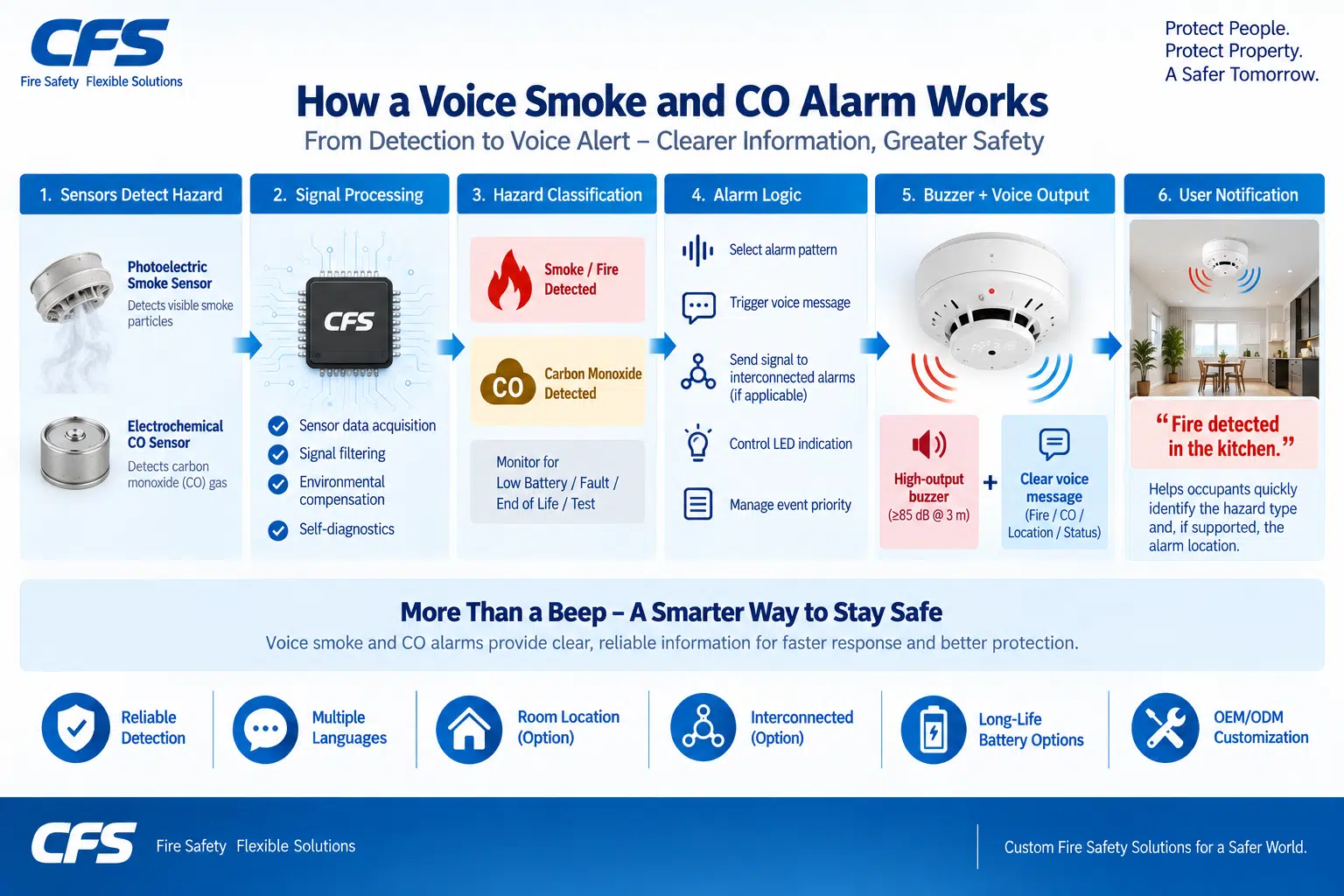
A smoke alarm or CO detector detects smoke or CO and activates its sounder or buzzer. But the challenge is whether the required sound output will exceed 85 dB after an enclosure change, a buzzer alternative, or a drop in battery voltage.

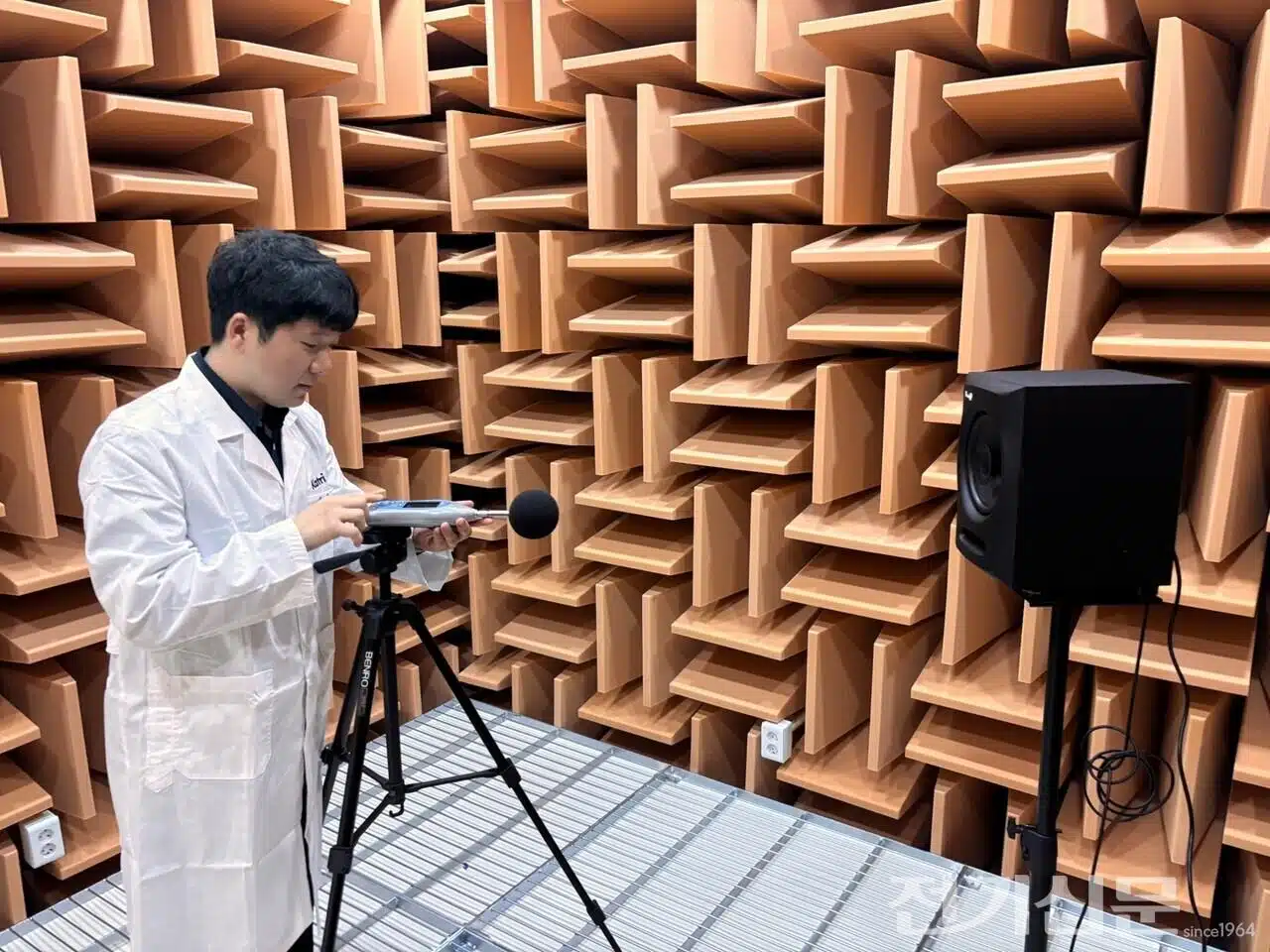
What Is an Anechoic Chamber?
An anechoic chamber provides a controlled acoustic environment, repeatable measurements, documented design verification, and control of production variation by eliminating wall reflections, background noise, and variations in measurement distance and mounting position. Sound insulation and vibration isolation help reduce interference from outside the room.

Anechoic Chamber vs Soundproof Room
Feature | Soundproof Room | Acoustic Anechoic Chamber |
|---|---|---|
Main purpose | Reduce sound transmission between spaces | Reduce reflections for controlled acoustic measurements |
Internal reflections | May remain significant | Controlled within the qualified range |
Main construction focus | Sound insulation | Absorption, insulation and vibration control |
Measurement suitability | Requires separate assessment | Depending on qualification and the test method |
Key evidence | Insulation performance and background noise | Free-field qualification, usable area and background noise |
Full Anechoic Chamber, Hemi-Anechoic Chamber or Acoustic Test Box?
Facility | Main Characteristics | Considerations for Alarm Testing |
|---|---|---|
Full anechoic chamber | Absorbing treatment on all six room boundaries | Useful for measurements within its qualified free-field region |
Hemi-anechoic chamber | Reflective floor with absorbing walls and ceiling | The reflecting plane and mounting arrangement must suit the method |
Acoustic test box | Compact enclosure for controlled checks | Useful for validated screening or comparison, subject to its limitations |
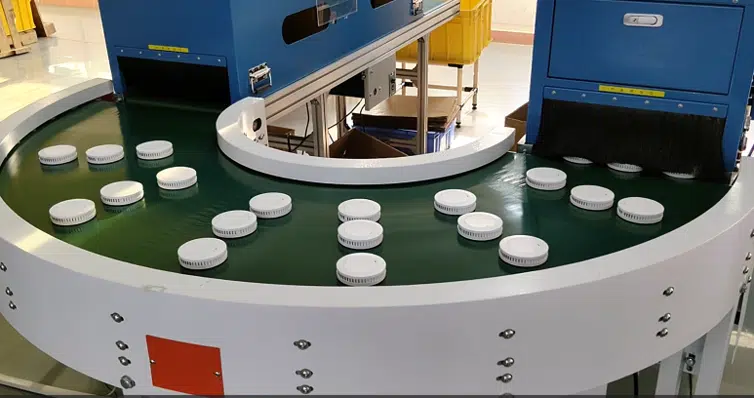
CFS usually uses a compact test box to detect missing or abnormal sound output on a production line. We usually verify the DB level in a full anechoic chamber.
Why Does Acoustic Testing Matter for Smoke and CO Alarms?
The sounder, drive circuit, battery, enclosure, mounting base, and assembly process will affect the sounder’s output.
A Qualified Buzzer Does Not Guarantee Qualified Alarm Output
A buzzer supplier’s specification applies to stated measurement and drive conditions. Those conditions may differ from the final alarm.
Factor | What Engineers Should Check | |
|---|---|---|
Sounder characteristics | Output variation, resonance and component tolerances | |
Drive circuit | Frequency, waveform and drive voltage | |
Battery and supply path | Voltage drops under alarm load | |
Sound openings | Size, position and obstruction | |
Internal cavity | Effects of the PCB, battery and structural features | |
Assembly | Sounder position, fixing method and adhesive variation | |
Mounting base | Effects of the final installation configuration |
Approval testing should therefore use the complete alarm with a representative final enclosure, base and assembly configuration.

Enclosure Customization Can Change Sound Output
A thinner housing or larger branding area may affect the sound path.
CFS usually tests the modified design under the same conditions, documents the differences, and reviews the certification implications if the change affects an approved product configuration.
Long-Life Battery Designs Need Loaded Testing
Standby current alone does not establish alarm sound performance. CFS engineers usually follow:

What Can an Anechoic Chamber Help Test?
The following measurements can form part of an alarm development plan. The actual scope depends on the product, facility and applicable method.
Test Area | Engineering Question | Information to Record |
|---|---|---|
Alarm sound pressure level | Does output meet the specified requirement? | Distance, orientation, supply and measurement settings |
Frequency spectrum | Has the sound distribution changed? | Analysis method, drive condition and product version |
Directional variation | Does output differ between measurement directions? | Mounting reference, angles and positions |
Alarm timing | Are pulses, pauses and repetitions correct? | Time record, operating mode and firmware |
Fault and battery warnings | Are the warning signals consistent with the specification? | Event type, signal pattern and criteria |
Voice output | Are content, level and playback sequence correct? | Language, audio version and method |
Design comparison | Has a component or enclosure change affected performance? | Baseline, modification and results |
Smoke and Carbon Monoxide Combination Alarms
A combination alarm may use the same sounder for several events.
Smoke, CO, fault and low-battery states should be evaluated as applicable to the product specification.
Voice Smoke and CO Alarms
Differences in spoken content, language version, playback sequence, acoustic output distortion, frequency response, recording quality, and the listening environment can affect speech clarity.

RF, Wi-Fi and Hardwired Interconnected Alarms
Interconnected products require verification of both event transmission and local warning behavior.
The acoustic chamber can support measurement of the sound produced after a device receives an alarm event. Communication range, network capacity and interconnection delay require their own verification methods.
How Should Buyers Read an Alarm’s dB Specification?
A sound-level number without measurement conditions is incomplete.
Before comparing suppliers, establish whether their figures describe the same quantity and test configuration.
Specification Item | What to Define |
|---|---|
Acoustic quantity | Sound pressure level or sound power level |
Unit and weighting | dB, dB(A) or another specified expression |
Distance | Measurement of distance and reference point |
Mounting | Base, surface and installation arrangement |
Orientation | Microphone position relative to the alarm |
Operating mode | Alarm, test, fault warning or voice |
Power condition | Battery type, voltage and loaded condition |
Time processing | Measurement window and result selection |
Acceptance basis | Applicable requirement and decision rule |
A Practical Acoustic Verification Process for OEM Projects
Define Acceptance Conditions
CFS follows the PRD, including the target market, product type, applicable requirements, test methods, and installation configuration.
Establish a Traceable Baseline
Record the configuration of each engineering sample, including:
Test the Relevant Conditions
Select conditions according to product risk, applicable requirements and development stage.
These may include nominal supply, specified low-voltage conditions, relevant environmental conditioning, different directions and representative component batches.
One selected prototype does not establish production consistency.
Control the Approved Configuration
After approval, place sound-critical components, dimensions and firmware settings under change control.
A replacement sounder, modified drive frequency or revised sound opening should trigger an engineering assessment before production release.
Connect Production Screening to Reference Testing
Production checks and development measurements may use different equipment, provided their purposes and limitations are understood.
Fast screening can identify absent or clearly abnormal output. Reference-method sampling can monitor performance and variation.

What Evidence Should Buyers Request from a Supplier?
📝 Note: A chamber photograph demonstrates the presence of a facility. It does not explain its usable range, measurement capability or connection to the product being purchased.
Evidence | Why It Matters |
|---|---|
Chamber qualification information | Establishes usable frequencies, positions and limitations |
Test procedure | Makes the measurement conditions explicit |
Instrument calibration and field-check records | Supports control of the measurement chain |
Model-specific results | Connects evidence to the ordered configuration |
Multiple-sample or batch data | Shows variation beyond one prototype |
Component and design-change records | Helps control unverified substitutions |
Production screening records | Shows how abnormal output is identified |
Third-party reports and certificates | Supports verification of approval scope |

How Acoustic Verification Fits into a CFS OEM/ODM Project
CFS offers OEM/ODM services such as private labeling, packaging, firmware, and design customization for smoke alarm, CO alarm, heat alarm, combination alarm, and gas alarm products.
Brand owners should have their engineering teams evaluate the following aspects during the requirements phase:
Project Requirement | Acoustic Review Focus |
|---|---|
Private-label existing platform | Confirm the supplied configuration and sound specification |
Compact enclosure | Review sound openings, cavity space and assembly |
Smoke and CO combination functions | Verify the relevant event-specific signals |
Multilingual voice alerts | Control recordings, playback and firmware versions |
Long-life battery operation | Evaluate sound output with the specified supply conditions |
Interconnected alarms | Verify local sound output alongside separate communication tests |
Cost reduction or component substitution | Compare performance before and after the change |
For compact designs, see the CFS mini smoke alarm engineering guide.
FAQ
1. Must every chamber achieve a 99% absorption coefficient?
A single absorption value does not establish suitability for every test.
2. Does a louder alarm always mean a better product?
Sound output is one requirement among several. It must be considered together with the required warning behavior, power capability and reliability.
3. Can a logo change affect alarm sound output?
A simple marking change may have little acoustic effect. A change that covers an outlet or modifies the enclosure needs closer review.
4. Should smoke and CO alarm modes be tested separately?
Where their patterns, drive settings or voice content differ, the relevant modes should be verified separately.
5. Does high voice volume prove good intelligibility?
No. Recording quality, distortion, frequency response and the listening environment also affect understanding.
6. Can an anechoic chamber verify smoke sensitivity?
No. Smoke chamber can test the smoke sensitivity.
7. Can a production acoustic box replace a development chamber?
It can perform validated screening tasks. Whether it can support a particular acceptance measurement depends on its capability and the method.