Quick Answer | What is Gas Alarm Relay Output?
A gas alarm relay output with NO, NC, and COM (3 contacts) controls gas shut-off valves, ventilation equipment, BMS, PLC, external alarm devices, or other control systems.
What is a Gas Alarm Relay Output?
A gas alarm detects target natural gas or LPG in the environment. Please see the working principles:

If a relay output is added to the product, an external control interface is added after the alarm decision:

You can also read more How Natural Gas Detectors to work.

What Do NO, NC and COM Mean with a Gas Alarm?
Interface | Meaning | General Status Description |
|---|---|---|
COM | Common | Common contact |
NO | Normally Open | Disconnected from COM when the relay is not activated |
NC | Normally Closed | Connected to COM when the relay is not activated |
For example, an alarm might be defined as:
Normal: COM–NC Closed
Alarm: COM–NO Closed
When the alarm enters the specified alarm state, the relay switches, and the external control system can use this state change to execute subsequent actions.
How Does a Gas Alarm Work with a Shut-Off Valve?
A typical control chain is as follows:

Can a Gas Alarm Relay Directly Drive a Solenoid Valve?
You need to obtain the following parameters for the valve before giving the answers:
Checklist Item | Gas Alarm / Relay | Shut-Off Valve |
|---|---|---|
Operating Voltage | Relay switching rating | 12/24 VDC、110/230 VAC等 |
Operating Current | Contact rating | Valve operating current |
Activation Characteristics | Contact capability | Inrush / coil characteristics |
Output Type | Dry contact / powered | Required control input |
Control Logic | NO/NC | Open/close logic |
Holding Mode | Momentary/continuous | Pulse/latching/continuous |
Reset Method | Auto/manual | Auto/manual |
State Upon Power Loss | Defined | Defined |
Electromagnetic coils are inductive loads; you should check the following performance:
Normally Open or Normally Closed Valve: Which Is Safer?
The terms “NO” and “NC” can refer to different aspects:
Must know what the worst-case scenario is under Normal, Alarm, Fault, and Power Loss conditions.
What Should Happen During a Gas Alarm?
System Status | Buzzer | Relay | Valve | System Action |
|---|---|---|---|---|
Normal | OFF | Normal state | Open | Normal monitoring |
Gas Alarm | ON | Alarm state | Close | Shut off gas supply |
Gas Cleared | Defined | Hold/Reset | Defined | Determined by design |
Sensor Fault | Fault indication | Defined | Defined | Maintenance/Repair |
Power Loss | Defined | Defined | Defined | Based on system safety policy |
End of Life | EOL warning | Defined | Project-defined | Replace equipment |

What Is a Latching Relay in a Gas Alarm?
Gas Alarm → Relay Active → Gas Clears →Relay Remains Active → Reset Required
You should check the following questions:
What Happens If Power Fails?
The possible reasons for a power outage are as follows:
When an alarm loses its main power supply, its relay opens or closes the valve, depending on the product instructions.
What Happens If the Relay Cable Is Broken?
Causes a NO or NC state without power. But it is difficult to distinguish between a normal state and a “broken cable”.
The following items are required to check in the project:
Can One Gas Alarm Control a Valve, Fan and BMS?
If multiple devices are connected directly to a single relay, the following factors must be evaluated:

How Should a Gas Alarm Relay Output Be Specified in an RFQ?
The client can provide the valve datasheet and the wiring diagram to help us select a suitable gas detector. The following information would be better:
RFQ item | Contents the customer needs to confirm |
|---|---|
Target Gas | Methane / LPG / Propane / Butane |
Application | Residential / Commercial / Industrial |
Target Market | EU / UK / North America / Other |
Power Supply | AC / DC / Battery + AC |
Relay Type | Dry contact / Powered output |
Contacts | NO / NC / COM |
Contact Rating | Voltage / Current / Load type |
Valve Voltage | 12/24 VDC |
Valve Current | Rated + Inrush |
Valve Type | Continuous / Pulse / Latching |
Alarm Logic | Latching / non-latching |
Reset | Auto / Manual |
Fault Logic | Required behavior |
Power-Loss Logic | Required behavior |
External System | Valve / Fan / BMS / PLC |
Communication | Relay /RS485/ Wi-Fi |
Certification | Exact market requirement |
Please get more information about Gas alarm.

Prototype Pass Does Not Mean Mass Production Pass
Test all performance under test conditions in accordance with the PRD during the engineering prototype stage. You can get how to control quality in the new product develop process.
But there are many items focused on in Mass production:
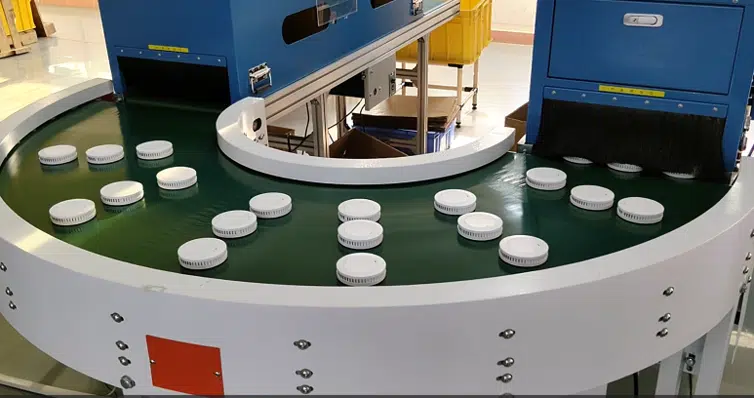
Follow the flowchart for Mass production and quality control to ensure each unit meets the requirements.


CFS Gas Alarm Relay & Valve OEM/ODM Solutions
You can follow the checklist (rather than a single model) to select your products.

Buyer Checklist Before Approving a Gas Alarm + Shut-Off Valve System
You should know the following items before project approval to reduce your project risks.
FAQ
Q1 What electrochemical sensor technology do you use?
Our 10-year carbon monoxide alarms use self-designed, ETL-approved electrochemical sensors with higher sensitivity, lower power consumption, and better resistance to environmental interference.
Q2 How do you ensure long-term sensor stability?
We use a quality control system from incoming inspection, automated calibration,100% functional testing to aging test.
Q3 What certifications are available for European markets?
Our carbon monoxide alarms CO03、CO04R、CO05R、CO06、 CO11、CO11W、CO11R、CO12 are suitable for EN 50291-1 residential applications and CO07、CO08 for EN 50291-2 recreational vehicles, boats and caravans.
Q4 what is your MOQ?
The MOQ for mass production is 50 sets. Custom logo and packaging require 1,000 pcs. Custom hardware and firmware require 5,000 pcs. Please contact us for an accurate quote regarding specific quantities.
Learn about custom alarms MOQ and other packaging options.
Q5 What is the expected sensor lifespan?
Our CO electrochemical sensor is designed to 5years,7 years or 10 years.
Q6 What gases can be detected?
Our detectors can detect natural gas (methane), LPG, propane, butane, and CO.
Q7 What sensing technologies are available?
We offer dual-wave, semiconductor, catalytic, and NDIR sensors for residential, commercial, or industrial applications.
Q8 How Long is Your Production Time?
Total production time includes purchase material, assembly, and quality inspection. Typically, LT is 15 business working days.
The specific time depends on the complexity and quantity of the order. You will receive a detailed timeline after order confirmation.
Read our manufacturing process.
Q9 Can relay output be customized?
Yes. We can customize the size, color, output logic, and mounting method of the relays to meet the requirements of your OEM projects.
Q10 What certifications are available?
The target market and product type will affect certification options, such as EU residential smoke alarms need EN14604, but the USA need UL217.
Q11 Do You Sign NDAs For Confidential or Private-label Projects?
We can sign NDAs to support the customized products.
Learn about CFS custom fire alarms process.
Conclusion
Please keep the following distinctions during the gas alarm’s relay output for gas shut-off applications: