Stricter worldwide gas safety standards, alongside property operators’ growing risk awareness, continue to drive global demand for gas detectors, as gas leaks pose severe safety hazards in residential, commercial, and industrial premises. Distributors, OEMs, developers and facility managers need to grasp detector principles and installation standards for project sourcing and private label planning.
This guide covers gas sensing technologies, proper installation rules, certification standards and core purchasing tips.
Quick Answer
Gas detectors are installed near the ceiling near potential leak sources such as boilers, water heaters, stoves, and gas pipelines, that emit both light and sound warnings when methane (CH4) reaches the alarm threshold. Most modern detectors adopt semiconductor or catalytic sensors, with optional smart links, relay outputs and building system integration.
Need a Certified Natural Gas Detector? Contact CFS for OEM & ODM Solutions.
What Is a Natural Gas Detector?
Gas detectors send an early alert to flammable methane buildup before hazards arise and help prevent fires, explosions, and other gas-related accidents. They are applied include:

Methane vs LPG: Why Gas Type Matters
Natural gas is mainly composed of methane (molecular formula CH4), which is less dense than air (air is mainly composed of nitrogen N2 and oxygen O2), and will float upwards and accumulate after a leak; liquefied petroleum gas is denser than air, and will easily settle and accumulate at lower levels of the ground after a leak. Detector placement therefore differs significantly.
Looking for Reliable Natural Gas Detectors for Your Market?
Why Natural Gas Detection Is Important
Natural gas leaks can result from:
Undetected gas accumulation may lead to:
Certified gas alarm devices deliver reliable monitoring to mitigate all such operational risks.
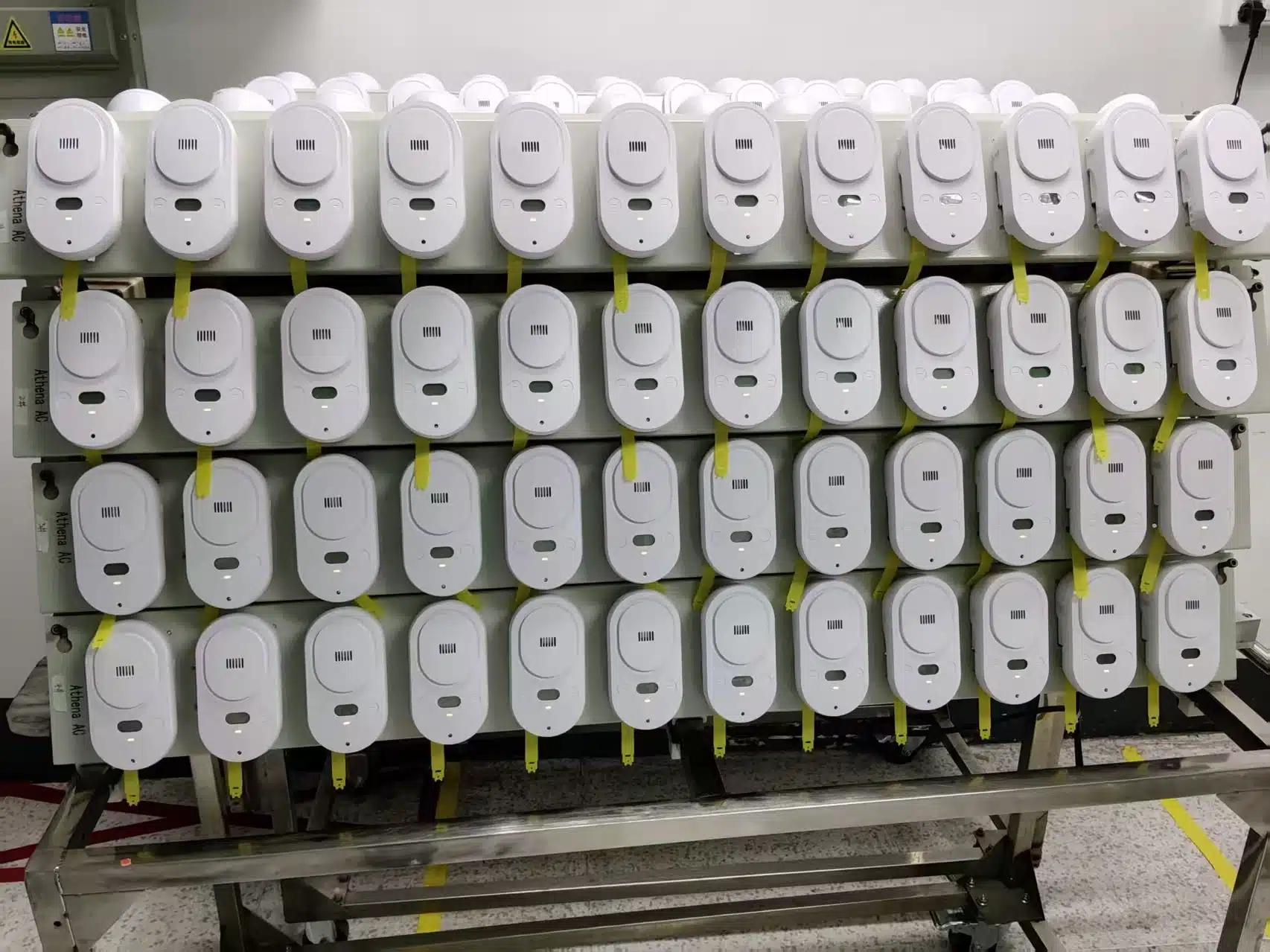
How Natural Gas Detectors Work
The unit monitors methane gas in ambient air nonstop. Once readings reach the 8% to 15% LEL trigger point, it activates alarms or interlocked safety systems for advance hazard alerts.

Types of Natural Gas Detection Technologies
| Sensor Type | Typical Application | Advantages | Limitations |
|---|---|---|---|
| Semiconductor | Residential | Low cost | Cross sensitivity |
| Catalytic | Industrial | Reliable | Calibration required |
| NDIR | Commercial/Industrial | Stable | Higher cost |
Semiconductor Gas Sensors
Semiconductor sensors detect methane by measuring changes in resistance, utilizing interactions between gas molecules and the heated semiconductor surface. The detector converts this resistance change into gas concentration information.
Advantages
Limitations
Typical applications:
Catalytic Bead Sensors
Catalytic sensors detect combustible gases by oxidizing gas on a heated catalyst surface.
Advantages
Limitations
Typical applications:
Infrared (NDIR) Sensors
Infrared sensors measure gas concentration by analyzing infrared light absorption.
Advantages
Limitations
Typical applications:
Natural Gas Detector vs LPG Detector: What’s the Difference?
Methane Characteristics
Methane (CH₄) gas rises after leakage and builds up near ceiling areas. Typical use cases are as follows:
Detector placement should therefore prioritize ceiling-level installation.
LPG Characteristics
Liquefied Petroleum Gas (LPG, including propane and butane) accumulates near floors and in low-lying areas and applies:
LPG detectors should normally be installed near floor level.
Installation Differences
| Gas Type | Relative Density | Recommended Detector Position |
|---|---|---|
| Natural Gas (Methane) | Lighter than air | Near ceiling |
| LPG (Propane/Butane) | Heavier than air | Near floor |
⚠️ Important: Incorrect detector placement can significantly reduce detection effectiveness.
Can One Detector Detect Both Gases?
Multi-gas models support detection of both methane and liquefied petroleum gas. For single fuel applications, single-gas detectors perform better and generate less unwanted false alerts.
Where Should Natural Gas Detectors Be Installed?
Methane rises and accumulates near ceilings, which are installed in the following locations:
Kitchens
Install detectors:
Utility Rooms
Utility rooms often contain:
Each room containing gas equipment should have dedicated gas detection.
Boiler Rooms
Commercial boiler rooms require continuous monitoring.
Industrial projects may require multiple detectors depending on room size.
Restaurants and Commercial Kitchens
Restaurants using natural gas should install detectors near:
Automatic valve control is strongly recommended.
Hotels and Apartment Buildings
Recommended installation areas include:
Residential Installation Examples
Natural gas detectors are commonly installed:
For apartments, one detector per gas appliance area is generally recommended.
Commercial Installation Examples
Commercial applications typically include:
Larger facilities may require multiple interconnected detectors.
Boiler Room Installation Recommendations
Commercial boiler rooms should use detectors capable of:
Multiple detectors may be necessary depending on room volume.
Where Should Natural Gas Detectors NOT Be Installed?
Avoid installing detectors:
Improper installation may cause missing alarms or false alarms.
A horizontal distance of 1–3 meters from the appliance is generally recommended.
Property managers should establish routine replacement programs based on manufacturer recommendations.
Natural Gas Detector Placement Guide
| Application Area | Recommended Installation Position |
|---|---|
| Kitchen | Near ceiling, 1–3 m from stove |
| Boiler Room | Near ceiling above equipment |
| Apartment Utility Room | Near ceiling close to gas appliance |
| Commercial Kitchen | Near ceiling with valve linkage |
| Hotel Mechanical Room | Near ceiling near gas piping |
Certification Requirements for Natural Gas Detectors
Certification requirements vary by market.
Common standards include:
Europe
EN 50194 specifies performance requirements for combustible gas detectors used in domestic premises.
North America
UL-certified products are generally preferred for residential and commercial projects.
Australia and New Zealand
Products should comply with applicable local gas safety regulations and electrical safety requirements.
Commercial and Industrial Compliance Requirements
Commercial & industrial sites need to satisfy extra local standards covering fire safety, gas control and electrical installation.
Examples include:
Distributors should confirm applicable standards before procurement.
Why Certification Matters for Buyers
Certification directly affects:
Wholesalers and private-label manufacturers speed up product market launch through certification.
Key Features Buyers Should Look For
Purchase teams should consider the features of natural gas detectors:
Sensor Technology
Choose proven sensor platforms with stable long-term performance.
Alarm Threshold
Compliant with local regulations.
Audible Alarm Output
Most residential products should provide at least 85 dB audible warning.
Relay Output
Relay outputs allow integration with:
Smart Connectivity
Modern detectors increasingly support:
Service Life
Long-life sensors reduce maintenance costs.
Self-Test Functions
Automatic self-diagnostics improve reliability.
Valve Shutoff Integration
Automatic gas shutoff functionality can significantly reduce explosion risks.
Many commercial projects require detectors capable of activating solenoid valves immediately after alarm activation.
Wireless Connectivity
Wi-Fi and RF connectivity enable:
Wireless solutions are increasingly preferred in managed properties.
Self-Diagnostics
Automatic self-testing functions improve system reliability and help identify:
End-of-Life Indication
Detectors with gas sensors end-of-life warning functions help users replace devices.

How to Choose the Right Natural Gas Detector
| Application | Recommended Sensor | Recommended Features |
|---|---|---|
| Residential Homes | Semiconductor | Low cost, easy installation |
| Rental Properties | Semiconductor + Wi-Fi | Remote monitoring |
| Hotels | Wi-Fi + Relay Output | Low maintenance |
| Commercial Kitchens | Catalytic | Valve linkage |
| Industrial Facilities | NDIR/Catalytic | Calibration capability |
For Residential Projects
Prioritize:
For Hotels and Rental Properties
Recommended features:
For Commercial Kitchens
Recommended features:
For Industrial Applications
Industrial projects should prioritize:
For OEM Brands
OEM buyers should evaluate:
Need OEM & Private Label Gas Detectors?
Total Cost of Ownership Considerations
Initial Product Cost
It includes unit cost and installation cost.
Maintenance Costs
The labor cost of Periodic testing, calibration, and replacement.
Calibration Requirements
Industrial-grade products often require regular calibration. Residential semiconductor alarms generally require less maintenance.
Service Life
Longer service life reduces replacement frequency and total ownership cost.
Natural Gas Detectors for OEM and Private Label Brands
Global demand for smart gas safety products continues to increase.
OEM and private-label customers should evaluate suppliers based on:
Certification Experience
Manufacturers with existing certified platforms can shorten product launch cycles.
Firmware Customization
Customization may include:
Branding Options
Typical customization includes:
Production Capacity
Large-scale projects require stable manufacturing capability and supply continuity.

Quality Control
Manufacturers should maintain:
Certification Project Support
Certification compliance is a major hurdle for private-label brands expanding into new territories.
Manufacturers with pre-certified hardware platforms cut clients’ certification expenses, speed up product development and enable faster market rollout. Support services may include:
MOQ and Product Roadmap Planning
Flexible minimum order quantities can help minimize inventory risk. CFS supports OEM programs with a phased product roadmap:
A diversified portfolio helps brands address multiple market segments.
CFS Natural Gas Detector Solutions
CFS provides OEM and ODM manufacturing solutions for residential and commercial gas detection projects.
Our capabilities include:
Typical applications include:

FAQ
Q1: Where should a natural gas detector be installed?
Natural gas detectors should generally be installed near the ceiling, approximately 1–3 meters from potential leak sources such as gas stoves, boilers, and water heaters.
Q2: Can one detector detect both methane and LPG?
Some multi-gas detectors can detect both gases. However, dedicated detectors optimized for a specific gas generally provide better performance.
Q3: How long do natural gas detectors last?
The service life of a natural gas detector depends on sensor technology and product design. Most residential semiconductor gas alarms provide a service life of approximately 5–10 years, while industrial NDIR sensors may last longer.
Conclusion
Proper sensor selection, mounting positions, and certified detectors can keep a stable long-term operation.
CFS supports distributors, OEM labels, and project purchasers by reducing certification risks and accelerating market access.


