Quick Answer
EN 14604:2005/AC:2008 and AS 3786:2023 are certification standards for residential smoke alarms in Europe and Australia and require 26 performance tests covering smoke sensitivity, fire response, environmental durability, EMC, battery safety, acoustic output, and mechanical reliability. Selecting certified products help distributors reduce compliance risks and accelerate market entry.
CFS offers a full range of smoke detectors certified by internationally recognized organizations, including ETL, TüV, SGS, BSI, CSIRO, Activfire, and SAI Global. We serve over 200 brand partners worldwide with an annual production capacity of 5 million units.
Looking for EN 14604 & AS 3786 Certified Smoke Alarms?
Talk to our engineering team for certified products, OEM solutions, and competitive bulk pricing.
👉 Get Bulk Pricing
Why Europe & Australia — A Market We Can Serve
Europe and Australia have some of the strictest regulations on smoke detectors globally. EU member states generally require residential and commercial premises to install stand-alone smoke detectors compliant with EN 14604; Australia has harmonized its national technical specifications through AS 3786:2023, a standard that adopts and modifies ISO 12239:2021, and is progressively pushing for mandatory installation in existing residential buildings.
The new regulations mean that all new residential buildings, hotels, and short-term rental properties must install compliant detectors, and retrofitting existing residential buildings will continue for decades. Our products are dual-standard-certified, designed for extreme environments, and are the reliable compliance solution builders and distributors need.
Market Size — Demand We Can Help You Capture
💡 Key Insight: Europe has a large housing stock, and most of Australia’s 16.2 million homes will require the gradual installation of smoke detectors compliant with AS 3786 standards.
For distributors: This is a market with continuous replacement and new demand for 25 years, and stable annual shipments mean predictable revenue growth.
For builders: Every new residential project requires compliant smoke detectors. Choosing a proven product with dual certification means zero risk of project acceptance.
Certification — Our Products Are Ready
Our smoke detectors have passed the full set of type tests in accordance with EN 14604 and AS 3786:2023, with certifications issued by internationally recognized authorities (TüV, BSI, SGS, CSIRO, SAI Global, etc.) in accredited laboratories. The products also hold international certifications such as UKCA, BSI Kitemark, RoHS, and REACH, meeting the market access requirements of Europe and Australia.
For customers seeking greater competitiveness, we provide technical support for submitting tests to local certification bodies, as well as a complete certification documentation package, to help you stand out in bidding and large-scale projects.
Regulation Timelines — When Your Customers Need Products
Key Milestones:
EN 14604, as an EU harmonized standard, has long been a prerequisite for market entry in Europe. Currently, European countries are gradually strengthening their coverage requirements for existing residential buildings, and new projects must provide compliant products during the project acceptance phase.
Australia’s AS 3786:2023 was officially released in 2023. Compared to the 2014 version, it includes several significant changes, such as new response threshold requirements for scattered/transmitted light detectors, new band classifications, and test-fire termination conditions, which impose higher requirements on product compliance.
This means that now is a critical window for distributors and builders to update their inventory and select compliant products. Our inventory and production capacity are ready to support orders at all stages.
EN14604 vs AS3786 Comparison
EN 14604 and AS 3786 are both important product standards for residential smoke detectors entering the European and Australian markets. Both focus on smoke sensitivity, fire response, sound pressure level, battery safety, environmental reliability, and EMC performance, but their applicable markets, testing details, certification pathways, and engineering audit priorities are not entirely the same. For purchasing managers, brand owners, and project contractors, it’s crucial not to consider only product appearance or price, but to ensure the product truly meets the regulatory requirements of the target market.
If a product is planned to enter both the European and Australian markets simultaneously, it is recommended to design and validate it to meet both standards from the initial project stage to avoid later modifications due to differences in sensor structure, buzzer sound pressure level, battery solutions, label documentation, or test-fire source requirements.
What Is the Scope of EN 14604 and AS 3786?
EN 14604 primarily applies to stand-alone smoke detectors in the European market and is a common market access standard in EU residential and some civil building projects. For distributors, retail brands, and engineering installers, EN 14604 certificates are typically the foundational documents for entering European markets, bidding on projects, and conducting product compliance audits.
AS 3786 primarily applies to the Australian and New Zealand markets, especially residential, apartment, rental, and new residential projects. You can select products not only with the AS3786:2023 certificate but also suitable for the local installation environment, temperature and humidity variations, battery life, and long-term false-alarm rate.
What Are the Main Test Requirements?
Both EN 14604 and AS 3786 require smoke detectors to pass tests related to sensitivity, fire response, environmental testing, sound pressure level, battery, electrical safety, and EMC. The core objective is not simply to prove that a product “can alarm,” but to verify that the product maintains stable, reliable, and consistent alarm performance under different environments, smoke types, power conditions, and interference conditions.
For the manufacturing side, key factors affecting test results include
When reviewing suppliers, purchasing managers should require not only the first page of the certificate but also the complete test report, product specification sheet, BOM version, and label documents for the corresponding model, ensuring that the purchased model matches the certified model.
What Are the Main Performance Differences?
EN 14604 emphasizes the basic safety performance of residential smoke detectors, including smoke response, fire testing, sound pressure output, environmental stability, and EMC immunity. AS 3786 emphasizes long-term reliability across high and low temperatures, humidity, dust, false-alarm control, and long-term battery performance.
From a manufacturing perspective, Australian projects typically focus on:
European projects typically focus on:
The same smoke alarm may look identical, but the certification version, firmware version, battery supplier, or label documentation may differ in different markets.
Which Certification Do You Need?
💡 Key Insight: When selecting certifications, buyers should first identify the target market, not just the product model.
Can One Smoke Alarm Meet Both Standards?
Yes, but only if the product is developed in accordance with dual-standard requirements during the design phase. Dual-certified products typically need to meet the requirements of both EN 14604 and AS 3786 in terms of optical cavity, sensitivity setting, buzzer sound pressure level, battery life, environmental testing, EMC design, and technical documentation.
For OEM customers, the value of a dual-certification platform is significant:
Not Sure Which Certification You Need?Not Sure Which Certification You Need?
We can recommend the right smoke alarm platform based on your target market and compliance requirements.We can recommend the right smoke alarm platform based on your target market and compliance requirements.
👉 Talk to an Expert
Major Certification Bodies
In many public projects and retail supply chains, the certification body itself is part of the supplier evaluation process.
Below are the major certification organizations commonly involved in smoke alarm certification for the European and Australian markets.
BSI
BSI is one of the most recognized certification bodies in Europe. Many installers and wholesalers are already familiar with the BSI quality system and BSI-certified smoke alarms.
From a manufacturing perspective, obtaining BSI certification requires not only successful type testing but also continuous factory quality audits. Production consistency, traceability and quality management are reviewed periodically to ensure products remain compliant after mass production.
💡 Buyer Tips
TÜV Rheinland
TüV Rheinland is one of Germany’s most respected independent testing and certification organizations. It provides product testing, electrical safety assessment, EMC evaluation and quality certification across numerous industries, including fire safety equipment.
For smoke alarms, TüV certification demonstrates that the product has undergone comprehensive laboratory evaluation under internationally recognized testing procedures.
Many European engineering contractors regard TüV-certified products as lower-risk procurement options because the testing process is highly standardized and technically rigorous.
From our experience, TüV projects usually place significant emphasis on documentation consistency, design verification and production traceability in addition to laboratory performance testing.
💡 Buyer Tips
CSIRO
CSIRO is Australia’s national science agency and plays an important role in evaluating fire safety products. For many building projects, products listed through the ActivFire scheme provide additional confidence for consultants, developers and fire engineers.
For suppliers entering Australia, AS 3786 certification combined with relevant local approvals significantly improves competitiveness during project tendering.
Compared with retail markets, Australian commercial projects often require more comprehensive technical documentation, installation instructions and long-term product support.
💡 Buyer Tips
ETL/Intertek
Intertek is widely recognized in North America and operates the ETL certification program. Although ETL is primarily associated with the US and Canadian markets, many global OEM manufacturers choose Intertek because it offers testing services across multiple international standards.
For manufacturers planning future expansion into North America, working with Intertek during product development can simplify subsequent certification planning.
Many buyers also appreciate Intertek’s engineering support during product development, especially when designing products intended for multiple regional markets.
💡 Buyer Tips
SGS
OEM customers choose SGS-certified smoke alarms because of the largest testing and inspection networks. But you should purchase a product model with a certificate.
How Should Buyers Evaluate a Certification Body?
Rather than simply asking “Does this product have a certificate?”, professional buyers should ask several additional questions before placing an order:
Buyers should evaluate certification alongside long-term product quality, based on the manufacturer’s engineering capability, production control, quality management system, and factory capability.
Need Certification Documents Before Purchasing?
Request certificates, test reports, and technical documentation for your evaluation.
👉 Request Certification Package
How Buyers Can Verify a Genuine Certification
You should verify that the certification is authentic and current.
Certificate Number Verification
You can check the unique certificate number for each valid certification, along with the following information, on their website before placing an order.
Test Report Review
You can verify the relevant sections of the laboratory report for the following items.
Reviewing the report helps confirm that the certified configuration matches the product intended for purchase.
Factory Information
Buyers should verify:
This is particularly important for private-label projects involving multiple manufacturing sites.

Product Model Matching
In practice, certification is issued for specific product models and configurations. You should also compare that before confirming an order:
Ensuring consistency helps avoid compliance issues during inspections or market surveillance.
Certification Validity
Normally, the certification has an expiration date. You should confirm that the supplier maintains:
Long-term certification maintenance is often a stronger indicator of supplier capability than simply obtaining an initial certificate.
What Do These 26 Certification Tests Mean for Buyers?
For distributors, OEM brands and project contractors, certification testing is much more than a regulatory requirement. Each test directly reflects how a smoke alarm will perform throughout its service life under real installation conditions. A detector that passes laboratory testing consistently is more likely to deliver stable performance after years of operation in homes, apartments, hotels and commercial buildings.
💡 Key Insight: From a procurement perspective, the value of certification lies in risk reduction rather than compliance alone. Products that have successfully completed the complete EN 14604 and AS 3786 certification process generally experience fewer warranty claims, lower false alarm rates, fewer project acceptance issues and reduced after-sales maintenance costs.
Below explains why each category of certification testing matters from a buyer’s perspective.
Why Certification Tests Reduce Project Risks
Whether supplying residential developments, government housing projects or commercial buildings, project acceptance depends on compliant and reliable fire safety equipment.
Certification testing helps verify that smoke alarms will continue operating correctly under conditions such as:
Products that have passed these evaluations are less likely to generate unexpected failures during installation or commissioning.
💡 Buyer Tips
How Testing Improves Product Reliability
Manufacturers use these test results to optimize:
These improvements contribute directly to longer product life and more stable field performance.
💡 Buyer Tips
Why Buyers Should Care About Every Test
Initial purchasing price represents only part of the total ownership cost.
For distributors and property managers, additional expenses often include:
Although certified products may have slightly higher initial costs, their lower failure rates generally reduce overall ownership costs throughout the product lifecycle.
For long-term supply programs, stable quality often delivers greater financial value than selecting the lowest purchase price.
💡 Buyer Tips
Why Certification Supports Faster Market Entry
For OEM brands entering Europe or Australia, certification is frequently the longest phase of product development.
Selecting a manufacturer with an existing certified platform allows buyers to reuse proven hardware and significantly shorten development schedules.
Typical benefits include:
This approach is especially valuable for private-label brands seeking rapid market expansion.

26 Certification Tests Explained
Our products have undergone full type testing by internationally recognized certification bodies in accordance with EN 14604 and AS 3786 standards. The following is a breakdown of the 26 core tests covered by these two standards; every CFS® product has undergone these rigorous tests:
Core performance tests (5 items)
Response threshold measurement: Using a standard smoke tunnel (Annex A), test aerosol (Annex B), and a smoke measuring instrument (Annex C), the trigger threshold of the alarm at a specific smoke concentration is accurately measured. Repeatability testing requires ymax/ymin < 1.6 to ensure product consistency. Direction-dependent testing is performed by installing in the “least sensitive direction” to ensure a reliable alarm response regardless of airflow direction. Airflow effect testing controls the airflow velocity (0.2 ± 0.04 m/s) to verify the impact of airflow on sensitivity.
Fire response test (4 items)
Four standard fire tests were conducted in a dedicated fire test room (Annex F): TF2 smoldering wood fire, TF3 smoldering cotton fire, TF4 flame plastic fire, and TF5 flame liquid fire. The temperature rise ΔT, smoke density curve, and alarm time were recorded.
Environmental durability tests (5 items)
Dry heat testing verifies product stability at 55°C. Cold testing verifies product startup and operation at 0°C. Damp heat testing is conducted for several days at 40 °C and 93% RH. SO<sub>2</sub> corrosion testing is conducted for 4 days at 25°C/93%RH + 25ppm sulfur dioxide (EN 14604 citing EN 60068-2-42). The acoustic durability test in AS 3786 may require a 21-day corrosive environment. Impact testing uses a pendulum impact device (energy 1.9J, velocity 1.5m/s) to strike the most vulnerable part of the alarm.
Mechanical reliability tests (2 items)
Operational vibration testing verifies normal product operation under a vibration condition of 5 m/s². Durability vibration testing verifies the product’s structural durability under a vibration condition of 10 m/s², triaxial, and 10-150 Hz.
Acoustic performance tests (2 items)
The sound output test measures the alarm sound pressure level; both EN14604 and AS 3786 require ≥85 dB(A) @ 3m. The sound durability test verifies that the buzzer is undamaged by prolonged ringing.
Electrical and battery testing (6 items)
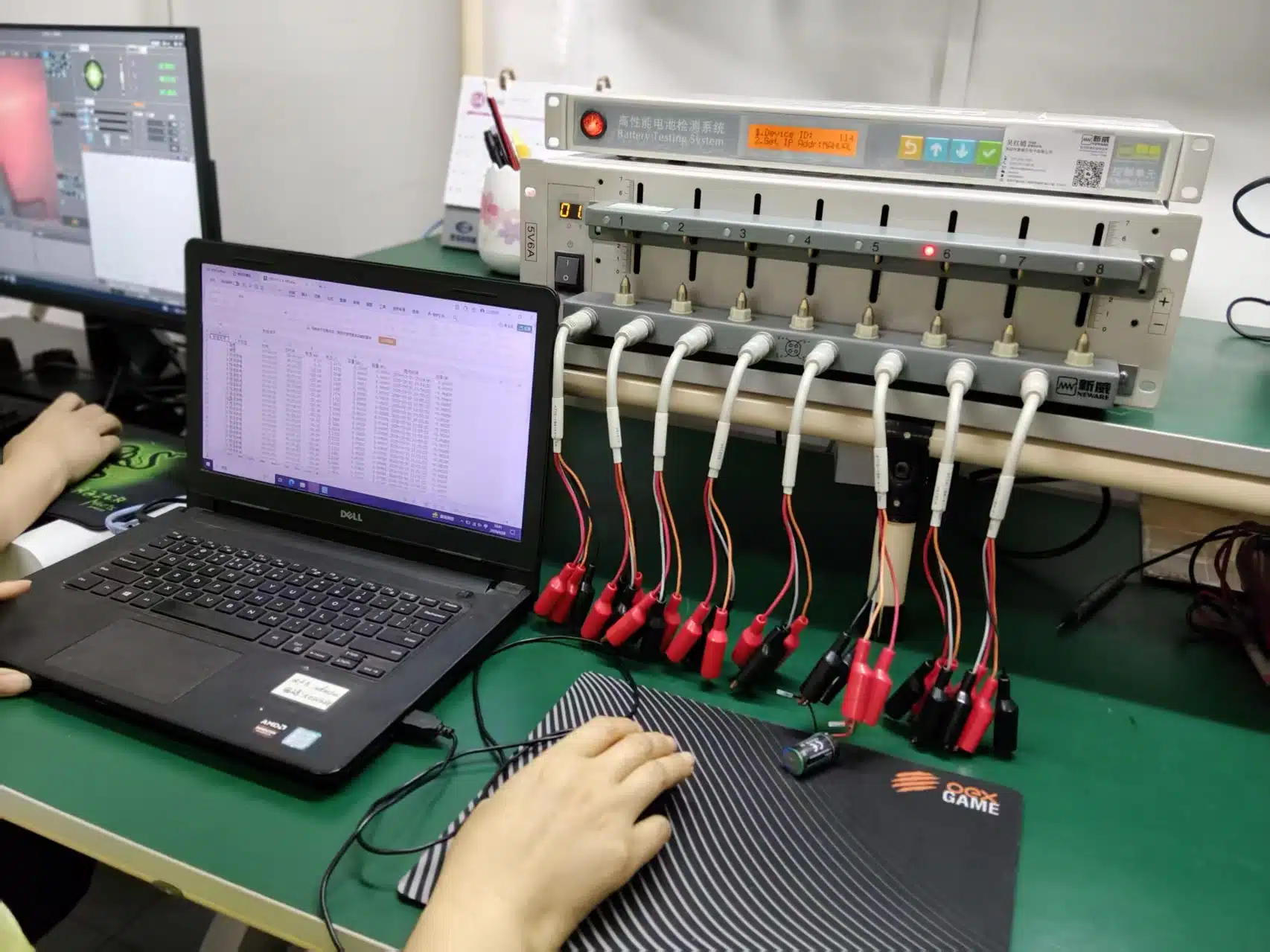
The battery fault warning test simulates a low-battery condition to verify the warning function. The power-supply voltage-variation test verifies the impact of voltage fluctuations on product performance. The battery reverse-connection test verifies that the product will not be damaged if the battery is installed incorrectly. The backup power supply test verifies the switching and continuous power supply capabilities after a main power failure. The electrical safety test assesses electric shock protection, temperature rise, and the risk of fire spread. The glare test uses alternating halogen lamp switching to test the effect of artificial light sources on sensitivity.
EMC and interconnection testing (2 items)
EMC electromagnetic compatibility testing includes immune tests for electrostatic discharge (ESD), radiated emissions, and conducted emissions (referencing EN 50130-4). Interconnectivity testing verifies the reliability of wireless/wired linkage between multiple alarm units.
Common Reasons Smoke Detectors Fail Certification
Many products perform well during prototype evaluation but fail during formal certification. There are some common reasons:
Smoke Sensitivity Failure
Smoke sensitivity is one of the most common reasons for certification failure. A detector that responds too early may generate nuisance alarms, while insufficient sensitivity may delay alarm activation during an actual fire.
Sensitivity problems are often caused by:
To improve consistency, manufacturers should perform automatic smoke calibration and verify detector response before shipment.

⚡ Engineering Insight
In our production experience, maintaining stable optical calibration across different production batches is just as important as the original detector design. Even minor assembly variations can affect long-term sensitivity performance.
Battery Performance Issues
Battery-related failures remain a major challenge, particularly for 10-year sealed battery smoke alarms.
Certification laboratories evaluate battery performance under different environmental conditions, including temperature variation, voltage reduction and long-term discharge simulation.
Common causes include:
💡 Buyer Tips
EMC Non-compliance
Poor EMC performance may cause:
Common engineering causes include:
⚡ Procurement Significance
For apartment developments, hotels and interconnected alarm systems, EMC performance directly affects long-term product reliability and customer satisfaction.
Acoustic Test Failure
Alarm sound pressure is one of the easiest performance items to measure, but also one of the most common reasons for certification failure.
Factors affecting acoustic performance include:
Both EN 14604 and AS 3786 require a minimum sound output of 85 dB(A) at 3 meters, and CFS usually includes additional safety margins to account for component variation and environmental conditions.
⚡ Engineering Insight
Rather than designing exactly to the minimum requirement, experienced manufacturers typically establish internal targets above the certification threshold to improve production consistency.
Environmental Test Failure
Environmental failures frequently occur because of:
Products intended for coastal regions, high-humidity environments or unheated buildings require additional engineering validation beyond minimum certification requirements.
💡 Buyer Tips
Manufacturing Insight from CFS
Certification confirms that a product complies with a published standard, but long-term field reliability depends largely on manufacturing consistency.
Over the past two decades of OEM and ODM production, we have found that most warranty claims originate not from product design, but from variations introduced during manufacturing, material control and engineering change management.
For this reason, quality assurance should begin long before final product inspection.
Common Causes of Product Returns
Analysis of returned products from international markets shows that the majority of failures are associated with a limited number of recurring issues.
Typical examples include:
Process control can prevent many of these issues rather than product redesign.
Lessons Learned from Certification Projects
Every certification project provides valuable engineering feedback.
During certification, laboratories often identify issues that are difficult to detect during routine production testing, including:
Rather than viewing certification as a regulatory obstacle, experienced manufacturers use these findings to improve future product generations.
How We Reduce False Alarms
CFS combines hardware optimization with intelligent software algorithms to reduce nuisance alarms in the following ways.
Continuous Manufacturing Improvements
Manufacturing improvements may include:
These measures help maintain consistent product performance throughout large-scale production.
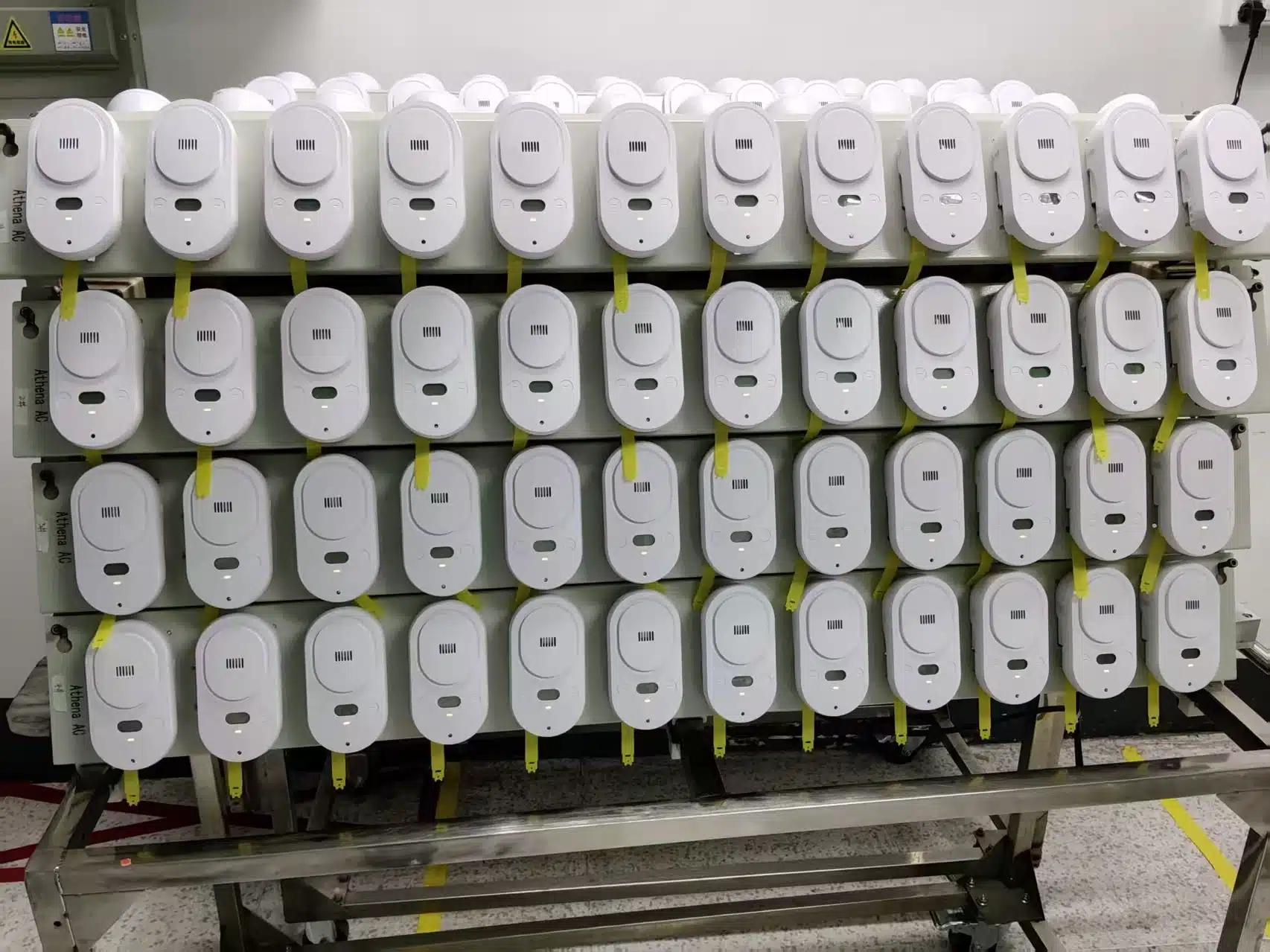
How CFS Verifies Every Smoke Detector Before Shipment
Every certified smoke alarm should perform consistently, not only during laboratory testing but also after mass production.
To ensure this consistency, each production batch follows a standardized quality control process before shipment.
IQC
All critical components, including optical sensors, PCBs, batteries, buzzers and plastic housings, are inspected before entering production.
Material verification reduces the risk of production variability caused by component inconsistencies.
SMT Assembly & AOI Inspection

Automatic Smoke Calibration
Each detector undergoes smoke calibration to verify that alarm sensitivity remains within the required operating range.
Automatic calibration also compensates for manufacturing tolerances between individual optical chambers.
💡 Buyer Tips
100% Functional Test
Before packaging, every smoke alarm is tested for:
Products failing any functional parameter are removed from the production line.

72-hour Aging Test
Extended aging helps identify early component failures before shipment.
Typical observations include:
Final Inspection & Packaging Verification
Finished goods undergo final verification in accordance with AQL standards to meet clients’ requirements before shipment.
Smoke Detector Procurement Checklist
The following checklist highlights can help you select a certified smoke alarm manufacturer.
Evaluation Item | What to Verify | Why It Matters |
|---|---|---|
Certification | EN 14604 / AS 3786 Certificates & Test Reports | Ensures legal market access |
Factory | ISO 9001, Production Capacity, Automation | Confirms manufacturing capability |
Quality Control | IQC, AOI, Smoke Calibration, Aging Test | Improves product consistency |
Performance | False Alarm Rate, Battery Life, EMC | Reduces warranty costs |
OEM Capability | Logo, Packaging, Firmware, Label | Supports private-label projects |
Supply Chain | Battery, Sensor, Lead Time | Minimizes delivery risks |
Technical Support | Engineering, Documentation, Warranty | Enhances long-term cooperation |
Verify Product Certifications and Compliance Documents
Certification should always be the first step in supplier evaluation.
You should get the following documentation before releasing an order:
Always compare the product model, hardware revision and manufacturer information shown on the certificate with the quotation and product label.
Evaluate Manufacturing Capability
There are some key evaluation criteria for manufacturing capability.
Assess Quality Control Systems
CFS has control over quality during each production stage, including:

Review Product Performance and Reliability
Key performance indicators include:
If the supplier has completed long-term reliability testing, request summary reports or validation data.
Products with lower warranty rates and stable long-term performance often provide a lower total cost of ownership than products selected solely on purchase price.
Confirm OEM & Customization Capabilities
For private-label brands, customization capability is an important selection criterion.
Discuss the following items before development begins:

Evaluate Supply Chain Stability
Recommended evaluation points include:
Critical components are tested internally, and the clients are notified to approve and then release the Engineering Change Notices (ECNs).
Review After-sales Service and Technical Support
Key support services may include:
Responsive technical support is particularly valuable for OEM brands introducing new products into unfamiliar markets.
Evaluate not only response speed but also the supplier’s ability to provide practical engineering solutions during product development and after-sales service.
Planning Your Next OEM Smoke Alarm Project?
Customize your logo, packaging, firmware, and labeling with our OEM/ODM manufacturing services.
👉 Start Your OEM Project
Our Product Range — Smoke Alarms for Every Scenario
We offer a complete product matrix covering diverse scenarios, from standalone to smart connected devices:
Standalone Smoke Detectors
SM02/SM03/SM04 with a 10-year lithium battery is suitable for residential apartments and small offices.
Wireless Connected Smoke Detectors
SM11R / CS11R / CO11R support via a 433MHz or 868MHz RF signal; any SM11R / CS11R / CO11R activates all connected devices simultaneously.
Hardwire smoke alarms
SM22/ SM21 are powered by 120V/AC with battery backup, providing continuous fire protection and supporting interconnected operation for residential, commercial, and multi-family buildings.
Wi-Fi Smart Smoke Detectors
SM11W/ CS11W can be connected via the Tuya APP and push notifications for alarms and view device status online in real time, suitable for hotels, schools, and commercial complexes.
Combination Smoke and CO Alarms
Two-in-one detection, saving installation space and costs.
All models are compatible with European and Australian voltages (230V/50Hz) and installation standards.

OEM/ODM — Your Brand on Our Products
CFS®’s core advantage lies in its end-to-end customization capabilities. We support customization of appearance (casing color, indicator lights, button styles), packaging design (branded boxes, multilingual manuals), firmware customization (alarm logic, interconnection protocols), and private labeling/rebranding.
Certified products can be printed directly with your logo, significantly shortening time to market. Flexible minimum order quantities—from small trial orders to large-volume shipments- our annual production capacity of 5 million units is sufficient to support various scales of demand.
We don’t simply sell products; we provide a full-chain service from certification support and sample testing to after-sales technical guidance.
Looking for a Reliable Long-Term Manufacturing Partner?
Explore our complete range of smoke alarms, CO alarms, heat alarms, and interconnected solutions.
👉 Request Product Catalog
Why Choose Us — Reliability, Compliance, Value
We have focused on exporting to Europe and Australia for many years and are familiar with local regulations and channel requirements:
Extensive Certification Experience
With long-term export experience to Europe and Australia, our products have passed multiple international certifications, including UKCA, BSI Kitemark, RoHS, and REACH. We are familiar with local regulations and channel requirements, avoiding the risk of returns due to certification non-compliance.
Stable and Controllable Quality
All alarms have passed by 100% functional testing and smoke/ CO calibration before leaving the factory.
On-Time Delivery
With an annual production capacity of 5 million units, our own production lines are flexible and adjustable. Commonly used models are readily available, ensuring timely project delivery.
Engineering Support
Trusted by 200+ brand partners, we provide comprehensive support from concept to delivery.
Manufacturing Insight
As a manufacturer, we have found that:
European returns primarily stem from:
Therefore, we have increased production of:

Risks of Purchasing Non-certified Smoke Alarms
Price is often an important consideration during supplier selection, but focusing solely on the lowest quotation can introduce significant commercial and compliance risks. Smoke alarms are life safety products, and in most regulated markets, certification is not optional—it is a legal requirement for market access and an essential indicator of product reliability.
Non-certified or improperly certified products may initially appear to reduce procurement costs. However, the resulting expenses associated with customs delays, project rejection, product recalls, warranty claims and reputational damage can far exceed the initial savings.
From our experience supporting OEM brands and international distributors, selecting a certified manufacturing platform at the beginning of a project is one of the most effective ways to reduce long-term business risk.
Potential Risk | Possible Consequences | Recommended Action |
|---|---|---|
No valid certification | Customs rejection, market access issues | Verify certificates before ordering |
Inconsistent product model | Project acceptance failure | Match the certified model with the purchased product |
Weak quality control | Higher defect rates and warranty claims | Audit the manufacturer’s quality system |
Uncontrolled engineering changes | Product inconsistency | Review the supplier’s ECN process |
Limited technical support | Longer issue resolution time | Assess engineering and after-sales capabilities |
Low-cost uncertified products | Higher total lifecycle costs | Evaluate total cost of ownership instead of unit price |
Risk of Failing Regulatory Compliance
Products without valid certification may fail customs inspections, be rejected by distributors or become ineligible for public procurement projects.
💡 Buyer Tips
Project Acceptance Failure
Engineering projects typically include product verification during commissioning and final inspection.
If installed smoke alarms do not match the certified product documentation, consultants or authorities having jurisdiction (AHJs) may reject the installation.
Common causes include:
Project acceptance delays often result in additional labor costs, replacement expenses and contractual penalties.
💡 Buyer Tips
Higher Warranty and After-sales Costs
Potential issues include:
These failures increase warranty claims, technical support requests and replacement costs throughout the product lifecycle.
💡 Buyer Tips
Increased Product Liability and Insurance Risk
Using products without recognized certification may expose businesses to:
💡 Buyer Tips
Supply Chain and Business Continuity Risks
As a result, buyers may experience:
These issues become particularly problematic for long-term OEM projects where product consistency is essential.
💡 Buyer Tips
Damage to Brand Reputation
Negative consequences may include:
Protecting brand reputation requires selecting manufacturing partners that prioritize certification compliance, engineering quality and continuous process improvement.
💡 Buyer Tips
Hidden Total Cost of Ownership (TCO)
While non-certified products may appear less expensive initially, the overall cost of ownership is often substantially higher.
Additional costs may include:
When these costs are considered over the entire product lifecycle, certified products frequently provide a lower total cost of ownership despite a higher initial purchase price.
💡 Buyer Tips
FAQ
Q1 Can one smoke detector comply with both standards?
Yes. CFS SM11R4 can comply with both EN 14604 and AS 3786.
Q2 How long does certification take?
OEM smoke alarm certification typically takes 6 to 10 months, including product evaluation, laboratory testing, documentation review, factory inspection (if required), and certificate issuance.
Q3 How do buyers verify certification?
Confirm the certificate number, certification body, product model, manufacturer, issue status, hardware version, firmware version, and supporting laboratory test reports.
Q4 Why do smoke detectors fail certification?
The most 5 causes include unstable smoke sensitivity, battery performance issues, insufficient EMC protection, inadequate sound output, and poor environmental reliability.
Q5 What documents should buyers request?
Before placing a bulk order, buyers should request:
Q6 Can RF interconnected alarms be certified?
Yes. RF interconnected smoke alarms can be certified provided both the individual detector performance and wireless interconnection functions comply with the applicable certification requirements. Additional testing verifies communication reliability, simultaneous alarm activation, and resistance to electromagnetic interference.
Q7 Can existing certified platforms reduce OEM costs?
Absolutely. It can reduce engineering investment, development time, and project risk.
Q8 How does CFS support OEM certification?
CFS supports OEM partners product design optimization, documentation preparation, pre-compliance testing, laboratory coordination and certification submission.
Q9 What certifications are required for Europe?
Normally need EN 14604, CE marking, UKCA (United Kingdom), RoHS, REACH, and ISO 9001 quality management certification.
Q10 What certifications are required for Australia?
Residential smoke alarms comply with AS 3786:2023 but engineering projects need ActivFire, CSIRO, or SAI Global.
Conclusion — Let’s Grow Together in Europe & Australia
The mandatory implementation of EN 14604 and AS 3786 has created sustained demand for smoke detectors in Europe and Australia for decades. CFS®, with its compliant products, proven quality, and flexible production capacity, looks forward to working with you to bring reliable safety protection to homes across Europe and Australia.