FIRE SAFETY STANDARDS
EN 14604 Standalone & Wireless Photoelectric Smoke Alarms
EN 14604 certified standalone and wireless photoelectric smoke alarms for reliable residential fire protection, supporting RF interlink, 10-year battery options, private label, and OEM/ODM compliance.
EN 14604 Standalone & Wireless Photoelectric Smoke Product Info
EN 14604 photoelectric smoke alarms are developed for residential fire protection requiring dependable detection performance and certification compliance. Standalone and wireless interlinked alarms use optical smoke sensing to detect smoldering fires while helping reduce nuisance alarms caused by cooking fumes and airborne particles for residential housing and retrofit fire safety projects.
CFS supplies a complete EN 14604 smoke alarm platform covering standalone, RF interlinked and smart Wi-Fi models for residential applications.
Image | Type | Model | Connectivity | Power Supply | Key Features | Certification / Remarks |
|---|---|---|---|---|---|---|
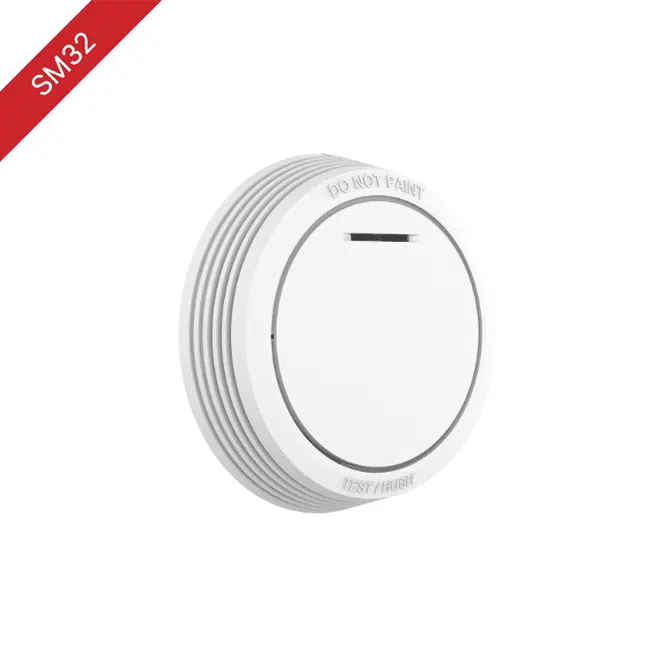
| Standalone | Independent | DC3V Sealed Lithium Battery | New dual-emitter optical chamber, replaceable battery | EN 14604, TÜV Certified | |
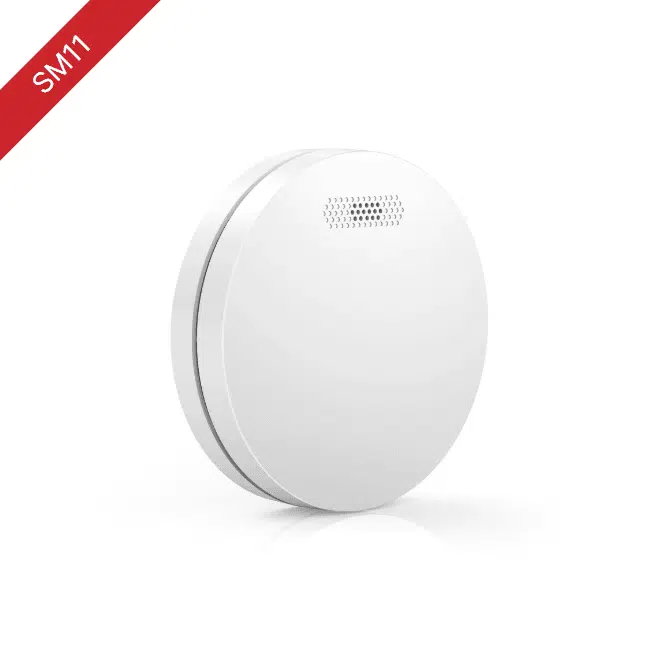
| Standalone | Independent | DC3V Sealed Lithium Battery | Basic residential protection | EN 14604, TÜV Certified | |
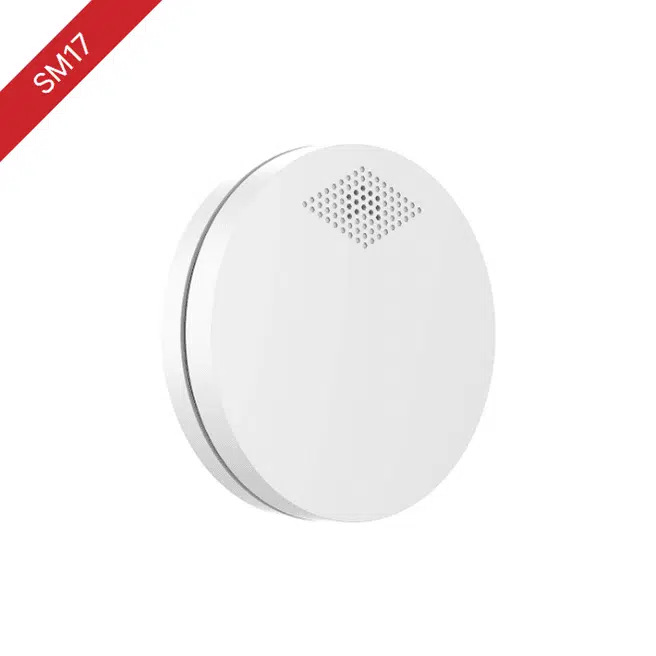
| Standalone | Independent | DC3V Sealed Lithium Battery | Compact residential design | EN 14604, TÜV Certified | |
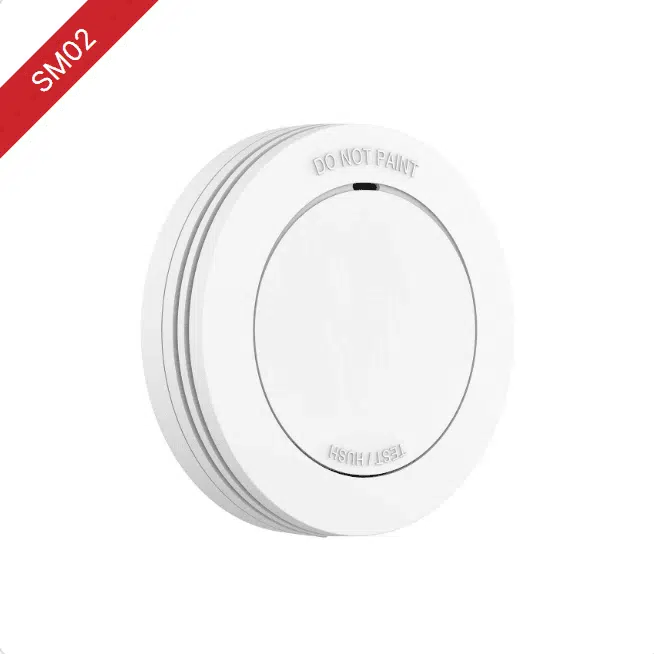
| Standalone | Independent | DC3V Sealed Lithium Battery | Compact size, easy installation | EN 14604, TÜV Certified | |
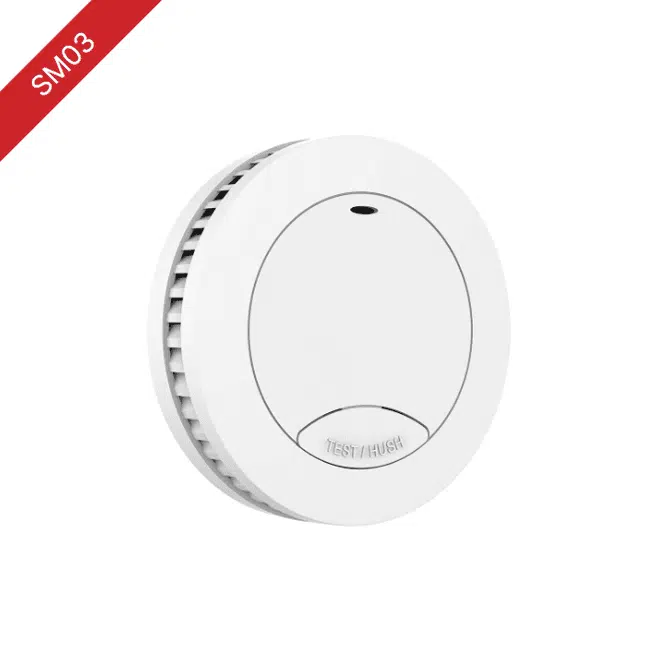
| Standalone | Independent | DC3V Sealed Lithium Battery | Compact size, easy installation | EN 14604, TÜV Certified | |
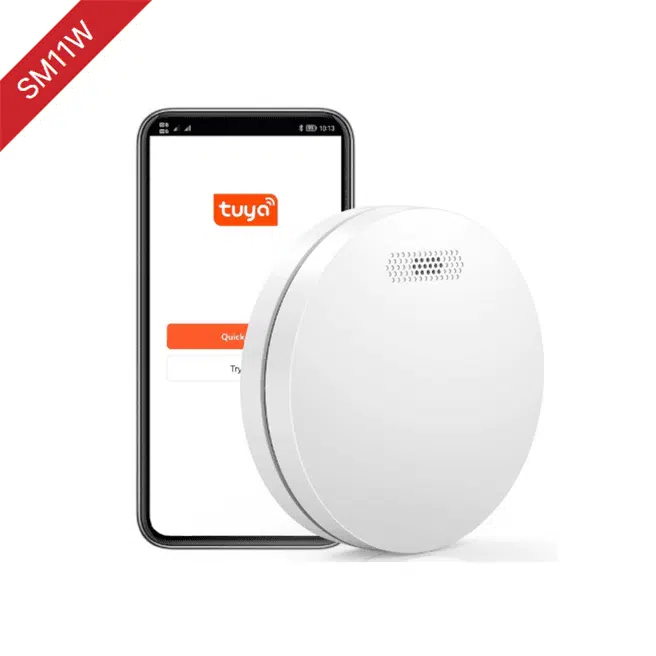
| Wi-Fi | Wi-Fi | DC3V Sealed Lithium Battery | Tuya APP notification & smart home integration | EN 14604, TÜV Certified | |
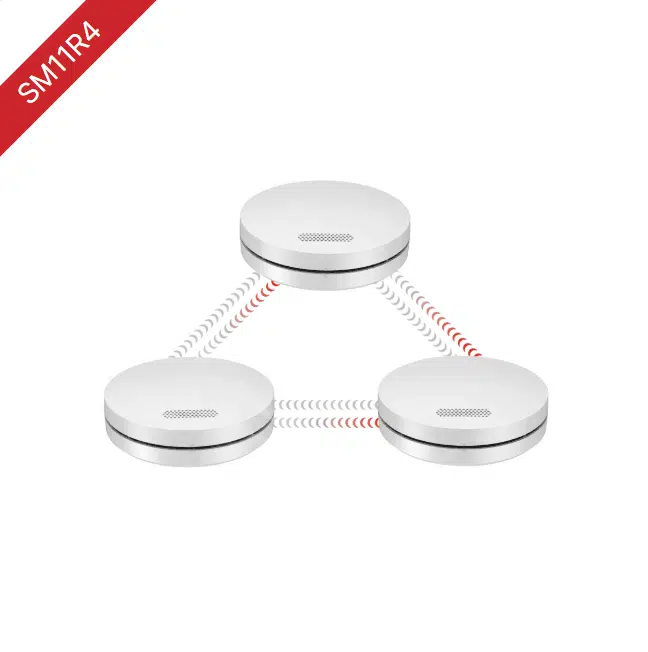
| Wireless Interlinked | RF 433MHz | DC3V Sealed Lithium Battery | Whole-home synchronized alarm | EN 14604, TÜV Certified | |
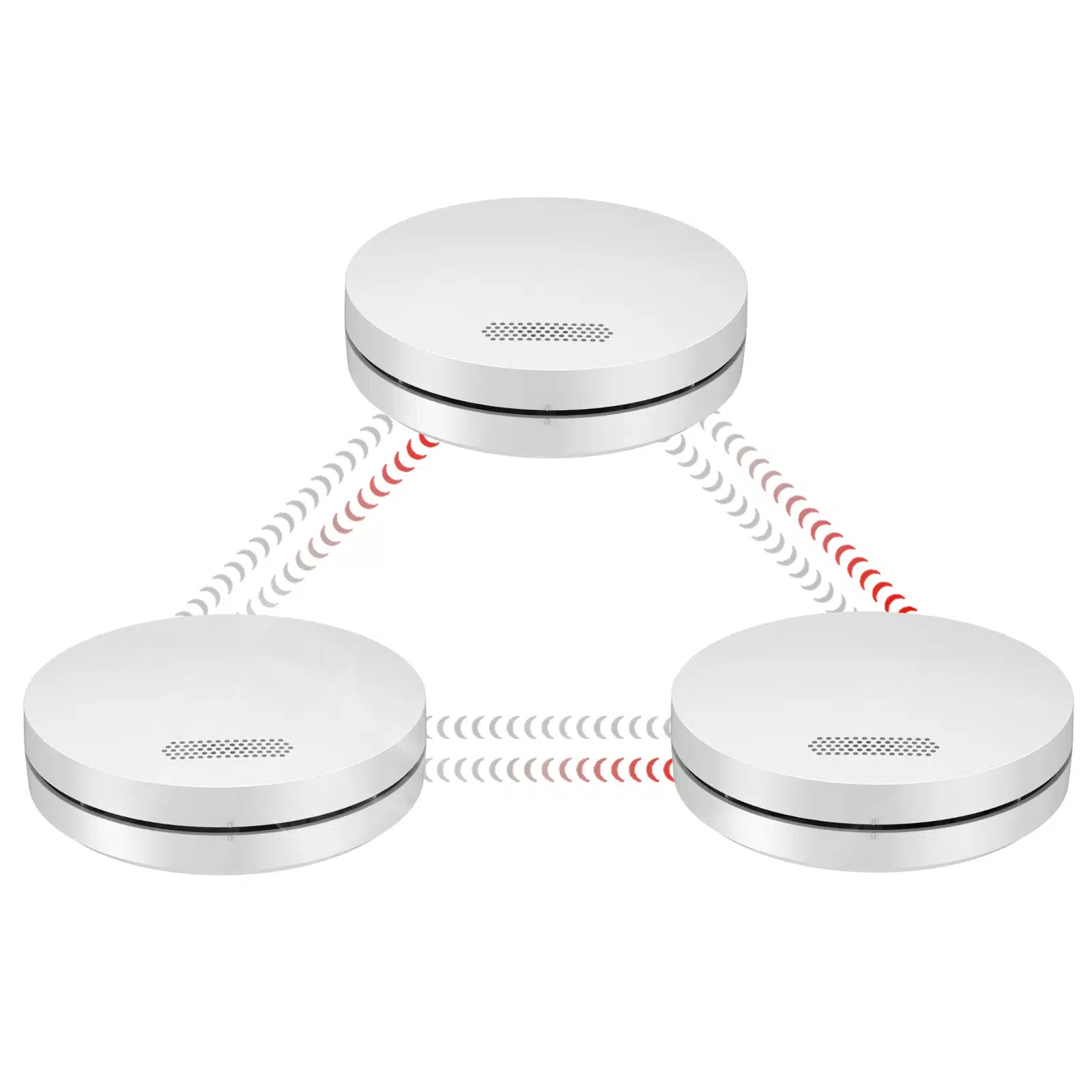
| Wireless Interlinked | RF 868MHz | DC3V Sealed Lithium Battery | Long-distance wireless networking | EN 14604, TÜV Certified | |
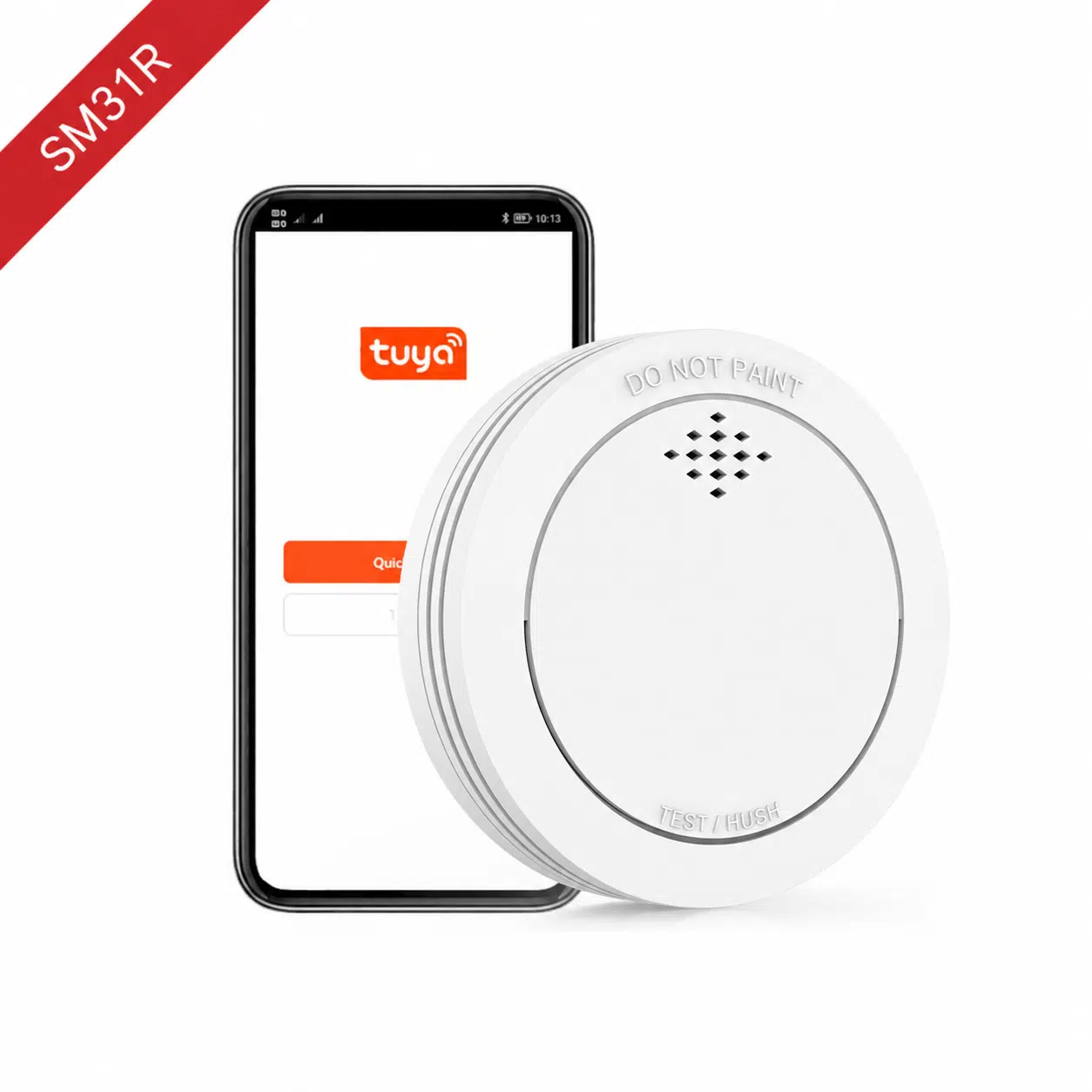
| Wireless Interlinked | RF 433MHz | Replaceable DC3V Lithium Battery | Interlinked, replaceable battery | EN 14604, TÜV Certified | |
| Smart Interlinked | Wi-Fi + RF433MHz | DC3V Sealed Lithium Battery | Smart APP + RF interconnection | TÜV Certified |
What is EN 14604
EN 14604 is a performance and safety standard for residential smoke alarms and provides the technical and testing requirements required for product compliance. EN 14604 compliance and CE-related approval are practical requirements for certification and residential fire protection projects. Typical applications include:
The core objective of EN 14604 is not merely to define “smoke detection sensitivity,” but rather to ensure that products, in the context of actual fire scenarios, possess:

EN 14604 smoke alarms are designed for comprehensive residential coverage.
Standalone units provide basic protection for individual rooms, while wireless interlinked systems ensure whole-home synchronization, triggering all connected alarms when any single device detects smoke.
This is especially critical for multi-storey homes and rental properties where early warning across all areas saves lives.
Key Aspects of European Standard EN 14604 Smoke Alarms
EN 14604 mainly defines requirements across several critical performance and safety categories:
Technical Requirement | EN 14604 Requirement | Purpose |
|---|---|---|
Smoke Detection | Defined sensitivity testing | Reliable fire detection |
Alarm Sound Output | Minimum 85 dB (typically at 3 m) | Effective occupant warning |
Battery Monitoring | Low battery warning | Prevent loss of protection |
Environmental Testing | Temperature, humidity, corrosion | Reliability in different climates |
EMC Performance | Electromagnetic compatibility | Reduce interference and false alarms |
Reliability | Long-term operational stability | Consistent product performance |
Product Marking | Model and compliance information | Market identification and traceability |
User Instructions | Installation and maintenance guidance | Safe product use |
1. Smoke Detection Performance
EN 14604 requires timely smoke detection with a consistently repeatable alert. Common tests include:
2. Audible Alarm Requirements
The dB level of alarm must be over 85 dB(A) at 3 meters. This requirement primarily serves to ensure:

The 85 dB(A) at 3 meters requirement is verified in specialized acoustic testing chambers.
CFS smoke alarms undergo rigorous sound output testing to ensure compliance with EN 14604 audible alarm requirements, providing reliable warning performance even in challenging residential acoustic environments.
3. Power Supply and Battery Monitoring
EN 14604 imposes rigorous requirements regarding power supply reliability. The standard mandates that smoke detectors must feature:
When battery capacity becomes insufficient, the device must automatically issue an alarm notification and maintain this warning signal for a specified duration. For more details on battery technology, refer to our complete smoke detector battery guide.
Tips From CFS
Based on 20+ years of manufacturing experience, CFS recommends selecting smoke alarms with sealed lithium batteries for European residential projects. Our 10-year battery design significantly reduces maintenance costs and ensures long-term compliance with EN 14604 power supply monitoring requirements.

4. Environmental Reliability
EN 14604 does not merely verify whether a “brand-new unit functions”; it also validates long-term stability and durability. Key environmental tests include:
Temperature Resistance
Verifying stability under the following conditions:
Humidity Testing
Testing under high-humidity conditions:
Mechanical Durability
Includes vibration, shock, and transport resilience testing to prevent:
EMC Compatibility
Verifies interference immunity and prevents issues caused by static electricity, power fluctuations, and wireless interference which could lead to false alarms or functional anomalies.
5. Product Marking and User Instructions
EN 14604 places equal emphasis on product information transparency. Standard requirements include:
In the European market, non-compliance regarding labeling and instruction manuals can also pose significant sales risks.
Important Note for European Market Entry
All EN 14604 smoke alarms sold in the EU must carry proper CE marking, Declaration of Performance (DoP), and factory production control (FPC) documentation. CFS provides full certification support including packaging compliance review and localized user manual preparation for target markets.
Company Info
CFS develops and manufactures over 50 models of EN 14604 smoke alarms, CO alarms, and combined fire alarms with wireless interlinked, 10-year battery life, and Wi-Fi functionality. We can assist clients with certification preparation, including BOM review, sample coordination, packaging compliance, and manufacturing control for OEM and private-label projects, drawing on 20+ years of production and engineering experience.
Tips From CFS
When planning your EN 14604 product lineup, consider offering both standalone and wireless interlinked variants to cover different residential market segments. CFS’s modular platform approach allows shared optical chambers and firmware across multiple models, reducing development costs and accelerating certification timelines for OEM and private-label projects.
EN 14604:2005 vs EN 14604:2005/AC:2008
EN 14604:2005 defines the requirements for the development and certification of European household smoke alarms, including smoke-detection performance, alarm-sound, power supply and battery monitoring, environmental reliability, product marking and user instructions.
EN 14604:2005/AC:2008 updates the technical corrections or editorial changes of version 2005. It includes:
Version History
Manufacturers’ and buyers’ familiarity with the history of EN 14604 helps verify product approval status and ensures compliance with European residential smoke alarm requirements.
Year | Version | Description |
|---|---|---|
Pre-2005 | Draft development | European smoke alarm harmonization work |
2005 | EN 14604:2005 | First official smoke alarm product standard |
2008 | EN 14604:2005/AC:2008 | Technical corrigendum and clarification |
CPR era | Continued harmonized use | Alignment with CE and CPR requirements |
Europe Smoke Alarm Requirements
1. Europe Smoke Alarm Compliance Requirements Overview
Requirement Category | Requirement | Description | Typical Status |
|---|---|---|---|
Product Standard | EN 14604 | European smoke alarm performance and testing standard | Required |
CE Marking | CE Compliance | Mandatory product conformity marking for EU market | Required |
CPR Compliance | Construction Products Regulation | Construction product market access framework | Required |
DoP | Declaration of Performance | Product performance declaration issued by manufacturer | Required |
FPC | Factory Production Control | Manufacturing quality and consistency system | Required |
Third-Party Certification | Notified Body Assessment | Product testing and factory audit | Depending on certification route |
Product Traceability | Identification & Records | Batch and manufacturing traceability | Required |
User Documentation | Installation & Safety Manual | Operating and maintenance instructions | Required |
Language Compliance | Local Language Manual | Country-specific language requirement | Often Required |
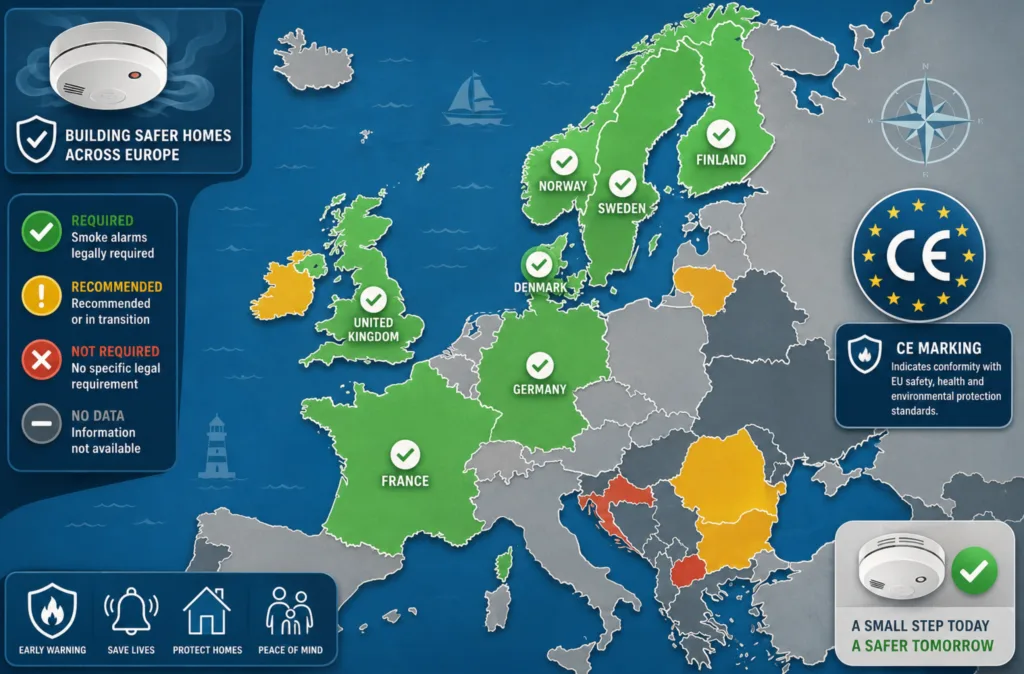
European smoke alarm requirements vary by country, but EN 14604 compliance serves as the foundation for all EU market entries.
Understanding local regulations—including specific installation rules, rental property mandates, and interlinked alarm preferences—is essential for successful product positioning across the UK, Germany, France, and Nordic markets.
2. Europe Country Smoke Alarm Requirement Comparison
Country / Region | Smoke Alarm Requirement | Typical Installation Rule | Market Preference |
|---|---|---|---|
UK | Residential smoke alarm regulations | Alarm on each living floor; rental property requirement | Interlinked alarms, 10-year battery |
Germany | Rauchmelderpflicht | Bedrooms, hallways, escape routes | Wireless interconnected alarms |
France | Mandatory residential smoke alarms | Minimum one alarm per dwelling | Easy-install, CE marked alarms |
Nordic Countries | Enhanced safety expectations | Country-specific residential requirements | High reliability, long-life battery |
Other EU Markets | EN 14604 + Local Rules | Depends on national building codes | Photoelectric smoke alarms |
3. Country Requirement Comparison Matrix
Compliance Item | UK | Germany | France | Nordic Markets |
|---|---|---|---|---|
EN 14604 Product Compliance | ✓ | ✓ | ✓ | ✓ |
CE Marking | ✓ | ✓ | ✓ | ✓ |
Smoke Alarm Mandatory | ✓ | ✓ | ✓ | ✓ |
Rental Property Requirement | Strong | Regional | Moderate | Varies |
Interlinked Alarm Preference | High | High | Medium | High |
10-Year Battery Preference | High | Medium | High | Very High |
Local Language Documentation | ✓ | ✓ | ✓ | ✓ |
FAQs
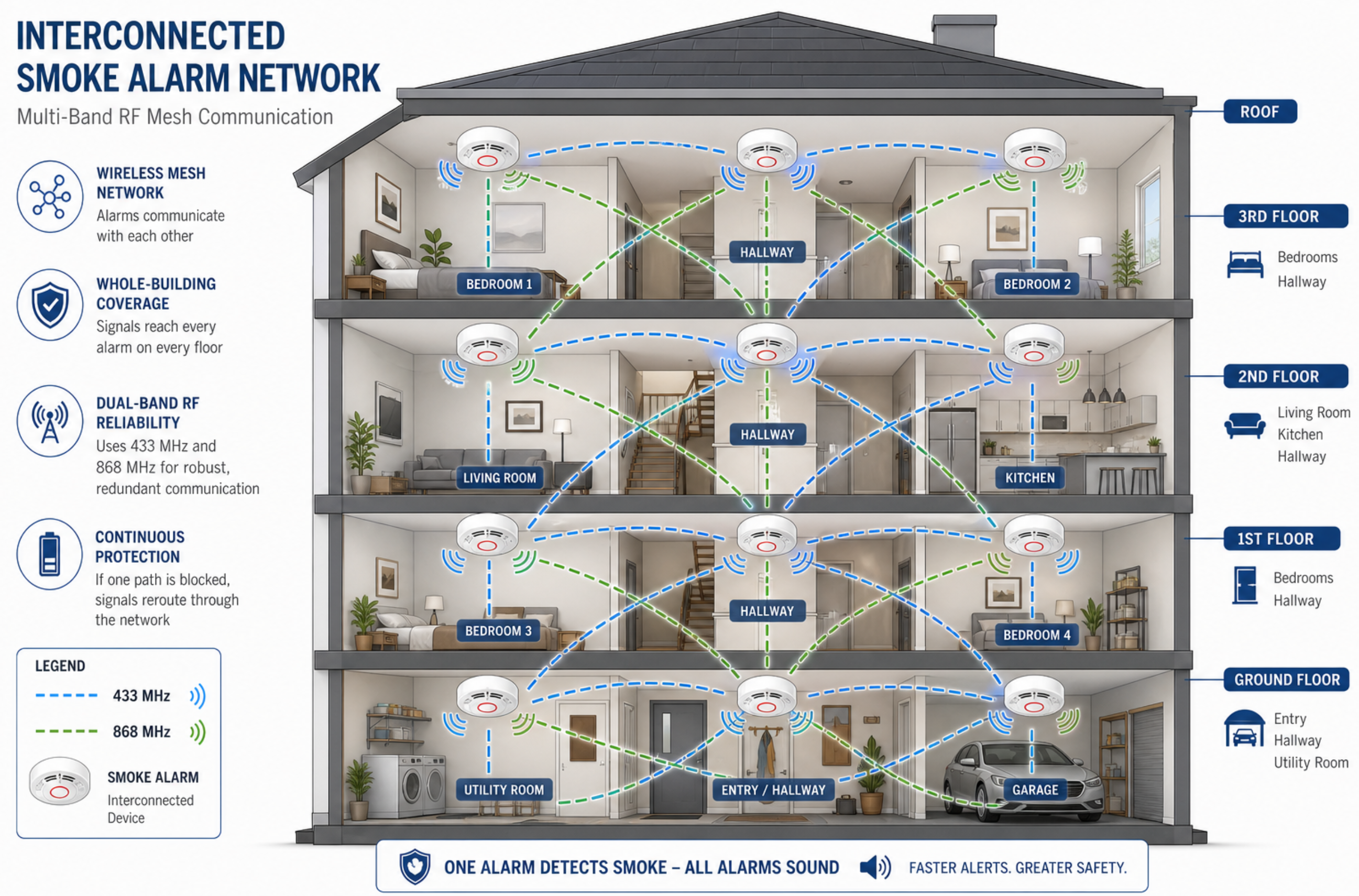
CFS wireless interlinked smoke alarm systems use RF 433MHz and 868MHz protocols to create reliable whole-home protection networks.
When one device detects smoke, all interconnected alarms sound simultaneously, providing critical early warning regardless of where occupants are located in the residence.
Other Alarm Products suit EN 14604
Combo alarms can provide comprehensive residential safety solutions to improve fire warning coverage and reduce false alarms. Learn more about our combo alarm OEM/ODM solutions.
Image | Item | Model | Product Type | Sensor Technology | Standards | Connectivity |
|---|---|---|---|---|---|---|
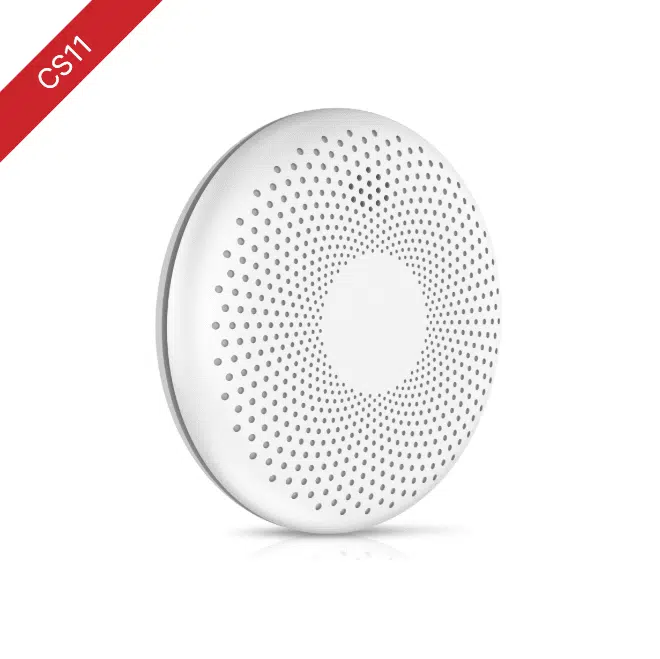
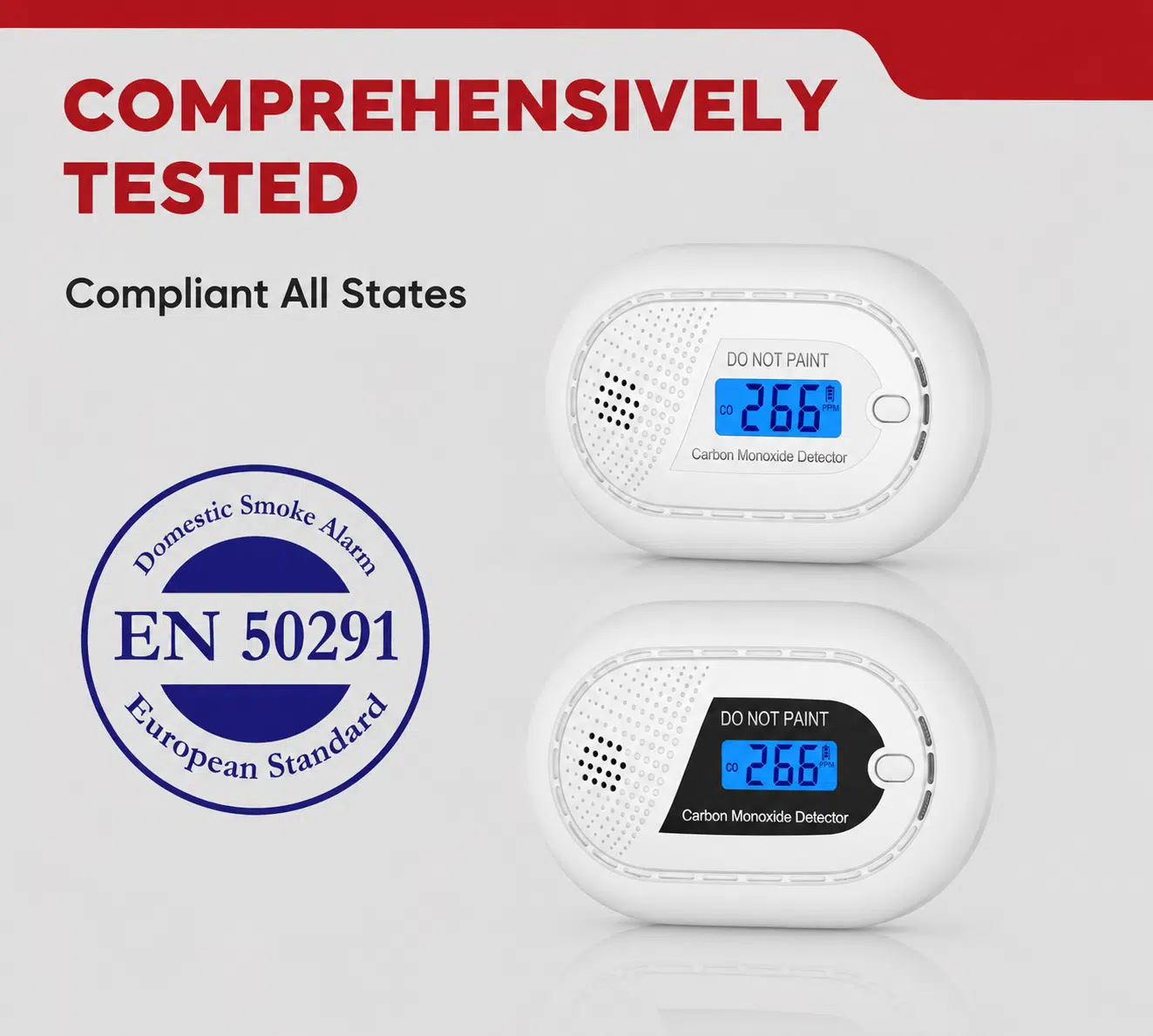
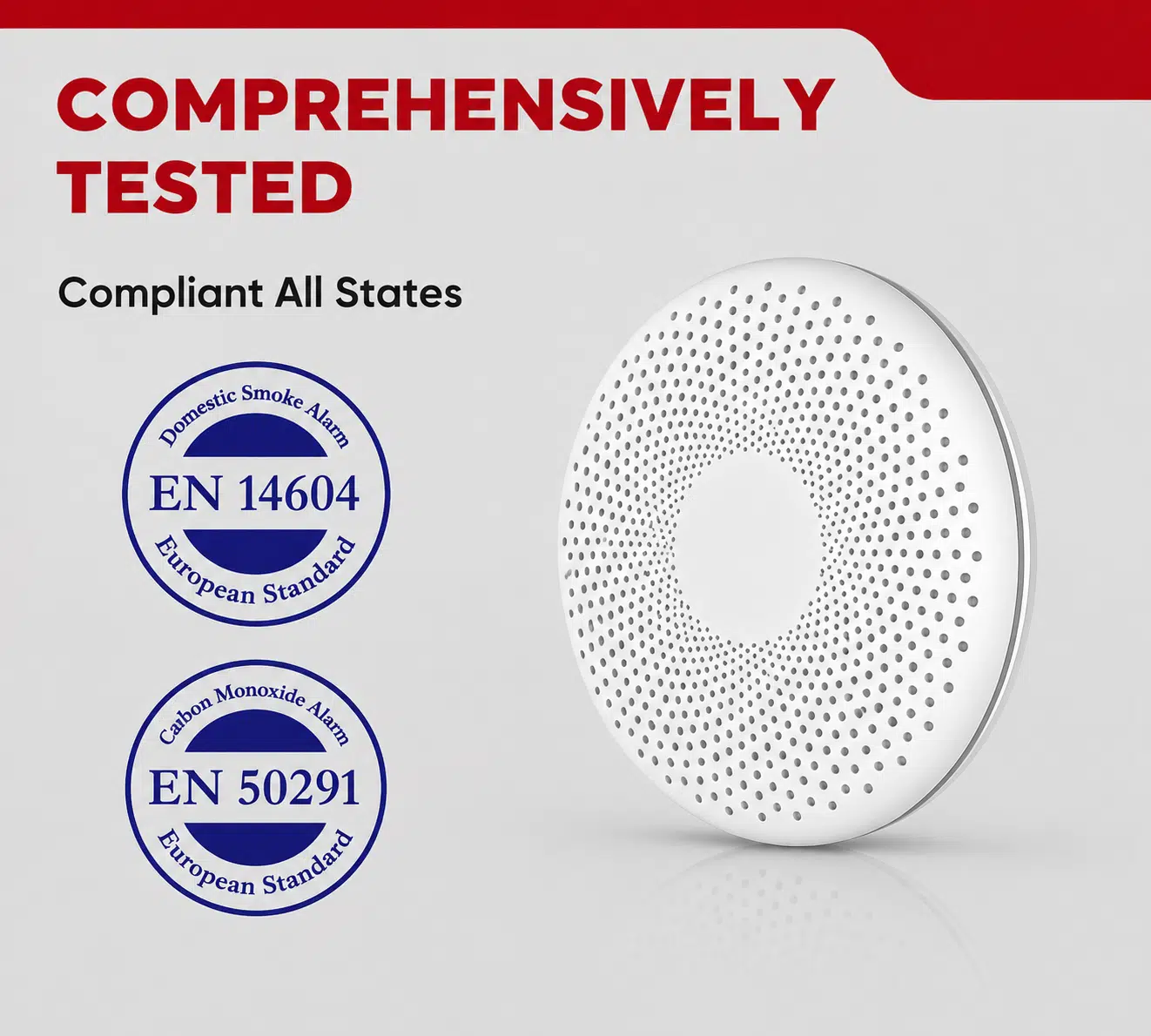
| Smoke & CO Combo | Smoke and carbon monoxide combined alarm | Photoelectric + Electrochemical | EN 14604 + EN 50291 | Standalone | |
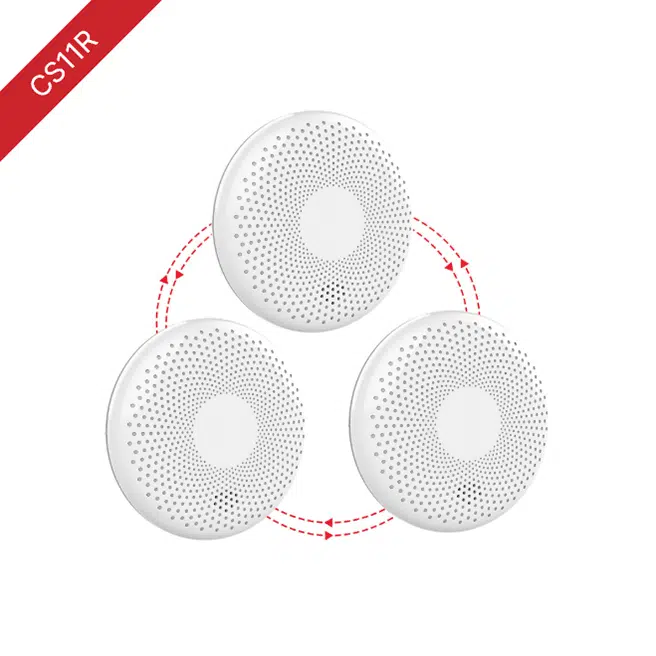
| Smoke & CO Combo | Smoke and carbon monoxide combined alarm | Photoelectric + Electrochemical | EN 14604 + EN 50291 | RF Interlinked | |
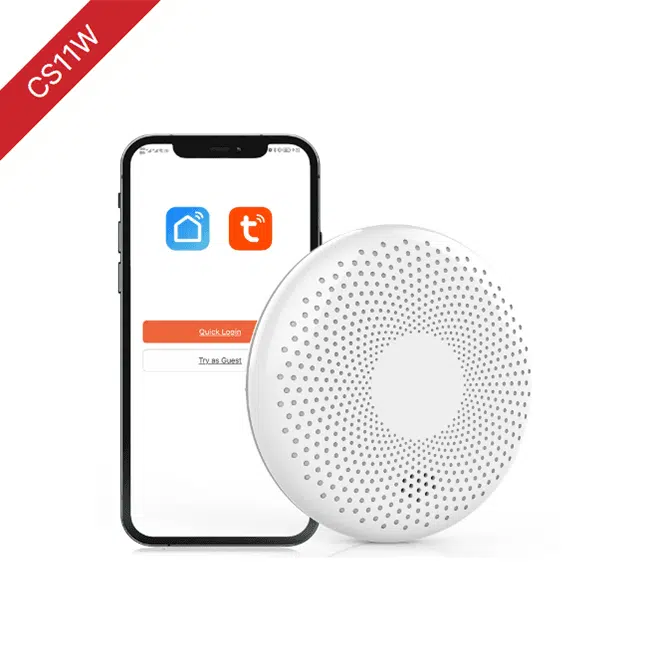
| Smoke & CO Combo | Smoke and carbon monoxide combined alarm | Photoelectric + Electrochemical | EN 14604 + EN 50291 | Wi-Fi (Tuya APP) | |
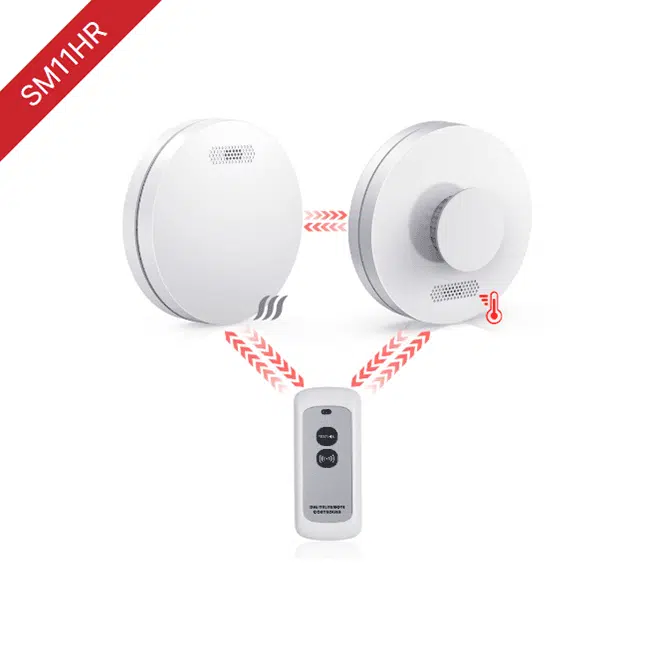
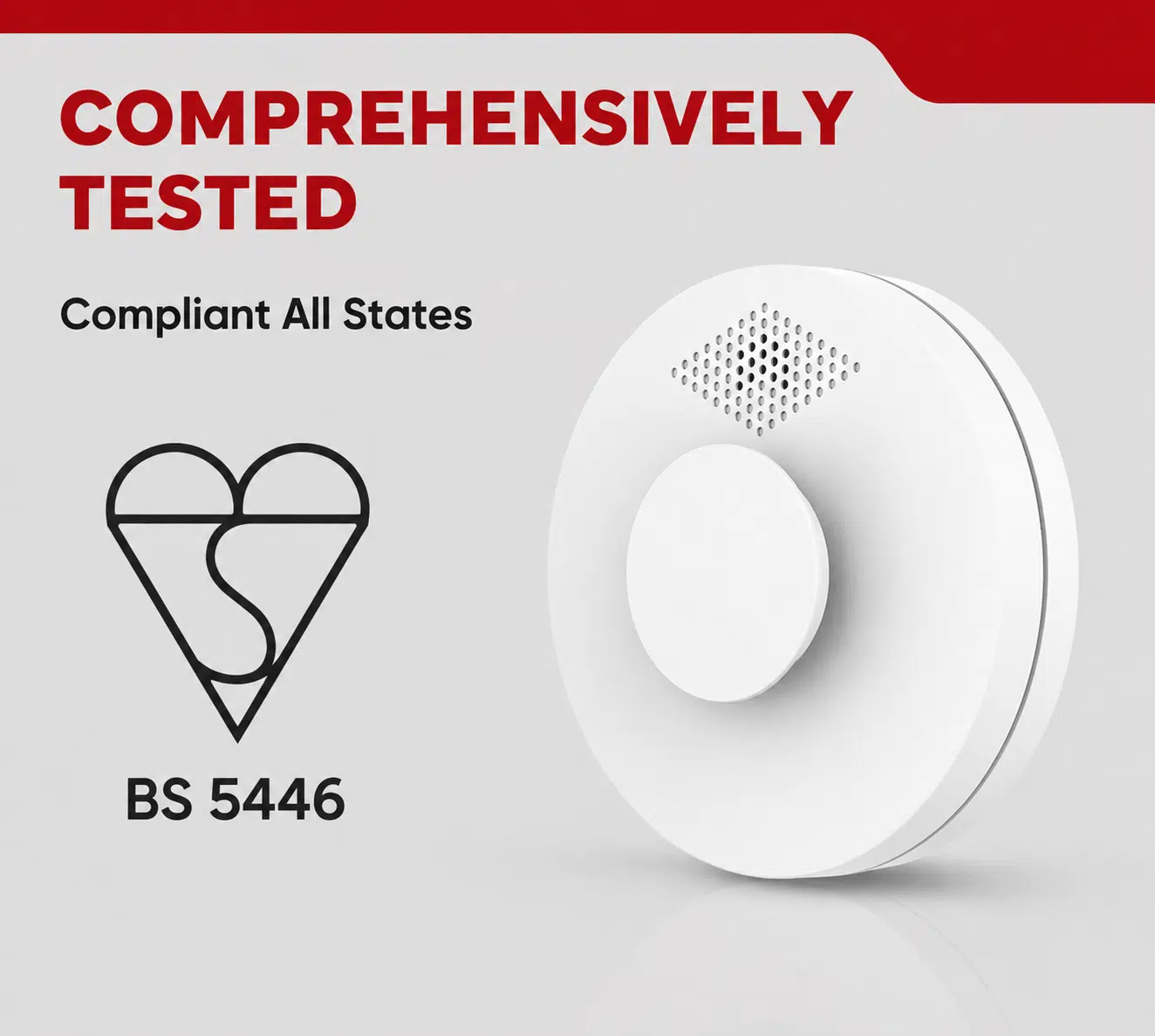
| Heat & Smoke Combo | Smoke and Heat Combo alarm | Photoelectric + Thermal | EN 14604 + BS 5446 | RF Interlinked | |
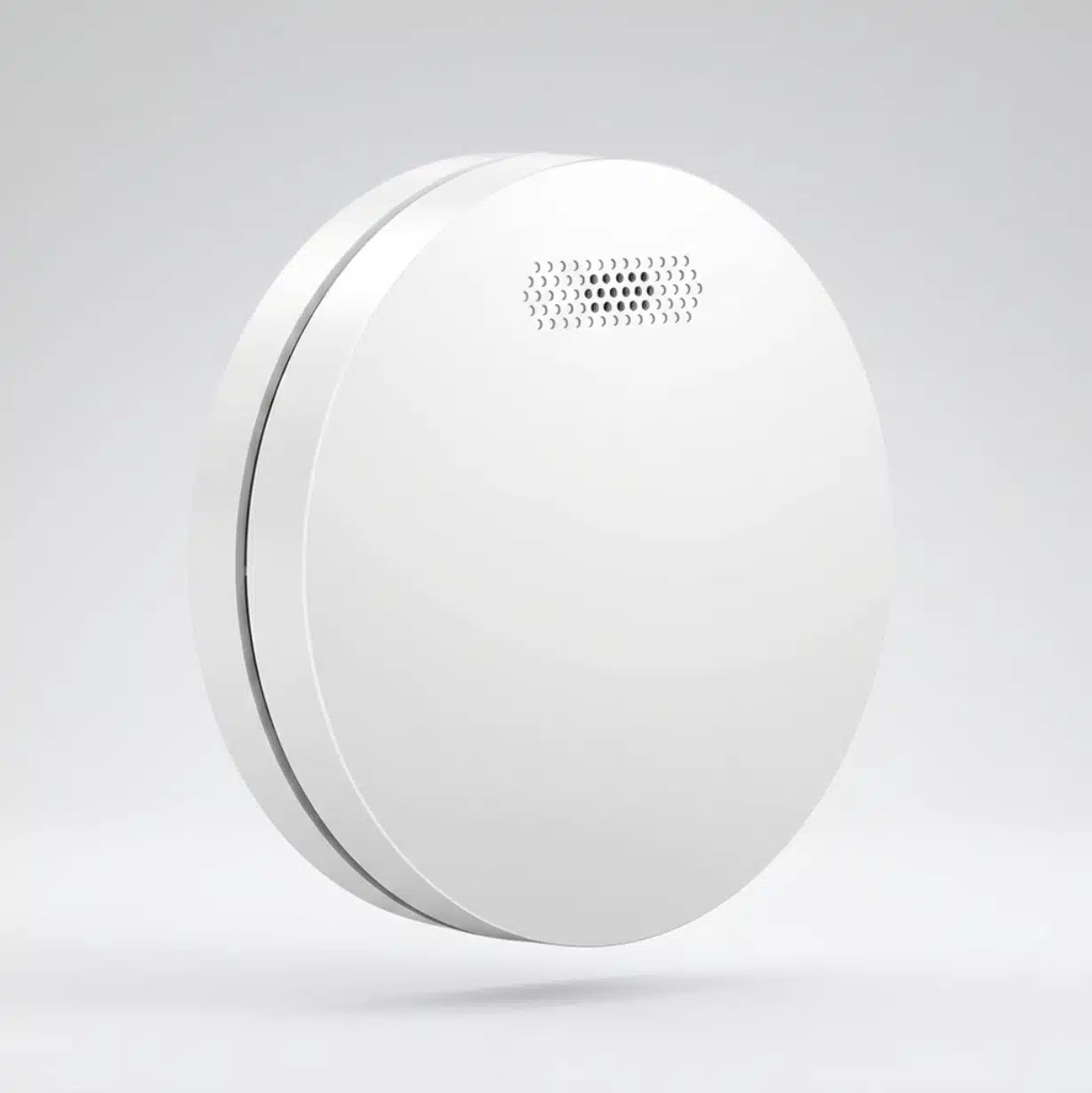
| Heat & Smoke Combo | Smoke and Heat Combo alarm | Photoelectric + Thermal | EN 14604 + BS 5446 | Wi-Fi + RF (Tuya APP) |
Other Standard Products
Explore our complete range of fire safety products certified to international standards:
Product Gallery


Get Started with CFS EN 14604 Smoke Alarms
Ready to launch your EN 14604 certified smoke alarm product line? CFS offers complete OEM/ODM services from design to certification. Contact our team today to discuss your project requirements.
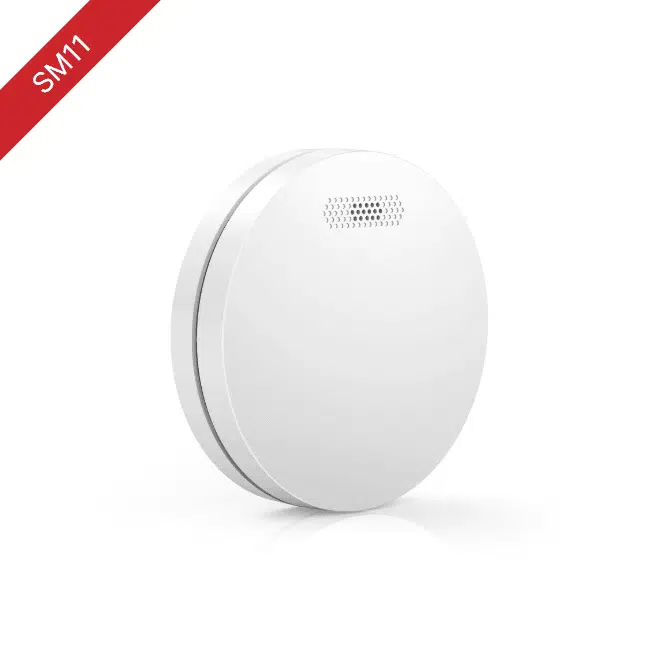
SM11 Ultra-slim And Ultra-light Stand Alone Smoke Detector
Lifetime: 3 or 10 years, cuztomziation avaliable
SM11R4 Wireless Interlinked Photoelectric Smoke Alarm
Lifetime: 3 or 10 years, cuztomziation avaliable