Quick Answer
What Is Zigbee Interlink?
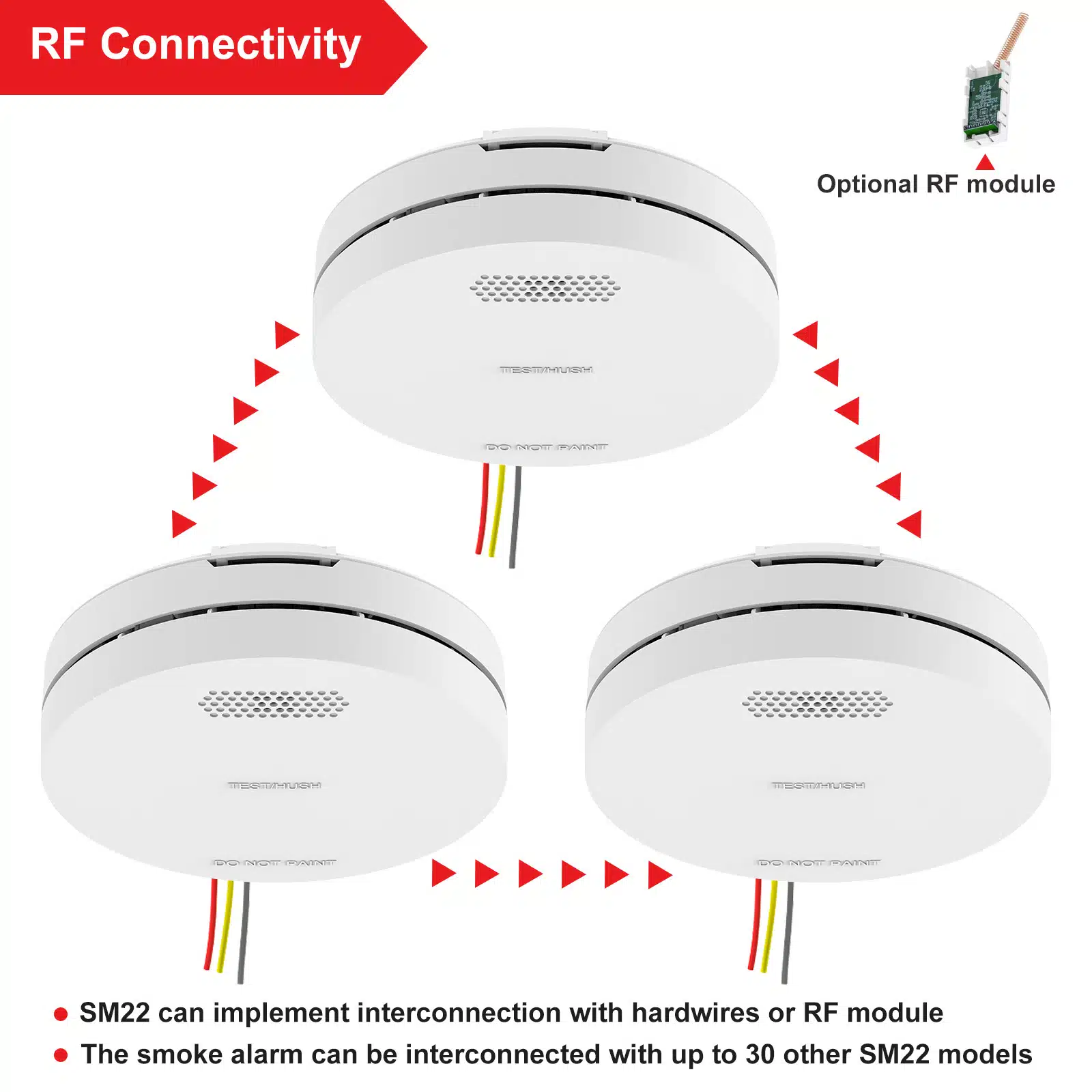
Zigbee interlink enables smoke alarms to send alarm, fault, and test signals to one another without hardwired connections for whole-building fire-alert linkage, and it seamlessly connects smart gateways to push real-time fire notifications to mobile applications.
Every Zigbee smoke alarm detects smoke and broadcasts alarm data across the entire mesh network. Nearby alarms forward the signal automatically to expand coverage.
Why Are OEM Brands Choosing Zigbee Instead of Traditional RF?
Zigbee delivers greater network capacity, stronger signal penetration, automatic network recovery, and native gateway compatibility, unlike RF alarms, which support only a limited number of paired devices.
Summary:

What Is a Zigbee Interlinked Smoke Alarm?
The following photos will show the definition of Zigbee Interlinked Smoke Alarm and how Zigbee Interlink Work.

Please check the Recommended Flowchart Smoke Detection

Zigbee vs RF Interlinked vs Wi-Fi Smoke Alarms: Which Technology Is Best for Your Project?
Zigbee, RF, and Wi-Fi smoke detectors are designed for completely different applications in wireless alarms. RF is suitable for residential projects with limited budgets; Wi-Fi is suitable for a small number of devices and home app control; while Zigbee is more suitable for apartment, hotel, and property management projects that require stable network connectivity, remote management, OTA upgrades, and smart building integration. From OEM’s long-term product planning perspective, Zigbee 3.0 has become the mainstream wireless architecture for smart fire protection products.
Communication Protocol Comparison
Zigbee
Adopts a unified global open IEEE 802.15.4 Zigbee 3.0 standard to enable cross-brand, cross-module communication for all alarm, fault, and self-test signals and bidirectional data transmission (alarm upload and remote command downlink) compliant with EU RED and FCC wireless regulatory standards.
Traditional RF
Mostly proprietary private 433MHz/868MHz one-way communication protocols without unified industry standards. Different manufacturers’ RF modules cannot interlink with each other. Only single-direction alarm broadcast is supported; remote query, remote test, and OTA signal transmission are unavailable. Lacking a unified encryption mechanism, it is prone to signal interference and false triggers caused by external RF devices.
Network Stability
Zigbee
Built-in self-healing mesh topology. Every smoke alarm acts as a signal relay node. If one unit fails, loses power, or the signal is blocked by walls, the network automatically switches to other adjacent devices for multi-hop signal forwarding, with no alarm dead zones. Automatic route reconfiguration runs in real time; even partial network damage won’t break whole-house linkage. Optimized anti-Wi-Fi/ Bluetooth interference channel algorithm to reduce co-frequency signal conflict.
Traditional RF
Simple point-to-point / one-to-many star topology without relay function. Signals can only be transmitted in direct line of sight. Once walls, floors, or distance block transmission, interconnection fails permanently. No automatic route repair after a device failure; a single damaged unit may cut off the link between multiple detectors. Susceptible to household wireless equipment interference, easy to generate missed inter-alarm or false linkage.
Wi-Fi
Each alarm establishes an independent direct connection to the home router, with no mutual signal relay between detectors. The entire wireless link depends entirely on normal router operation. Router power outages, rebooting, or broadband disconnection will cut all Wi-Fi smoke alarms off from remote notifications. If multiple alarms connect to a single router, excessive device load causes frequent offline drops, requiring repeated re-pairing by installers. No backup signal routing mechanism exists for blocked transmission paths.

Power Consumption
Zigbee
Ultra-low power sleep design optimized for battery-powered smoke alarms. The module enters a dormant state 95% of the time, except when receiving or sending signals.
Traditional RF
Continuous periodic signal polling mechanism leads to higher standby power draw. Frequent wakeups to scan surrounding pairing devices increase battery discharge rate. Most RF interlinked smoke alarms can achieve an 8~ 10 years battery life.
Wi-Fi
The Wi-Fi chip has a much higher baseline power draw to maintain constant radio listening to stay connected to the router. Frequent heartbeat packets, cloud polling, and real-time data upload drain lithium batteries rapidly. Most Wi-Fi smoke alarms only support 2–3 years of battery life, failing to meet the global market’s 10-year safety device standard. Mains-powered Wi-Fi models resolve power issues but add installation wiring costs and cannot function during power blackouts without backup cells.
Installation & Maintenance Comparison
Comparison Item | Zigbee | RF | Wi-Fi |
|---|---|---|---|
Initial Installation | Easy | Easy | Medium |
Additional Devices | Auto Join | Re-pair Required | Router Reconfiguration |
Firmware Upgrade | OTA | Manual | OTA |
Maintenance Cost | Low | Medium | High |
Scalability | Excellent | Limited | Medium |
For long-life residential projects, maintenance costs often exceed initial hardware costs. Technologies supporting OTA updates and automatic network expansion can significantly reduce lifetime operating expenses.
Cloud Connectivity
Zigbee
Native gateway docking capability, compatible with Tuya, Alexa, Google Home, and mainstream property cloud platforms. Alarm, low-battery, and fault data can be uploaded to cloud servers in real time, enabling remote push via mobile APP, historical record query, and centralized property monitoring. Complete two-way cloud-device data interaction.
Traditional RF
No built-in gateway communication logic. Can only realize local inter-alarm linkage without remote cloud access. An extra-expensive dedicated receiver panel is required to upload data, and it cannot support real-time mobile phone notification functions.
OTA Firmware Management Capability
Zigbee
Supports OTA over-the-air remote batch firmware upgrades via a mesh network. Engineers remotely optimize alarm logic, calibration parameters, and wireless protocols without dismounting on-site units, greatly reducing after-sales maintenance costs. All upgrade records can be stored in the background in the cloud.
Traditional RF
Almost no OTA function. If firmware bugs or standard updates occur, all devices must be removed from the walls for a wired programming rewrite, resulting in a huge project maintenance workload and property management coordination costs.
Feature | Zigbee (3.0) | Traditional Point-to-Point RF |
|---|---|---|
Mesh Self-Organizing Network | ✅ Supported | ❌ Not available |
Self-Healing Signal Routing | ✅ Automatic signal reroute if device fails | ❌ Signal lost when intermediate unit fails |
Smart Gateway Integration | ✅ Native gateway access | ⚠️ Limited third gateway matching |
Remote OTA Firmware Upgrade | ✅ Batch remote update | ⚠️ Rare, mostly wired local upgrade only |
Smart Home Ecosystem Integration | Excellent (Tuya, Alexa, Google Home etc.) | Basic local linkage only |
Max Network Device Capacity | Up to 200+ units per mesh | Max 30 paired units |
Long-Distance Signal Reliability | Higher via multi-hop relay | Medium, blocked easily by barriers |
Standby Power Draw | Ultra-low sleep power | Slightly higher continuous RF standby consumption |
Cross-Floor / Large Building Coverage | Wide range via relay nodes | Limited direct transmission distance |
Project Selection Guide
Project Type | Technology | Why |
|---|---|---|
Single-family Homes | RF / Zigbee | Cost-effective or smart home ready |
Apartments | Zigbee | Mesh networking, centralized management |
Hotels | Zigbee | Gateway monitoring, OTA maintenance |
Student Housing | Zigbee | High device density |
Rental Properties | Zigbee | Remote monitoring |
Smart Homes | Zigbee | Ecosystem compatibility |
Temporary Buildings | RF | Lower initial investment |
Luxury Villas | Zigbee / Wi-Fi | Smart ecosystem integration |
Total Cost of Ownership (TCO) Comparison
Cost Factor | Zigbee | RF | Wi-Fi |
|---|---|---|---|
Installation Cost | Medium | Low | Medium |
Maintenance Cost | Low | Medium | High |
Battery Replacement | Low | Medium | High |
Firmware Upgrade | OTA | Manual | OTA |
Long-Term Expansion | Excellent | Poor | Medium |
Although Zigbee modules may have a slightly higher initial hardware cost, lower maintenance requirements and remote firmware management often result in a lower total cost of ownership throughout the product lifecycle.
Procurement Decision Matrix
Buyer Priority | Recommended Technology |
|---|---|
Lowest Initial Cost | RF |
Smart Home Compatibility | Zigbee |
Large Apartment Projects | Zigbee |
Hotel Chains | Zigbee |
Property Management | Zigbee |
Cloud Monitoring | Zigbee |
10-Year Battery Products | Zigbee |
Simple Residential Projects | RF |
Internet-Based Remote Alerts | Wi-Fi / Zigbee |
How to Choose Between RF, Zigbee, and Wi-Fi Smoke Alarms

Why More OEM Buyers Are Choosing Zigbee Smoke Alarms
Supports Smart Building Projects
Modern apartment blocks, hotels, and senior care facilities require IoT fire safety management. Zigbee smoke alarms connect to building property cloud platforms, enabling centralized fire risk monitoring and automatic alarm reporting for engineering contractors.
Simplifies Whole-Home Fire Protection
Homeowners only need to install Zigbee detectors in every room; the mesh network links all units automatically without complex wiring. When smoke occurs, every room sounds the alarm simultaneously, eliminating blind spots in fire warning.
Supports Cloud Fire Monitoring
The owners remotely view device status, historical alarm records, and low-battery faults via cloud dashboards.
Reduce Installation Costs
No hardwire interconnection cables required. Installers simply mount and pair detectors, cutting construction wiring materials and labor costs for real estate and hotel projects.
Improve Product Value Differentiation
Generic RF smoke alarms face fierce price competition. Zigbee IoT connectivity adds smart-function selling points, helping OEM brands raise product premium and capture high-value smart-home order channels.
Supports Future IoT Expansion
Zigbee linkage with smart locks, gas detectors, and heat alarms, allowing brands to launch a full smart safety series without replacing wireless hardware.

Typical Applications for Zigbee Smoke Alarm Systems
Residential Apartments
Single-family houses, small apartments for smart home fire protection, and support for resident mobile alarm reminders.
Multi-Family Housing
High-rise residential buildings with unified property cloud monitoring for batch deployment of Zigbee detectors.
Hotels
Guest room fire safety, automatic alarm push to front desk management terminals.
Student Accommodation
Campus dormitories with centralized fire risk supervision for school property departments.
Senior Living Facilities
Elderly care homes requiring real-time fire alerts sent to nursing staff mobile devices.
Rental Properties
Landlord remote monitoring of tenant housing fire equipment status.
Smart Home Projects
Complete smart home solutions matching Tuya, Amazon Alexa, and Google Home ecosystems.
Property Management
Commercial and residential complex unified fire equipment background management.
Application Matrix Suggestion
Scenario | Core Demand | Zigbee Advantage |
|---|---|---|
Single Family Homes | Whole-house simultaneous alarm, mobile alerts | Easy self-pairing, no wiring |
High-Rise Apartments | Batch management, cross-floor signal coverage | Mesh relay + property cloud docking |
Hotels & Hostels | Front desk real-time alarm notification | Gateway centralized data collection |
Senior Care Facilities | Staff remote emergency reminder | Low-power stable long-term operation |
Smart Home Retail | Ecosystem linkage with smart speakers | Standard Zigbee 3.0 cross-brand compatibility |
Rental Real Estate | Remote equipment health check | Cloud low-battery fault push |
Key Technical Specifications Buyers Should Evaluate
Zigbee Version (3.0 Recommended)
Only Zigbee 3.0 certified modules meet unified IoT standards, ensuring cross-gateway and cross-device compatibility. Older Zigbee 2.0 versions have limited network capacity and poor smart home docking performance.
Communication Frequency
2.4GHz ISM global unlicensed frequency band, compliant with FCC, CE, and RED wireless radio regulations
Maximum Network Capacity
Single mesh network supports over 200 interconnected smoke alarms, suitable for large commercial and multi-story residential projects.
Network Topology
Communication Range
Single direct transmission distance ≥30m in open space; multi-hop mesh relay extends coverage to cover entire multi-story buildings.
Battery Life
Low-power Zigbee sleep design, matching 10-year long-life lithium battery smoke alarm hardware without frequent power replacement.
OTA Firmware Upgrade
Support batch remote wireless firmware updates to optimize alarm logic, fix communication bugs and update standard compliance without dismounting devices.
AES-128 Encryption
End-to-end data encryption for alarm and device status signals to prevent network signal tampering and meet smart device data security requirements.
Code Compliance & Certifications
EN 14604
It covers smoke sensing, alarm sound, reliability, and interconnection performance for smoke alarms in the EU market.
UL 217
North American core safety standard for single- and multi-station smoke detectors, mandatory for US & Canadian market sales.
AS 3786
Australia/New Zealand domestic smoke alarm mandatory certification standard.
EN 300 328
EU 2.4GHz wireless RF performance standard for all Zigbee radio modules.
RED Directive
EU Radio Equipment Directive required for CE marking of Zigbee wireless smoke alarms.
FCC / IC
US FCC and Canada IC wireless emission certification for North American market Zigbee products.
RoHS & REACH
EU hazardous-substance restriction certifications for finished electronic goods.
Buyer Recommendation: Wireless module certifications and smoke alarm safety certifications must be reviewed together during supplier audit. Changing uncertified Zigbee modules later will trigger full product re-certification and delay mass shipment.
OEM & ODM Zigbee Smoke Alarm Manufacturing
Private Label Solutions
Custom housing silk-screen/laser brand logos, exclusive retail color boxes, and multilingual user manuals complying with EN/UL marking rules.

Custom PCB Design
Adjust the PCB layout for integrated Zigbee modules; complete the full ECN process and conduct supplementary EN/UL and wireless testing after the circuit modification.
Firmware Customization
Custom mesh grouping logic, alarm push rules, OTA update strategy, and smart home linkage protocols per client project demands.
APP Branding
Custom white-label mobile APP UI, logo, property management background dashboard, and alarm notification rules.
Gateway Integration
Docking with mainstream smart gateways (Tuya, third-party building management gateways) and supporting custom gateway communication protocols.
Packaging Customization
Custom retail gift boxes, engineering bulk cartons and accessory kits for residential & commercial project channels.
Certification Project Support
Provide full test samples, technical data and factory surveillance documents for clients’ EN 14604, UL 217 and wireless certification applications.
Zigbee OEM Development Process

Zigbee Smoke Alarm Manufacturing Process


Production Quality Statistics
Item | Typical Result |
|---|---|
Finished Product Functional Test | 100% |
Smoke Calibration | 100% |
RF Verification | 100% |
OTA Verification | 100% |
Aging Test | 168 Hours |
Factory Pass Rate | >99.5% |
Incoming Material Inspection | IQC 100% |
Final Inspection | FQC 100% |
Manufacturing Insight: How We Ensure Zigbee Network Reliability
RF Performance Verification
Before production approval, every Zigbee platform is validated in our RF laboratory for:

Mesh Network Stress Test
Every Zigbee platform undergoes multi-node validation before production release to verify network reliability under real deployment conditions.
Typical verification items include:
Why it matters for buyers
Large residential and commercial projects depend on stable wireless communication. Multi-node mesh validation helps reduce communication failures, minimizes maintenance costs, and improves long-term system reliability.
Smoke Sensor Calibration
Every smoke chamber is calibrated against reference aerosol concentrations before production. Includes:

Final Functional Verification
How Buyers Should Evaluate a Zigbee Smoke Alarm Manufacturer
Manufacturing Capability
Complete SMT, AOI, ICT/FCT, automatic calibration, and aging production lines for mass-stable Zigbee detector output.

Wireless RF Laboratory
In-house RF test chambers to verify transmission distance, anti-interference performance, and radio index compliance with EN 300328 / FCC.

Reliability Testing
168-hour high-low temperature & humidity burn-in aging, long-term standby power consumption testing for Zigbee modules.
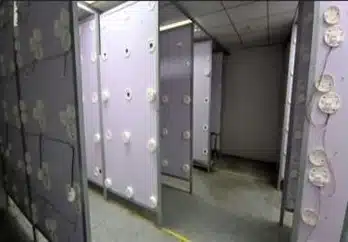
Mesh Network Verification
Large-scale mesh simulation test environment to verify multi-device relay, self-healing, and cross-floor signal stability.
EMC Testing
Electromagnetic compatibility testing to avoid wireless signal interference affecting smoke sensor detection accuracy.

Firmware Development Team
Independent embedded R&D team for Zigbee stack, alarm logic, and OTA remote upgrade program development.
OTA Management
Complete batch remote upgrade platform with version control and upgrade failure rollback mechanisms.
Quality Management System
ISO 9001 full-process quality control, 100% finished functional testing, and serial number full traceability system.

Zigbee Smoke Alarm Supplier Checklist
Checklist | Why It Matters |
|---|---|
Zigbee 3.0 Certified | Cross-platform compatibility |
EN14604 | European compliance |
OTA Supported | Lower maintenance |
RF Lab | Wireless stability |
Mesh Test Report | Verify reliability |
Battery Life Report | Lifetime validation |
Gateway Compatibility | Prevent integration issues |
Documents Buyers Should Request Before Ordering
Common Mistakes Buyers Make When Purchasing Zigbee Smoke Alarms
Confusing Zigbee with RF Interconnection
Treat ordinary paired RF alarms as Zigbee mesh products, ignoring relay, gateway, and OTA core functions, leading to failed smart project docking.
Ignoring Gateway Compatibility
Select Zigbee modules incompatible with the buyer’s existing smart gateway platform, requiring costly secondary firmware modification.
Overlooking OTA Upgrade Capability
Source products without remote wireless update; future standard revisions or function optimization require dismounting all units for wired upgrades.
Selecting Non-Zigbee 3.0 Products
Adopt outdated Zigbee 2.0 hardware with small network capacity and poor ecosystem compatibility, limiting later market expansion.
Ignoring Certification Requirements
Separate smoke safety certification and Zigbee wireless certification; module replacement triggers full product recertification and customs detention risks.
Not Verifying Mesh Network Stability
Only test single-unit transmission distance without simulating multi-device mesh relay, resulting in signal dead zones in actual multi-story buildings.

Zigbee Smoke Alarm Procurement Checklist
Item | Requirement |
|---|---|
Smoke Certification | EN 14604 / UL 217 / AS 3786 |
RF Certification | EN 300 328 / FCC / RED |
OTA Support | Yes |
Gateway Compatibility | Tuya / Custom Gateway |
Battery Life | 10 Years |
Mesh Capacity | ≥200 Devices |
Encryption | AES-128 |
RF Laboratory | Available |
Production Testing | 100% Functional Test |
Why Choose CFS for Zigbee Smoke Alarm OEM Projects
Complete OEM & ODM Services
One-stop solution covering appearance design, PCB, firmware, APP development, packaging, and full certification support.
Zigbee Hardware & Firmware Development
Self-developed Zigbee 3.0 full stack firmware, independent RF lab for wireless performance verification.
EN 14604 / UL 217 / AS 3786 Support
Full set of global smoke alarm safety certifications plus complete RED/FCC wireless certification archives.
Private Label Manufacturing
Flexible private label customization for retail brands and large engineering project clients.
Engineering Project Management
Dedicated technical PM to follow EVT/DVT/PVT mass production whole cycle.
Global Export Experience
Mass delivery to the EU, US, and Australian smart home and property engineering markets.
Core Strength Data Highlights
FAQ
Q1: What is a Zigbee interlinked smoke alarm?
A Zigbee-interlinked photoelectric smoke alarm synchronizes alarm signals across all connected units and enables remote mobile fire alerts, in compliance with EN 14604 and UL 217 standards.
Q2: Does Zigbee require an internet connection?
Mesh interlink between smoke alarms works offline without Wi-Fi. Internet access is required only if users need cloud storage and mobile app push notifications via a Zigbee gateway.
Q3: Can Zigbee smoke alarms work without a gateway?
Yes. All interconnection alarm functions operate independently within the local mesh network, even without a gateway; remote phone alerts will be unavailable without a gateway and internet access.
Q4: Can Zigbee smoke alarms support OTA firmware updates?
Qualified Zigbee 3.0 smoke alarm solutions support batch remote wireless OTA upgrades, no need to disassemble devices for wired programming.
Q5: How can buyers verify mesh network reliability?
Request manufacturers to conduct large-scale, multi-device mesh simulation testing, simulating wall-barrier signal attenuation and equipment offline failures to assess automatic signal-rerouting performance.
Q6: Can Zigbee and RF smoke alarms work together?
No. They use incompatible wireless communication protocols and cannot transmit alarm signals to one another. Projects must select unified Zigbee or unified RF hardware.
Engineering Insight: Why Some Zigbee Smoke Alarm Projects Fail
Incorrect selection of Zigbee 2.0, smoke alarm certifications (EN 14604, UL 217, AS 3786), and wireless certifications (EN 300 328, RED, FCC) cannot be tested.
Mass Production Consistency: RF calibration, smoke sensitivity calibration, Mesh network verification, 168-hour aging test, and 100% functional testing of finished products are crucial to ensuring stable delivery of mass-produced projects.